
A garage flat roof replacement is a short list of clear stages. This guide walks through what happens on a Bishopston garage, from the first inspection to the final edge trim.
A garage roof looks simple, and often it is, but doing it properly still follows a set order. The old covering comes off, the deck underneath is checked, falls are set so water runs away, and a new covering is laid with sound edges and upstands. Skipping a stage is how roofs fail early.
The first look
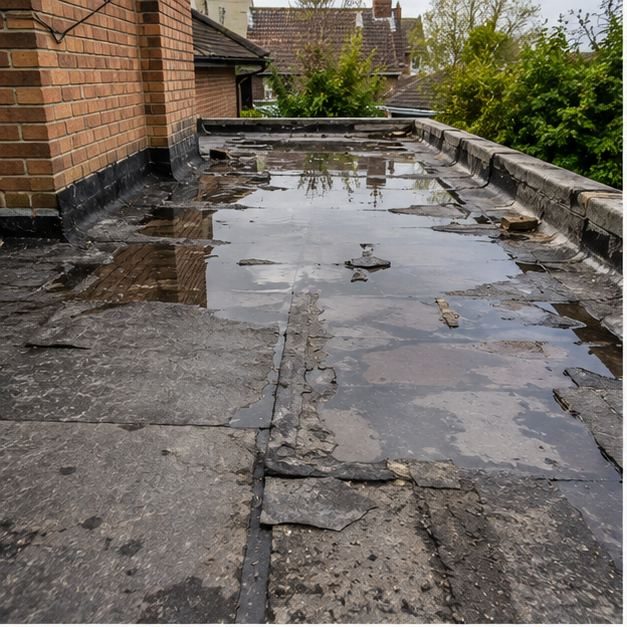
We start by checking how the roof is behaving now. Where is the water pooling, where are the splits, and does it leak into the garage? We look at the outlet or gutter, the edges and the wall it meets. Garages tacked onto the back of a tall terrace often have a tall wall behind them, so the junction against that wall gets particular attention. We also ask how the garage is used.
Stripping and checking the deck
The old covering is taken off down to the deck. This is the moment we find out what is beneath. Boards that have been damp for a long time can be soft or rotten and must be cut out and replaced. Laying a new covering on a poor deck only hides the fault, so we repair or renew the deck before anything else goes on.
- Soft or spongy boards are replaced.
- Fixings and joists are checked for movement.
- The deck is cleaned and dried before covering.
- Any damp is traced and dealt with first.
Falls, insulation and covering
Water must run to the outlet, so the deck is set with a slight fall. If the garage is used as a workshop or store, we talk about insulation. Then the new covering goes on. The common choices are single-ply rubber, fibreglass or a felt system, and we explain the pros and cons of each for your garage rather than pushing one. The aim is a roof that sheds water cleanly, with no low spots left behind.
Edges, upstands and outlets
Most leaks begin at the edges, so the details matter as much as the main sheet. We form upstands where the roof meets a wall, fit new edge trims so water drips clear, and make sure the outlet or gutter takes the flow. Lead or a suitable flashing seals the top of the upstand against the wall.
What to ask and what to expect
Ask for a written description of the work, including what happens if the deck needs replacing. Expect the site to be left tidy and the old material taken away. Larger replacements may need planning or Building Regulations checks — we advise before work starts. We explain each stage so there are no surprises when the old roof is lifted. Ask who will be on site and how scaffold or access is arranged.
Frequently Asked Questions
Does the whole roof always need replacing?
No. If the covering is sound in most places, a repair can be the sensible choice. Where cracks, blisters or ponding are widespread, a repair becomes a patch on a failing roof and replacement makes more sense. We tell you which applies.
Will the garage be usable during the work?
Usually you can use it before and after, but the roof is open while the old covering is off, so we plan the work around the weather and protect the contents. Moving valuables out beforehand is a sensible step.
Can the garage roof be insulated at the same time?
Yes, when the roof is being replaced it is the easiest moment to add insulation, which matters if the space is a workshop or storage for sensitive items. We discuss whether it suits your garage and how it affects the build-up.
Talk to our team about flat roofing in Bishopston
Every roof is different — the fastest way to get an accurate answer is a quick chat with our team.