
A solid soffit board looks tidy but can leave a loft with nowhere to breathe. This guide explains why vents matter, particularly in Bishopston lofts that have been converted or insulated.
Warm, damp air from a home rises into the roof space. If it cannot escape, it condenses on cold timbers and felt, and over time that means mould, rot and dripping. A vent in the soffit lets fresh air flow in along the eaves, so the roof space stays dry. It is a small detail with a big effect on the timbers above.
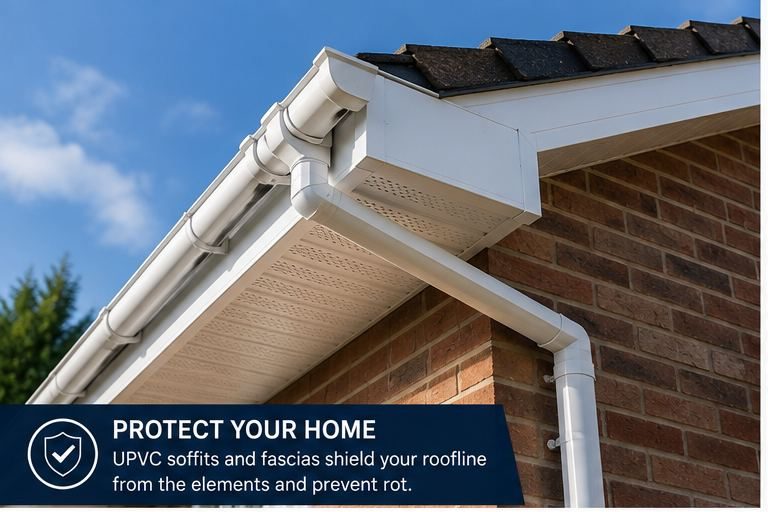
What the vent actually does
Cool air enters at the eaves, passes under the roof covering and leaves at the ridge or other high-level vents. That gentle flow carries moisture away before it settles. Without it, the underside of the felt turns wet in cold weather, and the rafters take it up. A vent costs little compared with the timber damage it prevents, and it works quietly with no moving parts.
Why lofts here need extra care
Bishopston has many tall Victorian and Edwardian houses whose lofts have been converted into rooms, with dormers added. Insulation fills the space between rafters, and bathrooms and kitchens add moisture below. In a tight, insulated roof there is little spare volume, so keeping an air gap open at the eaves is vital. Blocked or missing ventilation is a common reason for damp patches in these roofs.
Signs the roof space is not breathing
From inside the house or loft you may notice a musty smell, black speckling on timbers, damp insulation, or droplets on the underside of the felt. On the ground you might see staining under the eaves or boards that have gone dark. None of these prove a ventilation fault alone, but together they suggest air is not moving. Call us for a proper look rather than guessing.
- Musty smells in the loft or top-floor rooms.
- Black marks or damp patches on rafters.
- Condensation on the felt or insulation.
- Peeling paint or staining at upper ceilings.
How vents are fitted
When we replace fascias and soffits, we remove the old boards and check the rafter ends and eaves behind them. New soffits go in as vented boards, or we fit vent strips along the eaves, so air passes freely. Insulation is kept clear of the gap with eaves trays where needed. Gutters are refitted or replaced afterwards. Older homes are checked for what the existing soffit boards are made of before anything is disturbed.
What to ask your roofer
Ask whether the new soffits will be vented and how the airflow reaches the roof space. Ask how the insulation will be kept from blocking it. A good answer is specific to your roof. Scaffold or safe access is needed for this work, so ask how it is arranged. The boards themselves are very low maintenance and need only an occasional clean.
Frequently Asked Questions
Do all soffits need vents?
Most roofs benefit from them, because a pitched roof space needs air movement. The exact amount and position depend on the roof design and insulation. We check what is already in place and advise whether vented boards or vent strips suit best.
Will vents let insects and birds in?
Properly made vents have fine mesh or small slots designed to keep them out while letting air through. Poorly fitted or damaged boards are the usual route in. We check the eaves for gaps when we replace the boards.
Can I add vents without replacing the soffits?
Sometimes. Vent strips or individual vents can be fitted to existing boards if they are sound. If the boards are old, rotten or sagging, replacing them is better, and the vents go in as part of the new boards.
Talk to our team about UPVC fascias and soffits in Bishopston
Every roof is different — the fastest way to get an accurate answer is a quick chat with our team.