
Replacing a garage flat roof starts with getting access and ends with a covering that sheds water properly. In Kingsdown, access is often the first thing we plan.
Garages and outbuildings in Kingsdown tend to sit in small plots and tight streets, so getting materials to the roof and rubbish away from it is often the awkward part. The roof itself is usually simple, but the job still needs a clear order of work and honest advice about what lies under the old covering.
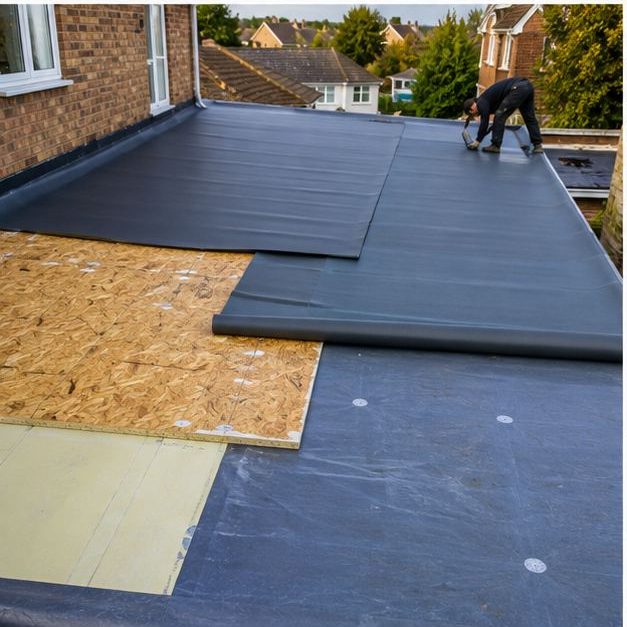
Planning access first
Before anything else, we work out how to reach the roof and where materials will sit. On narrow Kingsdown streets that can mean agreeing where a vehicle can stop and how long for, or carrying materials by hand. We tell you beforehand what we need, so there are no surprises on the day. Neighbours appreciate a heads-up as well, since lifting and carrying materials near a shared wall can cause some noise.
Taking off the old covering
The old covering is stripped back to the deck, including any layers built up from earlier repairs. This is where we find out what is really there. A roof that looks sound can hide boards that are damp, soft or rotten, and we want to see them before anything new is laid on top. Many older garage roofs have been recovered several times, and we often find multiple layers that have to come off together.
Deck, falls and edges
Soft boards are cut out and replaced so the surface is firm. We check the fall, because water needs a clear route to an outlet or gutter, and adjust it if needed. Edge trims and drips are fitted so the water drops clear of the wall. Where the roof meets a house wall or boundary wall, the upstand is formed and sealed properly, since that junction is a common place for leaks.
- Deck boards replaced where soft or rotten
- Falls corrected so water drains
- Edge trims and drips fitted
- Wall upstands formed and finished neatly
The new covering
Typical choices are single-ply rubber such as EPDM, fibreglass GRP, or a felt system. We explain which suits the garage and how it will be laid, including how corners, seams and edges are dealt with, because these are where flat roofs usually fail. The covering is laid in suitable weather, and we protect what is around. A fibreglass finish is laid in one continuous sheet, while rubber and felt systems use sheets or rolls with joints that must be sealed carefully.
Finishing off
When the covering is down, we clear the site, check the outlets and gutters run freely and talk you through what we have done. Some alterations may need planning or Building Regulations checks, and we advise before work starts. Ask for a written description of the work, so you know what is included and what happens if the deck turns out worse than expected. Rubbish is cleared away as the work goes, because tight streets leave little room to store it.
Frequently Asked Questions
Can the garage stay in use while the roof is done?
Mostly yes, though it may be sensible to move things away from the walls or the lowest areas. We tell you in advance if the work will be noisy or dusty and agree how access works.
What if the deck underneath is rotten?
Then it is cut out and replaced before the new covering goes on. We would rather find it and tell you than cover it over. We explain what we found and agree any change to the plan.
Does it have to be dry to lay the new roof?
Yes, the deck and surfaces need to be dry for the covering to bond or seal properly. We plan around the forecast, and we may hold back a day or two if the weather turns against us.
Talk to our team about flat roofing in Kingsdown
Every roof is different — the fastest way to get an accurate answer is a quick chat with our team.