Flat roofs on Brislington's extended homes
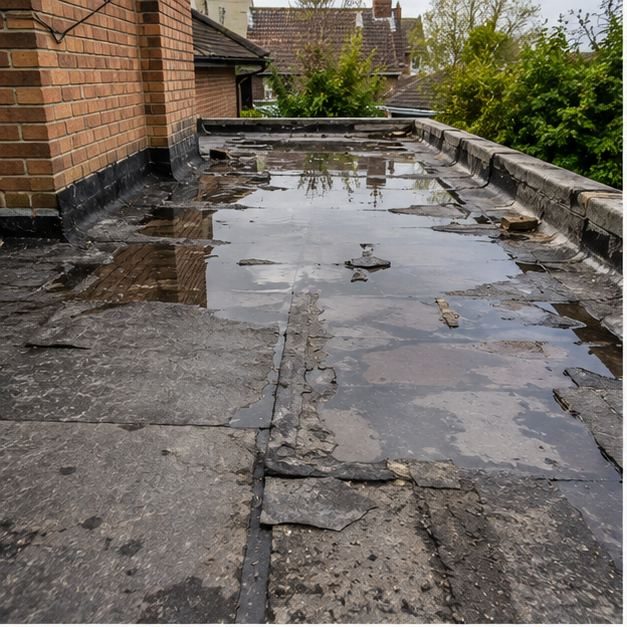
Garages and extensions are everywhere in the suburb's semis. Their flat roofs butt up against brick walls and the main pitched roof, so the upstands and flashings are the first places we inspect when damp appears on a wall or ceiling beside them. Water that gets behind the covering there can run a long way before it shows.
Because many of these additions were built after the original house, the flat roofs often vary in age and construction across a single street. One neighbour may have a sound surface while the next has a deck that has been taking in water for a long time. We therefore look at each addition on its own merits.
Dormers are another flat-topped feature on bigger Brislington homes. Their small roofs and cheeks need careful detailing at the edges, and a failure there often shows as a stain in the upstairs room, so we check the whole assembly, not only the top. Their small size makes repairs tidy, but only if the joints are sound.
Flat roofing work in Brislington
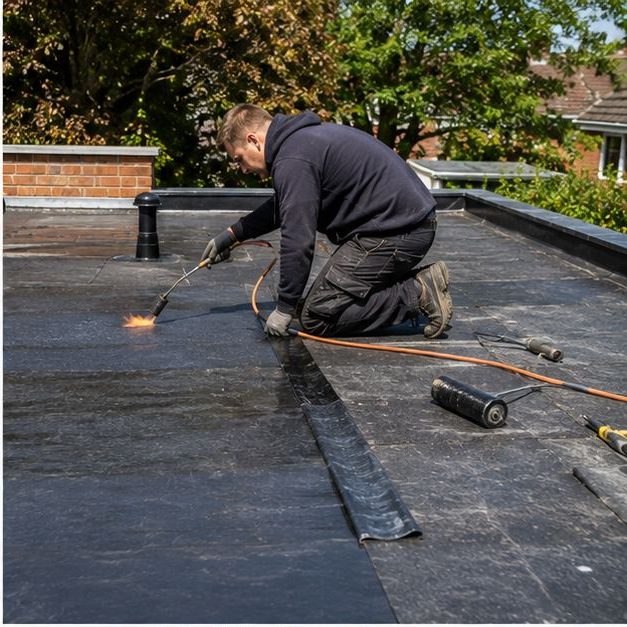
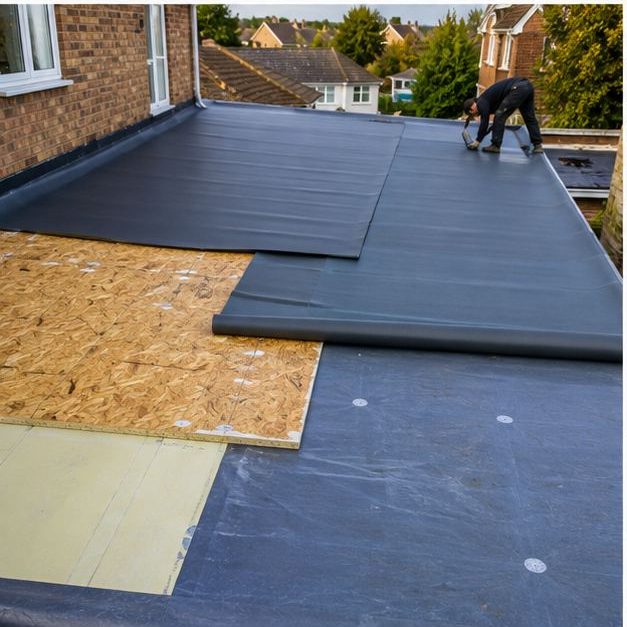
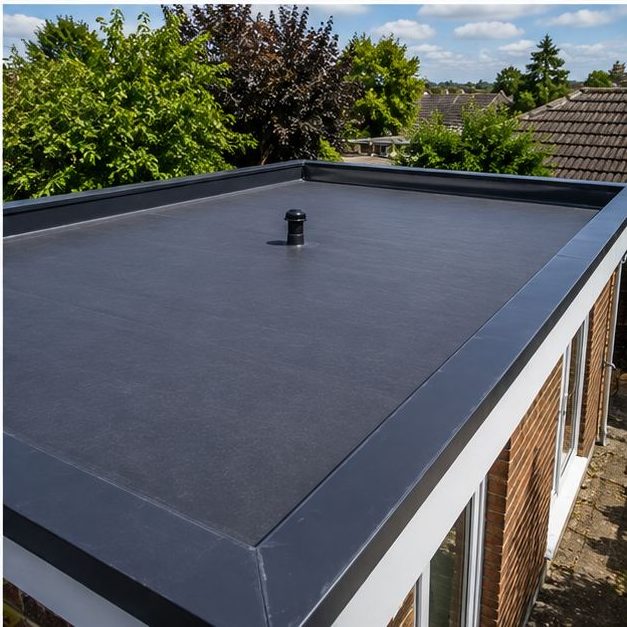
- Garage roof replacement. Stripping a failed garage covering, checking the deck for damp or rot and fitting a new waterproof system with proper edges.
- Extension roof repairs. Repairing splits, failed joints and lifted edges on rear and side extensions where the deck underneath is still sound.
- Dormer and bay flat tops. Renewing the covering on dormer tops and bay roofs, with careful detailing at the cheeks and the wall junctions.
- Upstands and abutments. Reforming the junction where a flat roof meets a wall or pitched slope so water cannot run behind the covering.
- Insulation and falls. Improving drainage and adding insulation boards laid to a fall when a roof is stripped and the structure allows it.
- Outlet and trim clearance. Clearing blocked outlets and refixing edge trims so water leaves the roof, instead of ponding on it.
How we assess flat roofs in Brislington
We look at what is going on indoors first: stains, damp on the party or side wall, peeling paint at the ceiling edge. Then we examine the surface for blisters, splits, ponding and the state of the trims and upstands. We also check the ceiling edges and corners for tidemarks.
If the deck is dry and the damage is local, we repair and say how long we expect the repair to serve without naming years. If boards are soft or the covering is failing widely, we explain replacement and the material choices. That keeps the advice honest and practical.