Roof repair on Brislington's hipped and older roofs
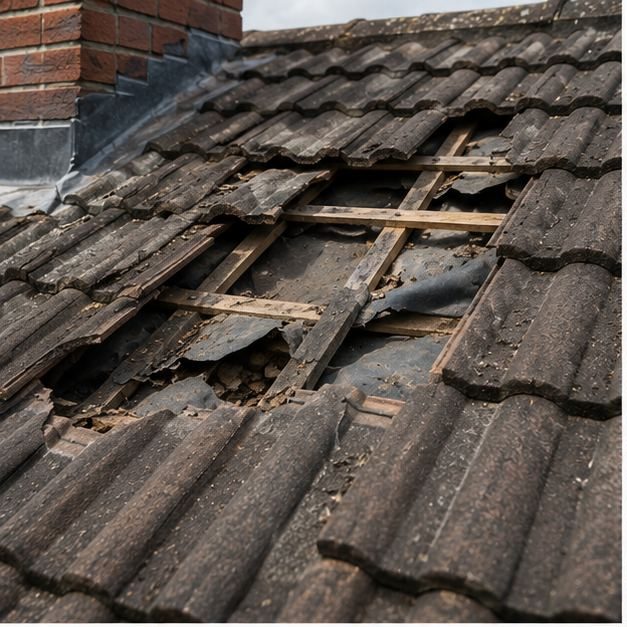
Hipped roofs are common across Brislington's semis, and every hip is a line of ridge-style tiles bedded along a slope. When that bedding cracks or a hip end slips, rain gets into the felt below, and the leak often turns up well down the roof. A loose hip is often the cause of a patch that appears two rooms away.
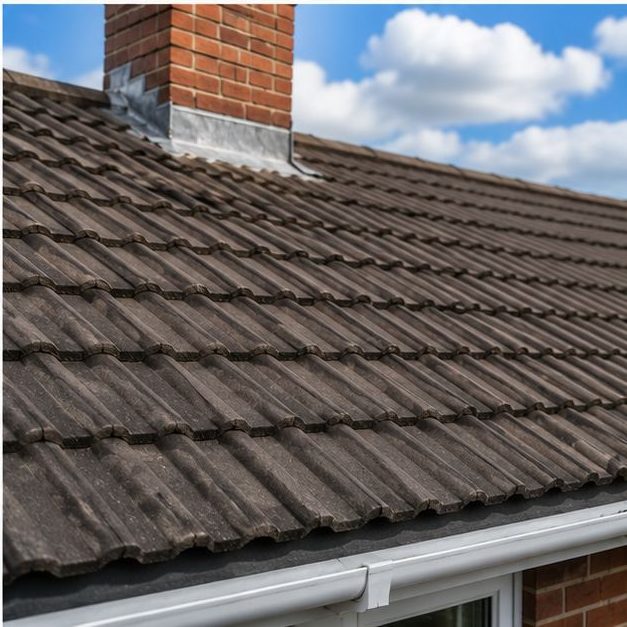
Many streets climb on rising ground, so wind comes across the roof slopes with little to break it. Tile edges, ridges and the covering around chimneys are the first places to loosen, and we check those closely before looking at the middle of the slope. Chimney surrounds on these semis get the same close look.
Older village-core houses behave differently from the semis around them. Their coverings, timbers and flashings are of an earlier build, so we are more careful about what we disturb, and more cautious about promising a patch will last, because the whole roof may need a judgement. Where in doubt, we explain what we know and what we cannot yet tell.
Roof repairs we carry out in Brislington
- Hip and ridge re-bedding. Lifting loose hip and ridge tiles, re-bedding them securely and renewing the end pieces on hipped semis and extensions.
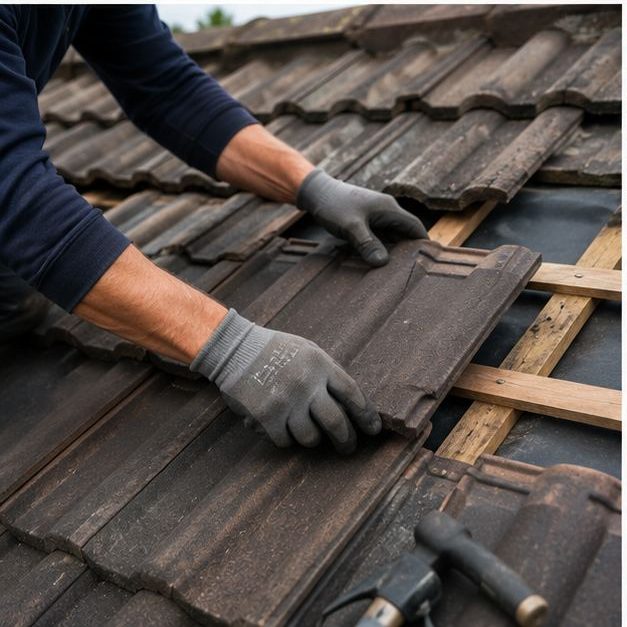
- Slipped and cracked tiles. Replacing displaced or broken tiles and checking the felt and battens underneath for water damage before closing up.
- Flashings and valleys. Repairing lead at chimneys, extension abutments and valleys where roof planes meet, a frequent source of leaks.
- Verge and eaves repairs. Making good the gable edge and the gutter line where tiles have shifted or the edge detail has broken down.
- Finding the true leak source. Tracing water along timbers and felt to the real opening, rather than patching beneath the stain on the ceiling.
- Storm-loosened roofs. Re-fixing tiles and ridges disturbed by gusts on exposed slopes and checking the neighbouring areas for hidden harm.
How we work on a Brislington roof repair
We begin by asking where you noticed the problem, then examine the roof from the ground and from our own safe access. In the loft we look for damp timber, dark felt and daylight, because they point to where water is entering. We also look at the eaves, where water can sit unseen.
After that we explain the finding without jargon. If a modest repair will do, we price that and nothing more. If the covering is tired across a whole slope, we tell you honestly that repair is only a stopgap. You then choose what happens next, with no obligation to go ahead.