Flat roofs on Bromley Heath houses
Houses on the north-east Bristol fringe tend to have had rear extensions, side garages and small porches added after they were built. Those flat roofs were often fitted by different people at different times, so one house can have two or three covers of different ages and types. Each layer needs reading properly before we choose how to deal with it.
The open, windy edges matter here. Gusts lift loose edges and trims, pull at upstands where the covering meets a wall, and can peel back a tired corner. A flat roof with a lifted edge trim lets rain behind the covering and into the deck below. We check every edge and trim for movement before a single new layer goes on.
Older cottages with later flat additions can be awkward, because the new roof meets an old wall that is not quite straight. The abutment needs careful detailing so water cannot track behind it, and we pay particular attention to that junction. Getting that junction right is what stops a repair failing again within a few winters.
Flat roofing work we do in Bromley Heath
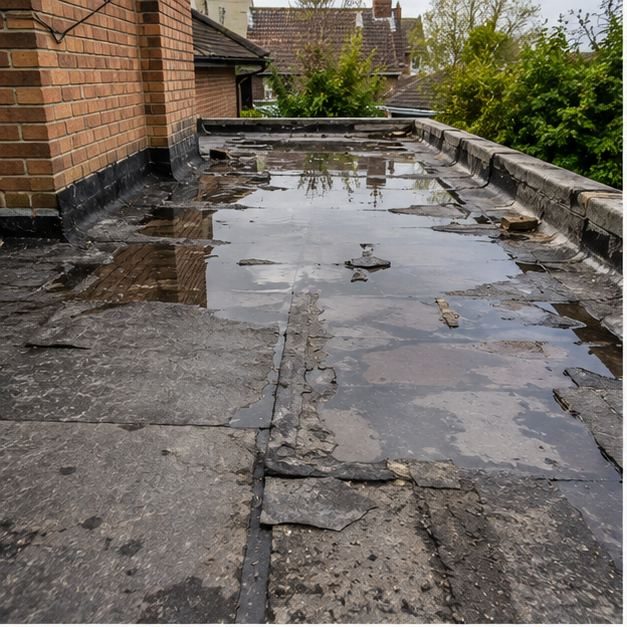
- Ponding and drainage fixes. Roofs that hold standing water are checked for falls, blocked outlets and sagging decks, then corrected so water runs away properly.
- Splits, blisters and failed joints. Cracked, blistered or opened seams repaired where the surrounding covering is still sound enough to take a patch.
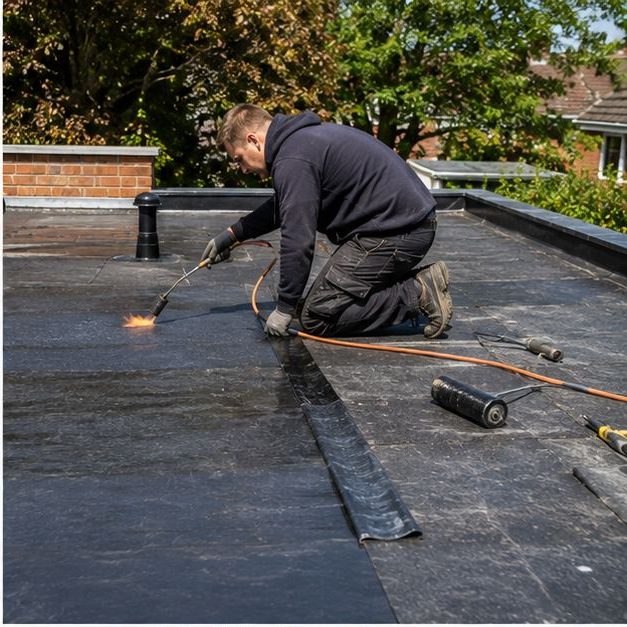
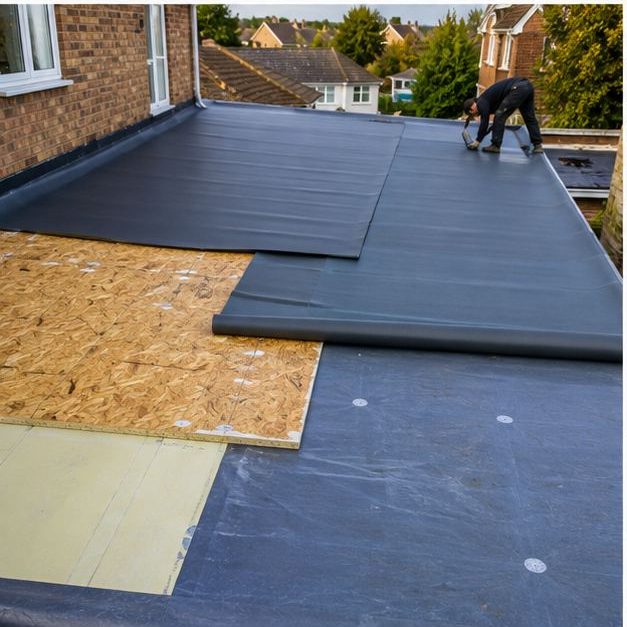
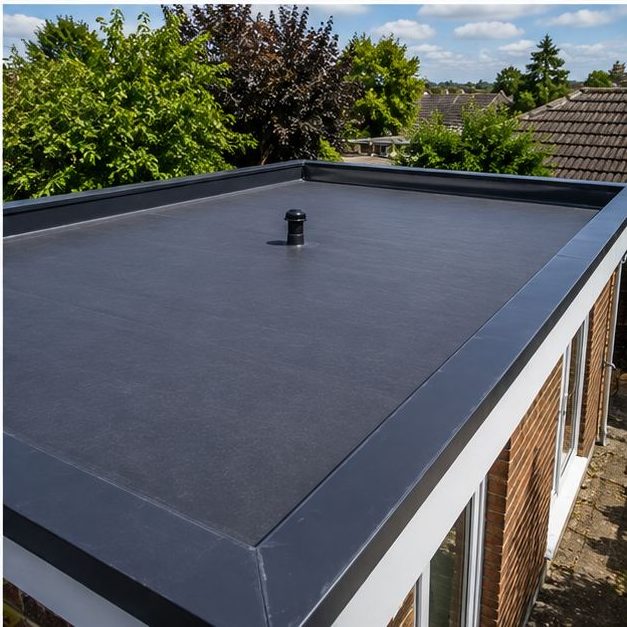
- Full flat roof replacement. Where the covering has failed widely, we strip back, repair the deck and lay a new system in EPDM rubber, GRP fibreglass or felt.
- Rotten deck repairs. Soaked or soft boards found under the covering are cut out and replaced before any new membrane goes down.
- Upstands, trims and abutments. Edges, wall junctions and trims renewed so wind cannot lift the roof and rain cannot track behind it.
- Insulation and falls. New roofs can be laid with insulation and gentle falls built in, so the finished surface drains instead of holding water.
How we plan a flat roof job in Bromley Heath
We look at the roof from above and below. Outside we note ponding, splits and how the edges are finished. Inside we check ceilings and, where there is access, the underside of the deck for dark patches that show water has been getting in for some time. Those marks tell us a lot before we open anything up.
Then we explain your choices. If the covering is sound apart from a few defects, a repair is sensible. If the deck is soft or the cover is failing everywhere, we say replacement is the honest answer and describe the materials in plain terms. You then decide with the facts in front of you.