
Flat roof leaks rarely sit above the stain. This is how we trace the real source on a Bromley Heath extension, garage or porch roof, and what a proper fix looks like.
A drip in the ceiling under a flat roof tells you water has got in, not where. On the extensions, garages and porches found across Bromley Heath, the water can travel a surprising distance through the deck and insulation before it appears. Tracing it carefully is what makes the fix last. We talk you through it as we go.
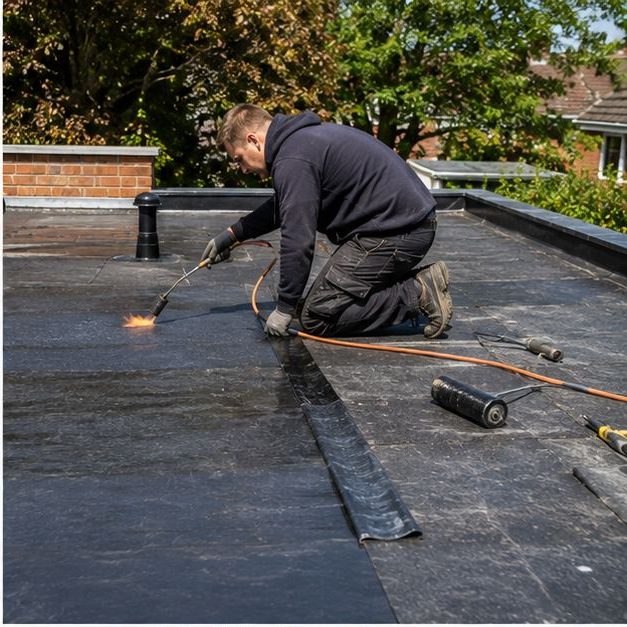
Why the stain misleads
Water moves along the underside of the covering, through the deck, then through the insulation and the ceiling board before it drops. The wet patch inside can be a metre or more from the hole. Treating the area above the stain usually fails. We start by working out the likely route water took. That is why the first visit is about understanding, not rushing a patch.
Where we look first
We begin at the usual weak points: the edges, the upstands where the roof meets a wall, the outlets, and any rooflight or penetration. Windy open sites mean edge trims and corners are put under stress, so they get close attention. Then we look at the main surface for splits, blisters and areas where water sits. Wind and weather on exposed ground make these spots wear faster than the middle of the roof.
- Edges and trims that have lifted
- Joints and seams that are opening
- Upstands and wall junctions closely checked
- Blocked or poorly draining outlets
Checking the deck and insulation
If the covering seems sound, the leak may come from the deck being soft or from moisture tracking through insulation. We check the ceiling and, where possible, probe or lift a small area to see what is below. Rotten board or wet insulation changes the answer from a repair to a bigger job. We tell you what we find, whatever the answer.
Making the repair
For a local fault we clean and prepare the area, then repair or renew the covering, joint or trim and seal it. This may mean a new patch, a re-formed upstand or a replaced outlet. We use a system compatible with what is there, whether rubber, fibreglass or felt, and explain what we are doing. The aim is a repair that sits flush and seals properly, not a bulge of filler.
When tracing shows a bigger problem
Sometimes the trace reveals widespread cracking, ponding and a weak deck. We say so honestly. A repair on that roof only postpones the bigger job. Where that is the case, we explain replacement in a suitable system with corrected falls and renewed edges, and let you decide with the facts. That is not what anyone hopes to hear, but it is better said early.
Keep a note of any new stains and the weather when they appeared. That small record helps us a great deal on a return visit, and it often points straight to the part of the roof that needs another look.
Frequently Asked Questions
Can a flat roof leak be fixed from inside?
Not properly. Interior fixes treat the damage, not the cause. The covering must be repaired from outside once the entry point is found, and we dry out or replace any wet insulation or boards where necessary. A stain on the ceiling is the result, not the source.
How long does it take to find a flat roof leak?
It depends on how clear the signs are. Some are obvious at an edge or outlet, and others need more investigation. We do not rush it, because guessing means the leak returns. A careful trace is quicker than repeated repairs.
Will rain stop me finding the leak?
Not necessarily. Rain can help us see where water goes, but we can inspect in dry weather too. Repairs are best done when the roof is dry, so we plan around the weather. Dry conditions give the best results for the actual work.
Talk to our team about flat roofing in Bromley Heath
Every roof is different — the fastest way to get an accurate answer is a quick chat with our team.