Why roofs on the Bromley Heath edge take a beating
The open edges of Bromley Heath are windy, and that decides most of the repair work we see. Wind lifts tiles at the eaves and verges, loosens ridge mortar and rattles flashings until the sealant gives up. After a blow, a roof that looked fine can have several tiles sitting out of line. Fixing those early keeps a small job small.
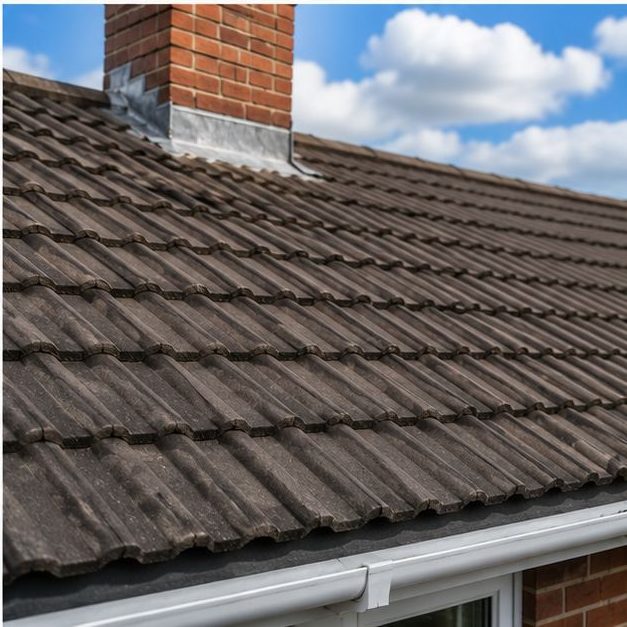
The later twentieth-century houses here usually carry concrete interlocking tiles on timber battens, with mortar-bedded ridges and verges. That mortar is the first thing to crack and drop. Fallen crumbs on a path or drive are often the first sign something has moved above. A quick look at the ridge line from the garden often tells us where to start.
The older cottages are a different job. Their roofs may have uneven rafters, softer old timbers and patched coverings from earlier repairs, so we go gently and check the structure under the tiles before deciding how much needs to come off and what can stay. Many of these roofs have been repaired before, so we read the earlier work too.
Roof repairs we carry out in Bromley Heath
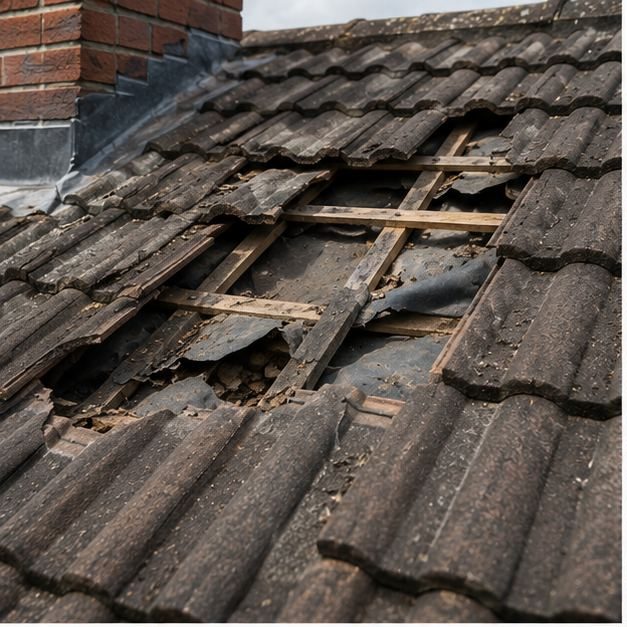
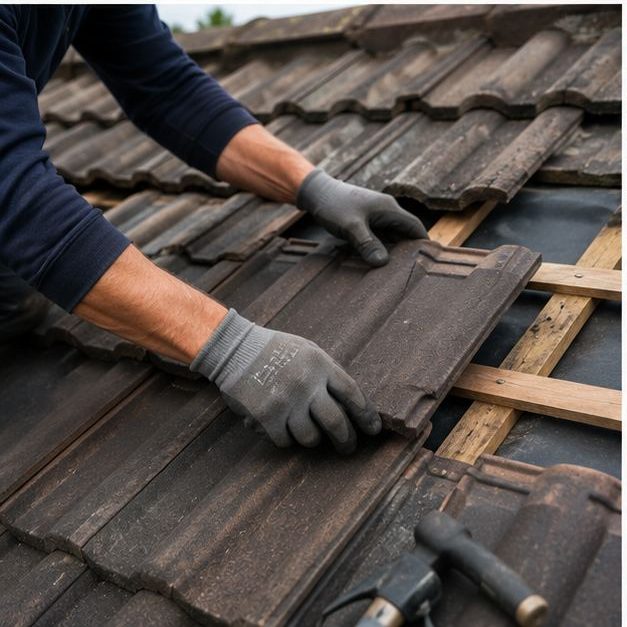
- Slipped and cracked tiles. Individual tiles replaced or refixed to match the surrounding roof, with the battens and felt underneath checked before the new tile goes on.
- Ridge and hip re-bedding. Cracked or loose ridge and hip tiles lifted and re-bedded, or mechanically fixed, so the top of the roof stays sealed in a gale.
- Lead flashing and valley repairs. Failed lead around chimneys, abutments and valleys repaired or replaced, which is where many hidden leaks begin.
- Verge and eaves repairs. Loose verge tiles and gutter-edge courses secured, because the edges of a roof take the worst of the wind.
- Storm damage repairs. Tiles, ridges and flashings put right after a blow, with the damage recorded so you can show it to your own insurer if needed.
- Leak tracing. Following a stain back along felt and timbers to the true point of entry, rather than patching wherever the damp shows.
How we approach a repair visit in Bromley Heath
We begin on the ground and in the loft. From outside we look for slipped tiles, gaps at the ridge and tired flashings. Inside we check timbers, felt and any damp marks, because the leak you can see is seldom where the water gets in. Only then do we look closely at the roof surface itself.
Before any work starts we explain what we found, what is urgent and what can wait, and whether a repair makes sense or the roof is nearer replacement. If it is only a few tiles, we say so and do not talk you into more. You get a clear account before anything is ordered.