Flat roofs on Cotham's villas and terraces
On a tall Victorian house, a flat roof usually sits tight against a high brick wall. The upstand where covering meets masonry, and the flashing that finishes it, are the first places water finds its way in. Water that tracks behind a poor upstand can reach brickwork and plaster without any sign on the roof surface itself.
Many of these buildings are now flats, so a flat roof may serve a single upper unit or sit over a shared stairwell addition. That matters, because a leak lands on someone's ceiling and the repair often has to suit more than one owner. Stairwell and rear additions in particular can sit over several flats at once.
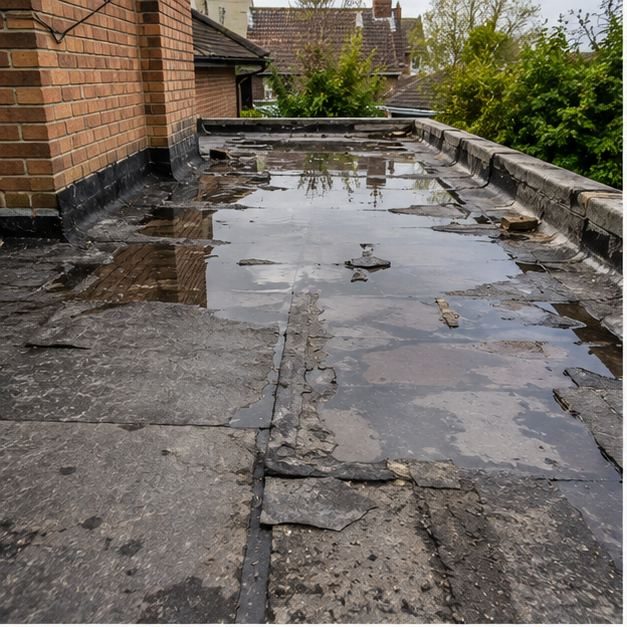
Older additions in Cotham were sometimes built with little fall, so water lies instead of draining. Standing water finds every weakness in a covering. Where we can improve the falls or clear a blocked outlet, we do, rather than simply laying new material over the same problem. Good drainage matters as much as the covering itself on a roof like this.
Flat roof work we carry out in Cotham
- Patch repairs to splits and blisters. Cutting out and sealing cracks, blisters and split joints where the surrounding covering is still sound enough to hold the repair.
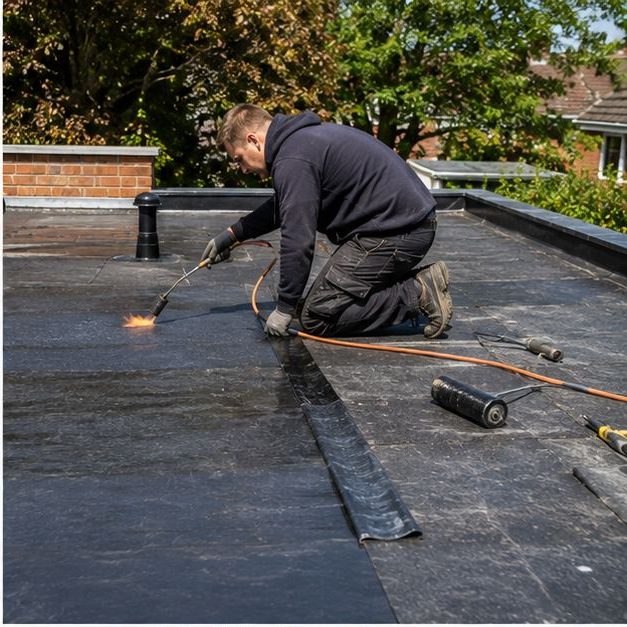
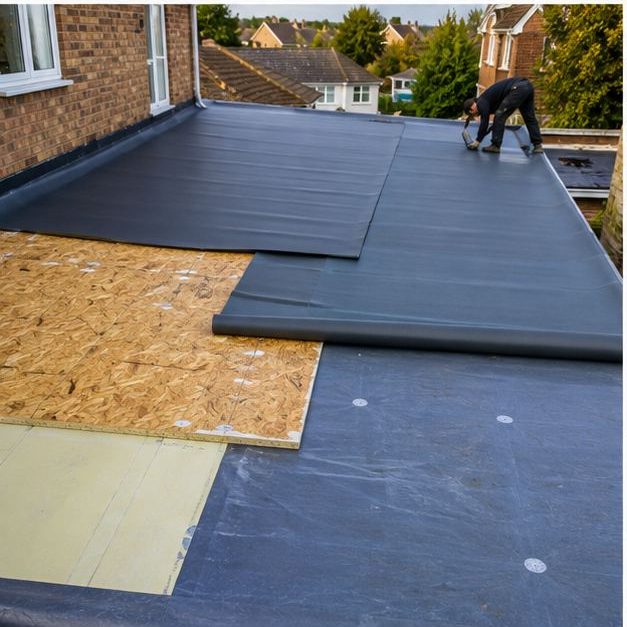
- Full flat roof replacement. Stripping a worn covering and relaying it as a new system when failure is widespread and patching would only delay the problem.
- Upstands and abutment details. Rebuilding the junction where the roof meets a house wall, with correct upstands and flashings so water cannot track behind.
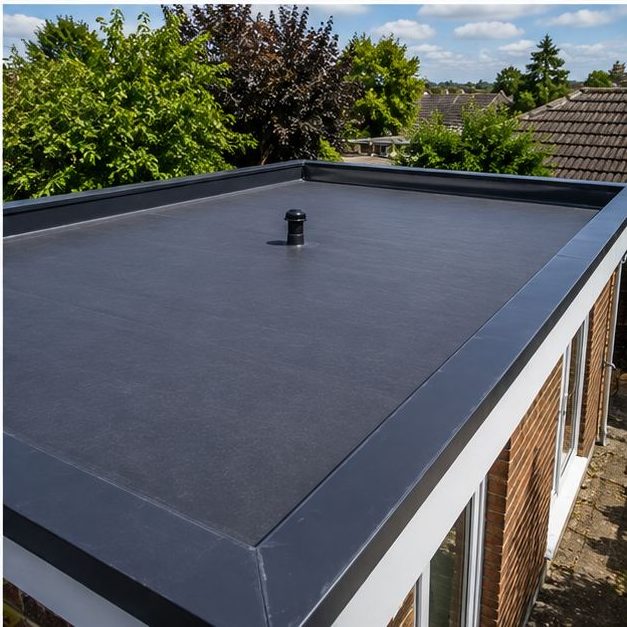
- Edge trims and drip details. Fitting new edge trims so water leaves the roof cleanly into the gutter instead of running back under the covering.
- Outlets and drainage. Clearing and renewing blocked or damaged outlets so rainwater leaves the roof instead of lying on it.
- Rotten deck replacement. Cutting out soft or rotten boards found beneath the covering and renewing them before the new layer goes down.
How we plan flat roof work in Cotham
Before quoting we want to see the roof and, where we can, the room beneath it. Soft boards, damp ceilings and staining tell us how far the damage has gone. Access on tall houses is often tight, so we decide early how materials will go up and how the work will be protected.
We discuss materials in plain terms, such as single-ply rubber, fibreglass or felt systems, and explain which suits your roof's shape and detail. If insulation or falls need attention, we raise that at the start. Some work may need planning or Building Regulations checks, and we advise before work starts.