
Blisters, cracks and splits are symptoms, not the problem itself. Trapped moisture, movement, sun and poor detailing each leave their own marks on a flat covering.
A flat roof rarely fails all at once. It blisters, cracks or splits first, and each of those tells a roofer something specific about what is happening underneath. Cotham has plenty of flat tops on bays, extensions and the back of tall houses, so it is worth knowing what the signs mean before water gets in.
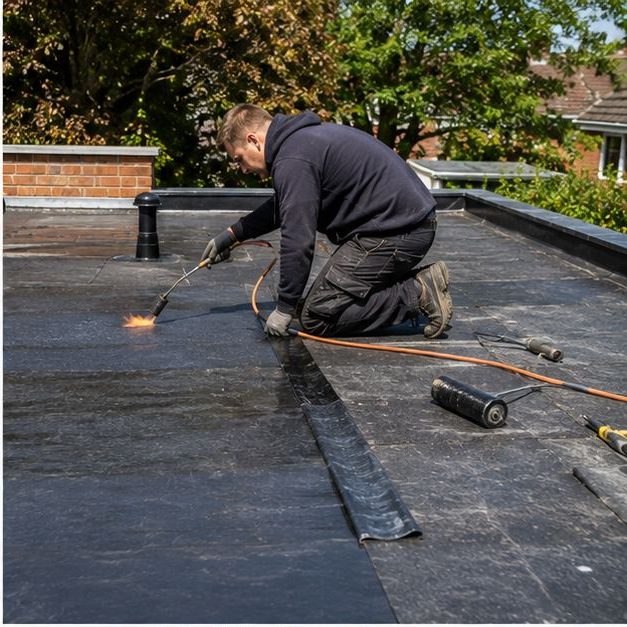
Blisters: trapped moisture and air
A blister is a raised bubble in the covering, most often on felt systems. It forms when moisture or air trapped between layers, or between the covering and the deck, expands in warm weather. Left alone, blisters thin the surface, split open and let water in. A small one can be dealt with, but we also look for the reason it formed. Do not press on or burst them.
Cracks: age, sun and surface wear
Surface cracking, sometimes called crazing, comes from the covering drying out and losing flexibility after long exposure to sun and weather. On its own it may be cosmetic, but it can open up into proper splits. We check how deep it goes and whether the layer beneath is still intact before deciding if a repair is enough. Taller houses catch more sun and wind on exposed roof tops, which speeds this ageing up.
Splits and failed joints: movement
Splits tend to follow movement. A flat roof expands and contracts with temperature, and the structure beneath moves a little too. Where the covering is stretched at an edge, a seam or a corner, it can open up. On a typical Cotham flat roof, such as a bay top or rear extension, we look at the same few places first and work from there.
- Seams and laps that have lifted or opened
- Upstands where the roof meets a wall
- Edge trims and corners under strain
- Areas around outlets, pipes and rooflights
What the cause usually is underneath
Surface faults often trace back to a poor deck, ponding water, blocked outlets or a lack of ventilation and falls. Standing water speeds up wear and adds weight. Damp boards can push up the covering from beneath. This is why we do not simply patch the symptom; we look at what is driving it, then explain the options. Often the surface fault is simply where the real problem finally shows.
Repair or replace
Where the damage is local and the deck is sound, a repair is often sensible. Where blistering and splitting are widespread, or the deck is wet, a patch only delays the problem and we will say so. From the ground you can look for ponding, stains inside and a rough or lifted surface, then call us for a proper look. We then explain what is urgent and what can wait.
Frequently Asked Questions
Should I burst a blister on my flat roof?
No. Bursting it lets water in and does not cure the cause. Leave it alone and have it looked at, so the trapped moisture and the weak layer can be dealt with properly. We cut out and repair a blister only after finding why it formed.
Are small cracks a big problem?
Fine surface cracking may only need monitoring or a protective treatment, but deep cracks and open splits let water through. We check how far they go, and what lies beneath, before telling you which category yours falls into.
Can a split be repaired without replacing everything?
Often, yes, provided the surrounding covering and the deck are sound. If the roof has several failures or a damp deck, repair stops being sensible and we will explain why replacement is the better route.
Talk to our team about flat roofing in Cotham
Every roof is different — the fastest way to get an accurate answer is a quick chat with our team.