Flat roofs on Montpelier's terraces and flats
With so many houses converted into flats, a flat roof over a rear extension may serve one household while sitting below the windows of another. Water damage there can end up in someone else's ceiling, so a clear picture of the roof's condition matters to everyone involved. We explain our findings in terms that can be passed on to neighbours or a managing agent.
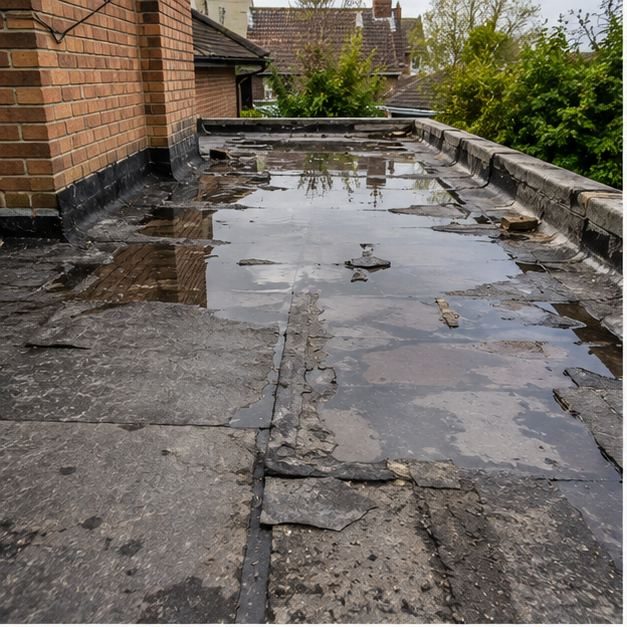
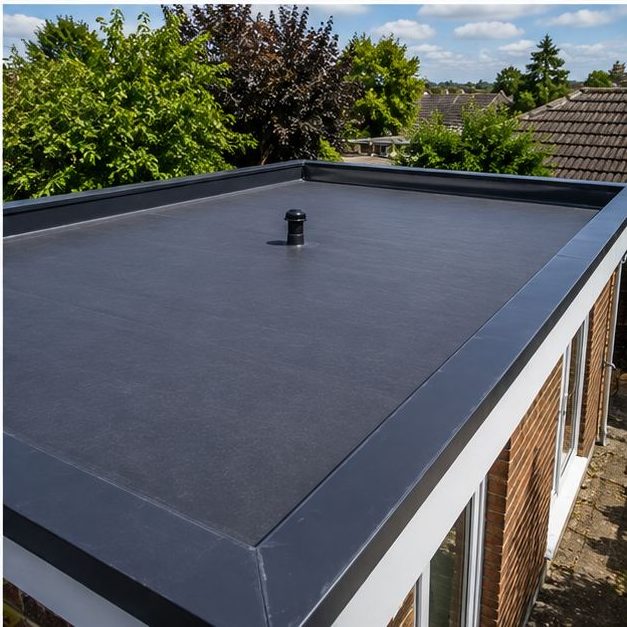
Tall chimney stacks and high party walls sit right beside many of these roofs. The upstands and abutments where the felt or membrane meets brick are a frequent weak point, as are the edge trims where water leaves the roof and runs towards the gutter. We renew those details carefully, since a good covering with a poor upstand will still let water in.
Tight rear access is the other local issue. Materials may have to be carried through a house or lifted over a wall, and we plan that before quoting a method. Repair is our first choice where the deck is sound, and we replace when the failure is widespread. That planning is part of the job, not an afterthought, and it keeps the disruption down for everyone in the building.
Flat roof work we do in Montpelier
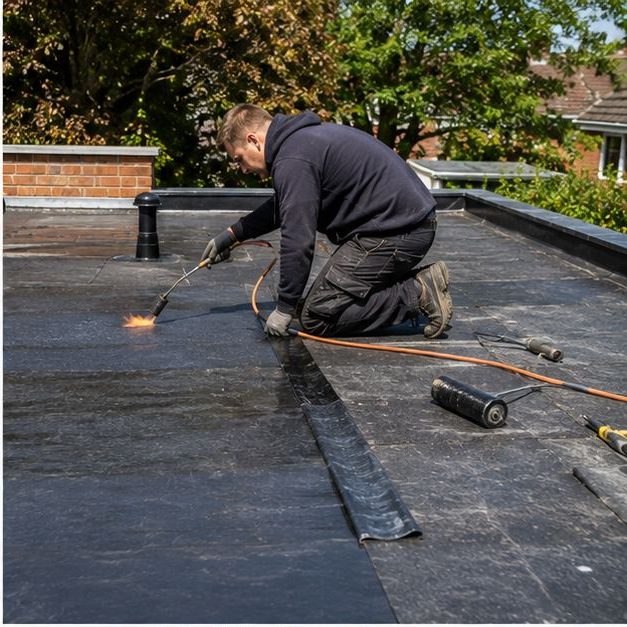
- Repairs to splits and blisters. Cracks, blisters and failed joints in the covering cut out and repaired where the surrounding roof and the deck beneath are still sound.
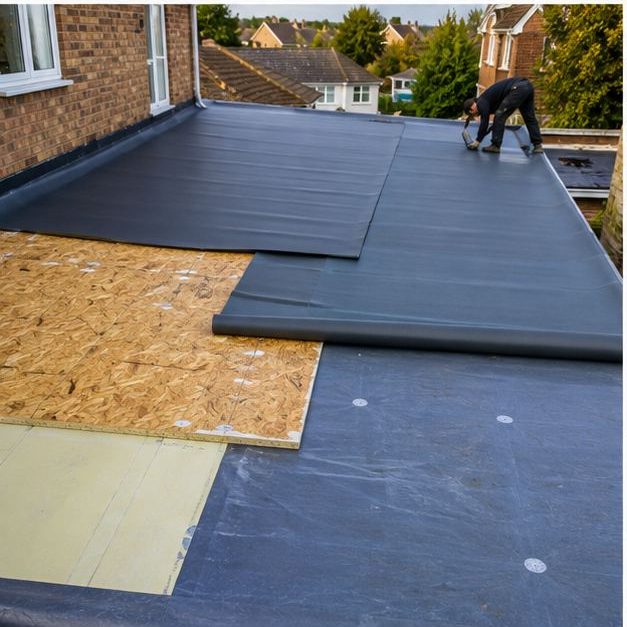
- Full flat roof replacement. Stripping a worn covering back to the deck and laying a new system, with insulation and falls corrected so water drains away.
- Single-ply rubber (EPDM) roofs. A flexible rubber membrane suited to extension roofs with awkward shapes, fitted with neat upstands against brickwork and walls.
- Fibreglass (GRP) roofs. A seamless fibreglass finish for small roofs, porches and bay tops where fewer joints mean fewer places for water to enter.
- Upstands, edges and outlets. Renewing wall abutments, edge trims and blocked outlets, which are where ponding and leaks around chimneys and party walls usually begin.
- Rotten deck and insulation repairs. Cutting out soft boards and wet insulation found under the covering, then rebuilding to a sound base before recovering.
How we approach flat roofs in Montpelier
We look at the ceiling below first for stains and soft patches, then the roof surface for ponding, splits and lifted edges. If the deck feels spongy underfoot after our own careful check, we say so, since that decides between repair and replacement. Photographs of what we find are shared so you can see it too.
We talk through materials in plain terms, explain where the falls are wrong, and flag any point where the work may need planning or Building Regulations checks — we advise before work starts. You then get one clear recommendation, not a menu of guesses. Our advice stays practical throughout.