Roof windows on Montpelier's Victorian roofs
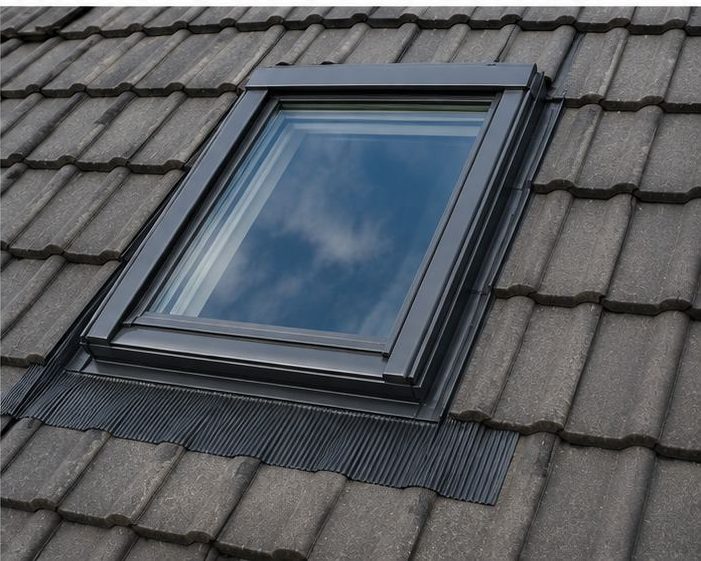
The steep pitches common in these streets suit roof windows well, because the angle gives good headroom and a decent view out. The covering is usually slate or clay tile, and the flashing kit must be chosen for that covering, since a kit for the wrong material will never seal properly. We confirm that match on site before ordering.
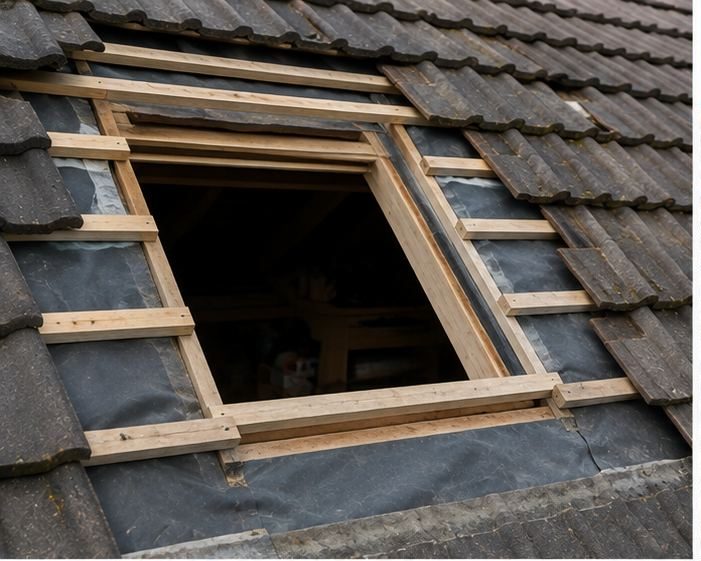
Older roofs have older timbers. When we cut an opening, rafters may need trimming and doubling up around it, and we check the strength and condition of the surrounding timbers on site first. In a converted house we also look at how the loft is used, and where a window would sit for the best light.
Tight access is the other local factor. A new window means lifting materials up narrow frontages and over high roofs, so we plan scaffold or access equipment in advance. Where a roof window is part of a loft conversion, the work may need planning or Building Regulations checks — we advise before work starts.
Roof window jobs we carry out in Montpelier
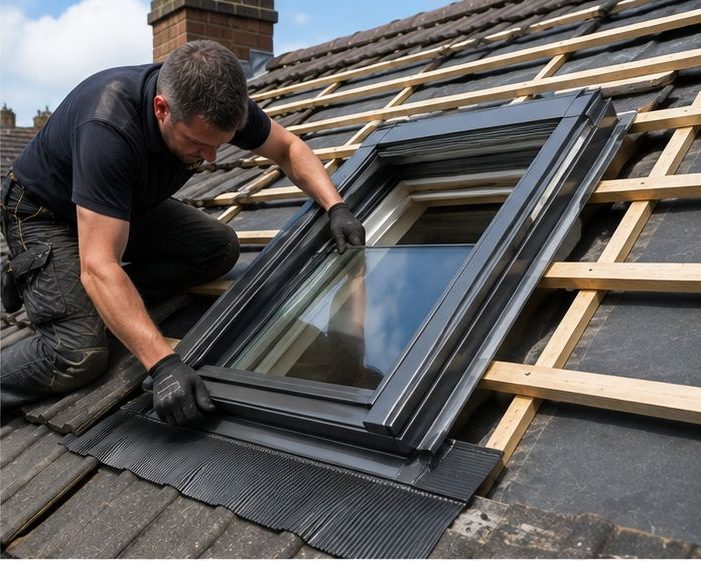
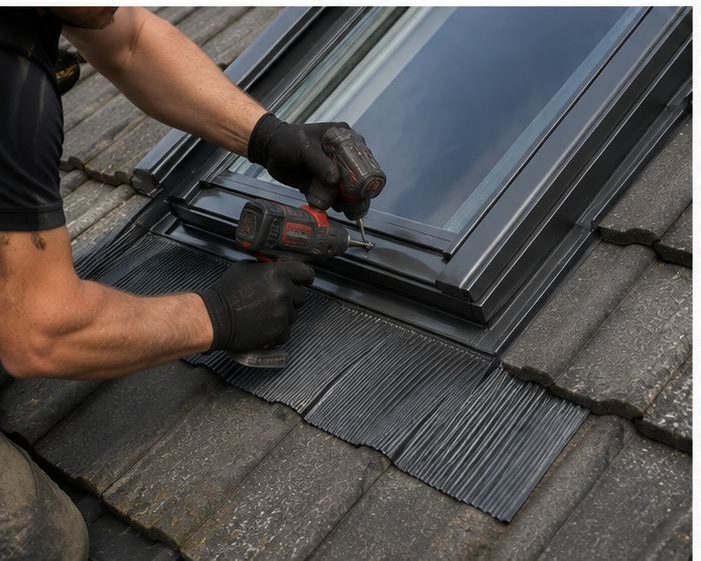
- New VELUX and similar roof windows. Cutting in a new window between the rafters, with the right flashing kit, lining and insulation for your type of roof covering.
- Replacing old roof windows. Taking out tired or leaking windows and fitting new ones, with the flashing, sealing and surrounding roof covering put right at the same time.
- Windows for loft conversions. Choosing the number and position of windows so a converted loft gets good light, ventilation and a safe way to open them.
- Leak investigation around windows. Working out whether a drip is from the flashing, the sealing, condensation or the roof covering around the window, not the glass.
- Misted or failed sealed units. Fixing the problem where the glass has misted between the panes, which points to a failed sealed unit rather than a roof fault.
- Lining and insulation around openings. Finishing the inside of the opening with a neat lining, insulation and vapour control so the room stays warm and dry.
How we fit roof windows in Montpelier
We start by looking at the loft or room from underneath, checking the rafter spacing, the insulation and where the light is wanted. Then we inspect the roof covering outside, because that decides the flashing kit and how the opening will be formed. You will know what to expect before work begins.
Before cutting anything, we explain what the rafters will need, how the lining will look inside and what access we require outside. If a leak is the reason you called, we say plainly whether the window, the flashing or the covering around it is at fault. That keeps the decision simple and avoids paying for the wrong fix.