Flat roofs under Downs trees and wind
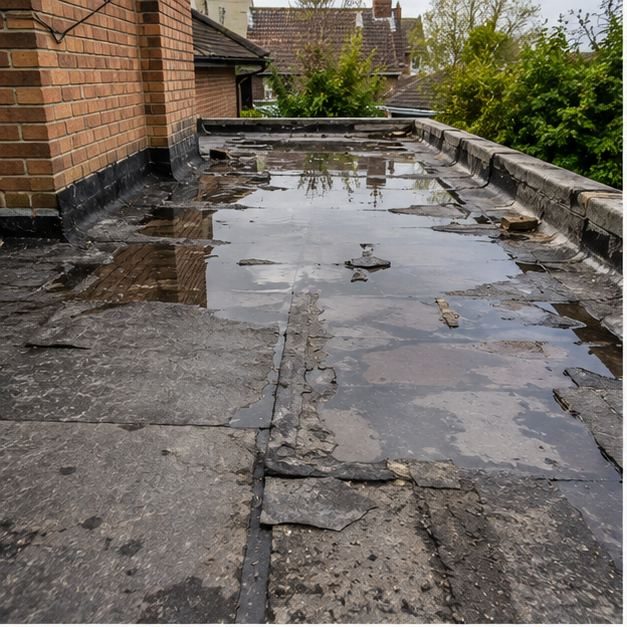
Trees close to many Downs houses mean leaves, seeds and twigs land on flat roofs all year. They clog outlets and sit in corners, and water then ponds against the covering. A flat roof under trees needs its drainage checked more than most. Mature trees nearby add shade, leaf litter and the occasional fallen branch.
Exposure to wind matters too. Gusts can lift loose edges and trims, and over time they work at the places where the covering turns up a wall. Bay tops and porch roofs on villas sit at awkward corners where the wind curls round the building. Getting the diagnosis right matters more than doing the work quickly.
Older extensions on these houses were often built with timber decks, so when the covering fails and water gets in, boards beneath can soften. We look for that early, because a rotten deck changes the job from a repair to a partial rebuild of the roof. Mature trees nearby add shade, leaf litter and the occasional fallen branch.
Flat roofing work around The Downs
- Bay tops and porch roofs. Small flat roofs over bays and porches are repaired or recovered, with lead or trim details renewed where the older brickwork meets the roof.
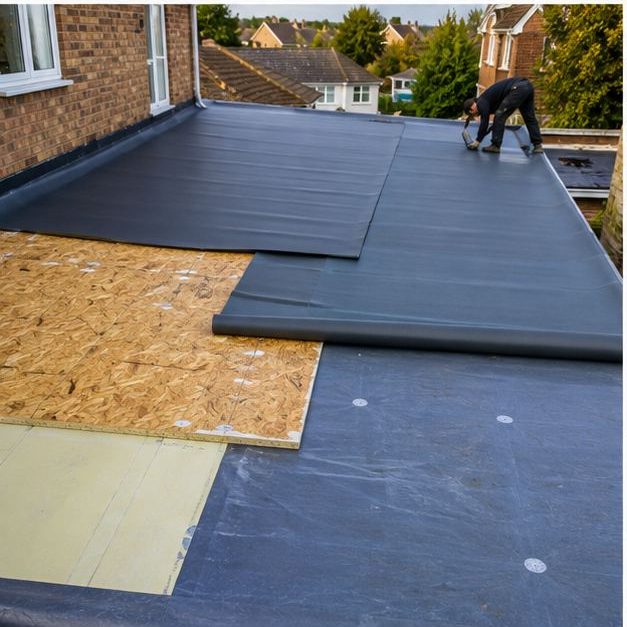
- Extension roof replacement. Where a villa extension roof has failed widely, we strip it back and fit a new system chosen to suit its size, shape and edges.
- Leaf-blocked outlets and gutters. Blocked drainage from nearby trees is cleared and the cause of the ponding put right, so water leaves the roof instead of sitting on it.
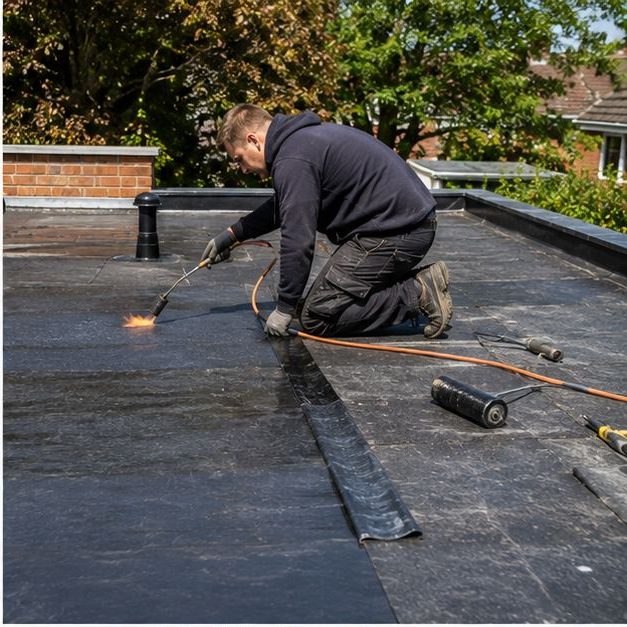
- Splits, blisters and open joints. Local damage in rubber, fibreglass or felt coverings is cut out and repaired when the surrounding roof is still sound.
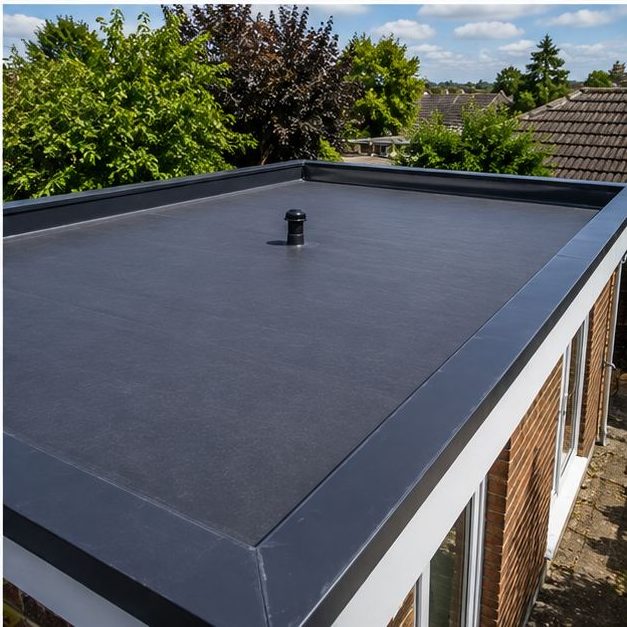
- Edge trims and upstands. Trims lifted by wind and upstands against brickwork are replaced and sealed so the covering stays locked down at its edges.
- Rotten deck repairs. Soft or rotten boards found under the covering are replaced before the new surface goes on, and falls and insulation are looked at at the same time.
How we tackle a flat roof in The Downs
We start by finding where the water goes and what sits underneath. On a villa that can mean a high-ceilinged room below, so we check inside for stains, then walk the problem back to the covering, the outlet or the wall junction. Questions are welcome at every stage, and we answer them plainly.
We explain what is repairable and what is not before any decision is made. If the work includes new insulation or changes to falls, it may need Building Regulations checks — we advise before work starts. Materials are discussed in terms of how the roof is used. Questions are welcome at every stage, and we answer them plainly.