
Tracing a leak is detective work: start at the stain, then work uphill and along the timbers. This guide explains how it is done on tall Bishopston terraces and what you can note safely from indoors.
The wet patch on your ceiling is where the water gave up, not where it came in. Finding the real entry point means reading the roof from the inside out and the outside in. On bay-fronted terraces and converted loft houses there are plenty of places for water to hide, so the search needs to be methodical rather than a guess.
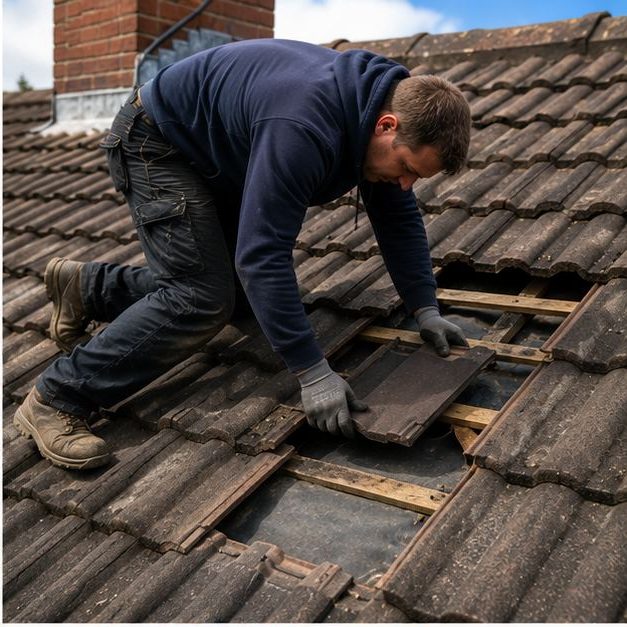
Start from the stain and go uphill
Water always comes from higher up than where it appears. So we begin at the stain and work up the slope, looking at what sits above it: a chimney, a valley, a dormer cheek, a ridge or a run of tiles. On a tall terrace, that route can cross a lot of roof, which is why a quick glance from the pavement rarely settles it.
What we look for in the loft
From inside the roof space we look for daylight, tracking marks on the felt, darkened timber and damp insulation. A tide line on a rafter shows how far water has run. Where lofts have been converted, we check around the boarding and any access hatches, because water can collect behind the lining before showing at all.
- Daylight where no light should enter.
- Dark staining along rafters and battens.
- Wet or compressed insulation near the stained area.
- Rusted nails or fixings near the damp area.
What we look for outside
With proper access, we check the usual weak points. Slipped or cracked tiles, broken slates, crumbling ridge bedding, tired lead flashings, blocked valleys and gaps around dormers and bay tops. Bay roofs and small flat sections on older terraces are common culprits because several materials meet there. Each junction is looked at on its own rather than assumed to be sound.
What you can note from the ground and indoors
You cannot read a roof from the street, but you can help. Record when the stain appeared and whether it grows after rain, wind or both. Note if it shows after heavy rain only or in any wet spell. A pattern points us toward the cause. Please do not climb up or hose the roof to find it; you may spread the problem or hurt yourself.
- Photograph the stain and date each photo.
- Note the weather when it first appeared.
- Check whether the mark grows or dries out.
- Tell us about any recent work on the roof.
Confirming the cause before repairing
A good repair follows a confirmed cause. We explain what we found, show you photos where we can, and say whether the fix is small or points to wider wear. If a roof is tired in several spots we say so rather than patching around the edges. Ask any roofer how they confirmed the source, because a stain alone is not proof.
Frequently Asked Questions
Can a leak be found from the ground?
Not reliably. From the ground you can see obvious problems like a missing tile, but most leaks start at joints and junctions that cannot be seen from below. A proper look from the roof and the loft is needed to trace the real source.
Why does the leak show up away from the cause?
Water follows timbers and the roofing felt before it drops through. It can travel a long way sideways, so the stain sits away from the opening. That is why we trace uphill rather than repair directly above the mark.
Should I pour water on the roof to test it?
No. Leave that to us. Hosing a roof can push water under tiles and cause new damage, and it means going up or leaning out in unsafe ways. We use controlled checks and a trained eye, with proper access in place.
Talk to our team about roof repairs in Bishopston
Every roof is different — the fastest way to get an accurate answer is a quick chat with our team.