
Covering old timber looks quicker, but it can hide what is happening behind it. Here is why we normally strip the old fascias first, even on well-kept Bishopston houses.
Fitting new boards straight over old timber sounds neat, but it traps whatever is underneath. If the wood is damp or soft, it keeps rotting out of sight. In most cases the honest answer is no: the old boards come off, the rafter ends and eaves are checked, and then new UPVC goes on a sound base.
The risk of covering rot
Timber rots where water sits. A fascia that looks fine on the face may have soft wood behind the paint or at the top edge under the gutter. Capping over it seals moisture in with no way out, so rot carries on and spreads towards the rafter ends. By the time the problem shows, the repair is bigger than it needed to be. We would rather show you the true state of the boards than cover them up.
What we find when old boards come off
Taking the boards off lets us see rafter ends, the eaves and the back of the roof covering. We look for soft timber, old leaks, nests, and gaps where air or weather gets in. Houses with tall frontages and converted lofts here often have eaves that have never been opened up, so there are sometimes surprises worth knowing about early. Seeing this first stops small faults turning into larger ones later.
- Rafter ends that have gone soft or stained.
- Gaps or old nests in the eaves.
- Gutter brackets that have lost their grip.
- Felt or tray ends that need replacing.
When capping is considered
There are cases where sound, dry timber can be left in place and the new boards fixed over it, for example a short run in good condition. We judge that on site, board by board, and only when we can see it is dry and firm. It is the exception, not the starting point, and we tell you plainly if we think it is the right choice. Either way, you get a clear reason for the choice.
Older homes and the soffit boards
On older homes, we check what the existing soffit boards are made of before disturbing them, and plan the work around what we find. That is a calm, routine step and it shapes how the boards are taken down. It is one reason we like to see the eaves properly before agreeing a method with you.
What the finished job looks like
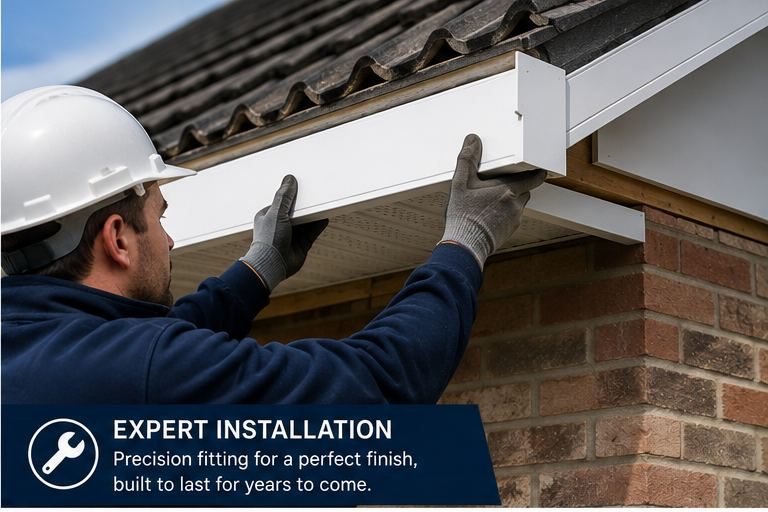
Replacement means old boards and gutters removed, eaves checked, new fascias and soffits fitted, vented soffits or vent strips so the roof space breathes, and gutters refitted or replaced. White is common, and darker and wood-effect finishes are available. UPVC is cleaned rather than painted, and is very low maintenance. Scaffold or safe access is arranged for the work.
Frequently Asked Questions
Is capping ever acceptable?
Occasionally, where the timber is dry, firm and in good shape, and the run is simple. We check carefully on site. If there is any doubt about the condition, we remove the board and see what is behind it.
Will new boards fix a leaking gutter?
Not by themselves. The gutter is refitted or replaced as part of the job, and we check the falls and joints. Leaks that come from the roof edge rather than the gutter may need work to the roof covering as well.
Do I need to be at home?
Usually not for the whole job, but access to the property edges is needed. We agree arrangements beforehand, including scaffold, gate access and where materials will be kept. You will know what to expect before work starts.
Talk to our team about UPVC fascias and soffits in Bishopston
Every roof is different — the fastest way to get an accurate answer is a quick chat with our team.