
There is no safe waiting period for a roof leak. Damage starts the first time water reaches timber or insulation, and how fast it spreads depends on the roof, the weather and where the water is going.
People in Keynsham often ask how long a leak can wait, usually because the drip is small or only shows in heavy rain. The honest answer is that it depends on what the water is touching. A slow leak can quietly soak timbers long before a stain appears on the ceiling, so looking sooner nearly always means less damage to put right.
Why a small drip is rarely small
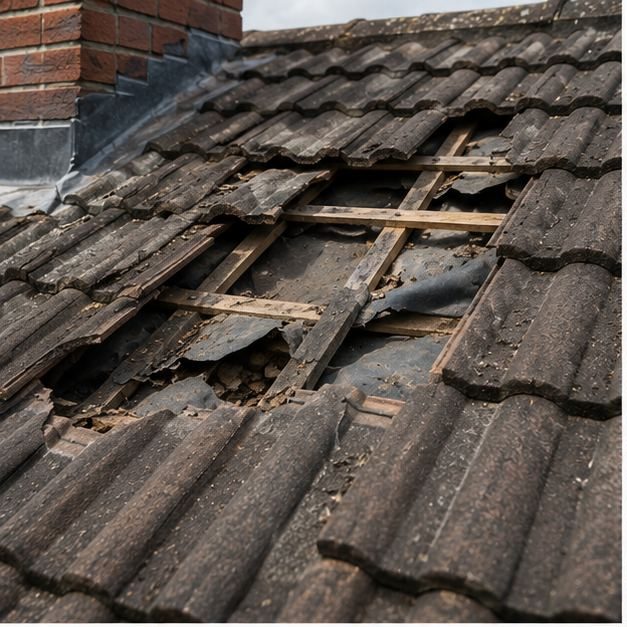
Water that gets through a tile or flashing does not drop straight down. It runs along battens, felt and rafters, then soaks into whatever is lowest or most absorbent. By the time a mark shows on a ceiling, the damp may already have travelled a long way across the roof space from the actual opening. A leak that seems to stop after the rain is often just draining away somewhere you cannot see, which is why a dry ceiling is not proof that the problem has gone.
What the delay depends on
The roof covering matters. A single slipped tile on a plain pitch lets in less than a failed valley or a gap round a chimney, which can take in a great deal in one storm, so the same drip can mean very different things.
Weather matters too. A leak that only shows in driving rain may get a rest in dry spells, but each wet spell adds to the damage already there and keeps the timbers from drying out. A roof that is leaking in autumn will usually be wetter still by midwinter.
- How much water is getting in and how often it rains
- Whether it lands on timber, insulation or bare plasterboard
- Whether the roof space is ventilated enough to dry out
- Whether the opening is getting bigger with each storm
What starts to happen inside
Rafters and battens that stay damp soften and can rot. Insulation soaked through stops doing its job and holds moisture against the ceiling. Plasterboard stains, sags and eventually lets go. Damp roof spaces also encourage mould, which is easy to spot as dark patches when you look up through the loft hatch. Ceilings are usually the last place to show it, so by the time a stain appears the loft has often been wet for a good while.
Older and newer homes in Keynsham
Victorian and Edwardian houses often have timbers that have stayed dry for a long time, so a fresh leak can do damage quickly once it starts. The inter-war, post-war and modern estates tend to have thinner roof timbers and felt that has aged, so a small gap at a ridge or verge can spread further than you would expect. Stone and tile roofs both hide trouble well.
What to do while you wait for us
From inside, keep an eye on the loft with a torch, put a bucket under any drip and move belongings away. Do not go up on the roof or lean a ladder against it. Photograph any stains with the date so we can see whether they are growing, then call us for a proper look and we will say what is urgent and what can wait.
Frequently Asked Questions
Is a leak only in heavy rain still worth fixing?
Yes. The opening is there all the time and only shows when the weather pushes water into it. Each storm lets a little more through and keeps timbers damp for longer, so it is worth having looked at before the next bad spell.
Can I fix a leak myself with sealant from inside?
Sealant on a ceiling or in the loft hides the symptom and can trap water behind it. The cause is outside on the roof, so the sensible step is to catch the water safely and have the real source found and repaired.
How will you know where the water is coming from?
We check the loft for daylight, damp timbers and stained felt, then look at the roof covering, flashings and valleys above that area. Because water travels, the entry point is often higher up than the stain.
Talk to our team about roof repairs in Keynsham
Every roof is different — the fastest way to get an accurate answer is a quick chat with our team.