
A dry verge closes the roof edge with fixed units instead of mortar, so there are far fewer gaps for birds, wasps and insects to use. Here is how it works and what it does not do.
Where a gable roof meets the wall, the verge is a favourite way in for sparrows, starlings, bees and wasps, especially once the old mortar has cracked. Across Keynsham, from Victorian and Edwardian terraces to the many estate homes with gable ends, a failed verge is a common starting point for nesting in the roof edge.
Why mortar verges let creatures in
Wet mortar dries, shrinks and cracks as the roof moves and the weather works on it. Small gaps open between the tiles and the wall, and pieces fall out onto paths and drives. Birds and insects find those gaps quickly, because the space behind is dry, sheltered and out of sight, which suits a nest very well. Gable ends on the older terraces are often the busiest spots, because the roof edge has had longest to open up.
How a dry verge closes the edge
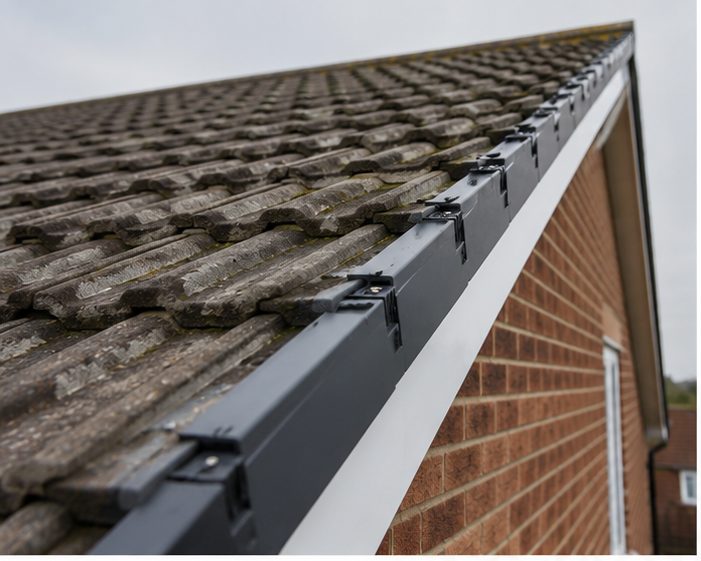
A dry verge uses mechanically fixed units that run along the roof edge, with a cap or tile-end piece finishing the line. There is no mortar to crack. The pieces sit tight against the tiles and the wall, so the edge is closed to weather as well as to wings, and the whole run is fixed to the maker's guidance. The result is a clean line along the gable that looks neat from the ground and gives nothing for a nest to grip.
What is already inside
If creatures have already been using a gap, we deal with the edge sensibly. Nests are not disturbed while they are in use, and nothing is sealed in. Where a wasp or bee nest is involved, it is better to have a pest specialist treat it before the verge is worked on, and we can tell you when that applies.
- Look for birds repeatedly flying into the same spot at the gable
- Notice insects entering at the roof edge
- Look for straw, twigs or droppings on the ground below
- Watch for crumbs of mortar lying on paths and drives
What a dry verge will not do
It stops access at the edge, not elsewhere. Gaps under ridge tiles, eaves, soffits or round flashings can still be used if they are open, and a dry verge does not cure a roof that is failing in another place. We look at the whole edge and the roof around it when we advise. Our job is to look at the whole edge honestly and tell you what is and is not covered by the verge.
Matching it to your roof
Compatibility depends on the tile profile, and some roofs suit a dry verge better than others. We check this on site before recommending anything. Stone and tile roofs in Keynsham are not all alike, so the units are matched to what is actually there. A dry verge suits new roofs, re-roofs, and repairs where the mortar has failed. Our advice is plain: if the mortar has failed, a dry verge is a sound way to close the edge for good.
Frequently Asked Questions
Will a dry verge stop bees and wasps?
It removes the open mortar gaps they commonly use at the gable edge, which helps a lot. It cannot stop them nesting elsewhere on the house, so other openings such as eaves should be sound as well.
What if birds are already nesting at my verge?
We would not seal an active nest. Wait until it is finished with, or arrange for a specialist where insects are involved. Once the edge is clear, the dry verge closes it for the future. If in doubt, ask us and we will explain what we find.
Does a dry verge need ventilation gaps for birds?
No. The roof space is ventilated at the eaves and ridge, not at the verge. Closing the verge keeps the weather and animals out while the roof still breathes where it is meant to. If in doubt, ask us and we will explain what we find.
Talk to our team about dry verge systems in Keynsham
Every roof is different — the fastest way to get an accurate answer is a quick chat with our team.