
A roof leak rarely stays small. In Montpelier's Victorian terraces and converted flats, water can travel a long way before it shows, so an early look usually means a smaller repair and less to dry out.
There is no safe waiting period for a roof leak, because damage starts the moment water gets past the covering and into timber. What changes is how quickly it spreads. In Montpelier, where many houses are tall Victorian terraces split into flats, a leak can run unseen for a long while before anyone notices it.
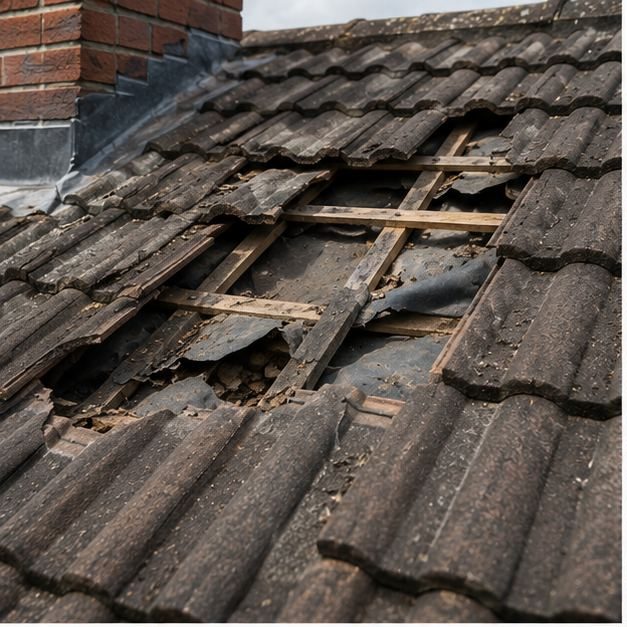
Damage starts before the stain appears
A ceiling mark is the last stage, not the first. Water gets through the tiles or slates, runs along the felt and battens, soaks into rafters and only then finds a way down. By the time a patch shows on a bedroom ceiling, the timber above may have been damp for a good while. How fast it worsens depends on how much water gets in, how often it rains and how well the roof space can dry out.
What the water reaches first
In tall terraced houses the roof space is often shallow and divided by chimney breasts and party walls, so damp timber tends to stay damp. The parts that suffer first are usually the ones nobody sees from the landing, and by the time they show, the repair has grown beyond a few tiles.
- Rafter ends and wall plates that stay wet and begin to soften
- Insulation that clumps, stops working and holds moisture against timber
- Ceiling plaster that loosens and eventually drops
- Wiring and fittings sitting in a damp loft
Flats, shared roofs and who notices
Many Montpelier houses are now divided, so the roof may sit over a top-floor flat while the occupant of the lower flat never goes near the loft. A leak can soak the upper ceilings for some time before it is reported. Where one roof covers several homes, a slow leak becomes a shared problem, so it is worth telling the other occupants and the landlord early rather than waiting for the next downpour.
What you can safely do from inside
Stay off the roof and leave any outside checking to us. From inside, catch drips, move belongings out of the way and note where and when marks appear, particularly after heavy rain or wind. If there is a loft hatch you can reach from the landing, a torch look for daylight, dark patches or stained felt is all that is needed.
- Put a bucket under any drip and protect floors and furniture
- Photograph stains and note the date and weather
- Keep clear of light fittings if water is near a ceiling rose
- Do not climb up to look; call us for a proper look
What we do when we come out
We look at the roof as a whole, inside and out, because the hole is rarely directly above the stain. Slipped tiles, cracked slates, tired lead around a chimney or bay and open ridge bedding are the usual culprits on older roofs. We tell you what is urgent, what needs a temporary fix, what can wait, and what we would do to stop the leak properly.
Frequently Asked Questions
Is a small drip an emergency?
Not always, but it should not be ignored. A small drip means water is already in the structure. Contain it, protect the room and arrange a look promptly, particularly if it is near wiring or comes back every time it rains.
Will the ceiling stain go away on its own?
A stain only dries once the source is stopped, and it may still mark the paint afterwards. If it keeps appearing or grows after wet weather, the leak is still active and the roof needs checking before any redecorating starts.
Does a leak only show when it is raining?
No. Water can sit in felt, insulation and timber and drip out well after the rain has stopped, or only appear with certain wind directions. That is one reason the visible mark can seem unrelated to the weather outside.
Talk to our team about roof repairs in Montpelier
Every roof is different — the fastest way to get an accurate answer is a quick chat with our team.