
Cracked verge mortar leaves gaps that birds, wasps and bees can use. A dry verge closes the edge with fixed units. Here is what that means at the gable ends of Montpelier's Victorian roofs.
The verge is where a roof stops at a gable, and old mortar there tends to crack and fall away. Those gaps become nesting spots. A dry verge replaces the mortar with fixed units that close the edge. On Montpelier's tall gable ends, that is a tidy answer, though it is no cure for every roof problem.
Why failed mortar invites visitors
Wet mortar shrinks, cracks and eventually drops out. What is left is a series of small openings between the tiles and the wall, sheltered and dry, ideal for sparrows, starlings, wasps and bees. Once something moves in, the gap widens, and nesting material can also block the airflow at the edge and hold moisture against the timbers.
In older Victorian roofs the gap can run back under the tiles along the wall, so the nest is out of sight and only noticed when twigs, droppings or buzzing start to show at the edge. By then the gap has usually widened, and rain has been getting in alongside the visitors for some time.
What a dry verge changes
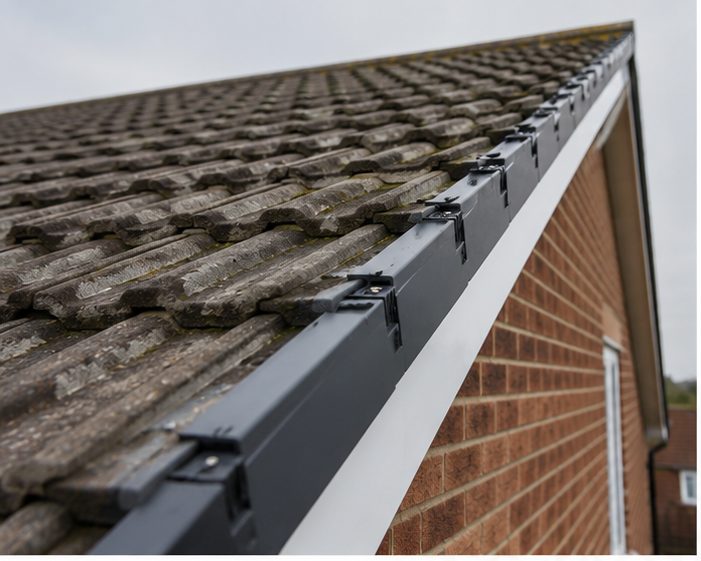
A dry verge uses mechanically fixed verge units and tile-end or cap pieces. Because they are fixed to the roof edge and meet the tiles snugly, they leave far fewer gaps than crumbling mortar. That means nowhere easy for birds to nest, nowhere for wasps to start a nest in the roof edge and less route for wind-driven rain.
- Fixed units close the gap between tiles and wall
- No mortar to crack, shrink or drop out
- Edge stays tidy and firm in wet and windy weather
- Fewer sheltered openings for nesting
What to do if something is already there
If a nest of birds or insects is already established, it needs dealing with properly before any work starts. We do not disturb a nest while birds are using it, and for insect nests a pest controller may be the right call. We can then plan the verge work once the edge is clear.
Once the edge is cleared, the opening is closed up with the new units so the same space cannot be reused next season. We also clear any leftover nesting material, because it holds moisture against the timber and tiles and invites the next arrival back to the same spot.
Where it fits on Montpelier roofs
Plenty of the houses here are terraces with party walls, so the verge is mainly a matter at end-of-terrace houses, villas and extensions with a gable. Falling mortar on a path or drive is a typical first sign. A dry verge is fitted to the tile maker's guidance, and which system works depends on the tile profile, which we check on site.
What it will not do
A dry verge keeps the edge closed, but it does not mend a roof that is failing elsewhere. Slipped tiles, tired ridge bedding or flashing faults still need their own attention. We look at the whole roof so the verge sits on sound ground, and tell you what else we see before recommending the work.
Frequently Asked Questions
Will a dry verge stop birds nesting under my tiles?
It makes it much harder. The fixed units and cap pieces leave very few gaps at the roof edge for birds to use, though no roof edge can be called completely sealed. Existing nests are dealt with before work.
Can wasps still get in at the verge?
Far less easily, because the edge is closed by fixed units rather than crumbling mortar. If wasps are already using a gap, the nest needs removing first, then the verge can be sealed off properly.
Do I need a dry verge if the mortar is only slightly cracked?
Not always. Light cracking can sometimes be repaired, but if mortar is falling out, a dry verge removes the problem rather than patching it. We look at the edge and tell you honestly which makes sense.
Talk to our team about dry verge systems in Montpelier
Every roof is different — the fastest way to get an accurate answer is a quick chat with our team.