
There is no safe waiting time for a leak. What matters is where the water goes, what it soaks into, and how well the height and size of an older Redland house hide it.
A small drip in a Redland villa can be doing slow harm long before a stain shows. Water runs along timbers and felt before it reaches a ceiling, so the damp patch is rarely under the fault. Here is what decides how much harm a leak does, and what to do while you wait for a visit.
Why the stain is only the last stop
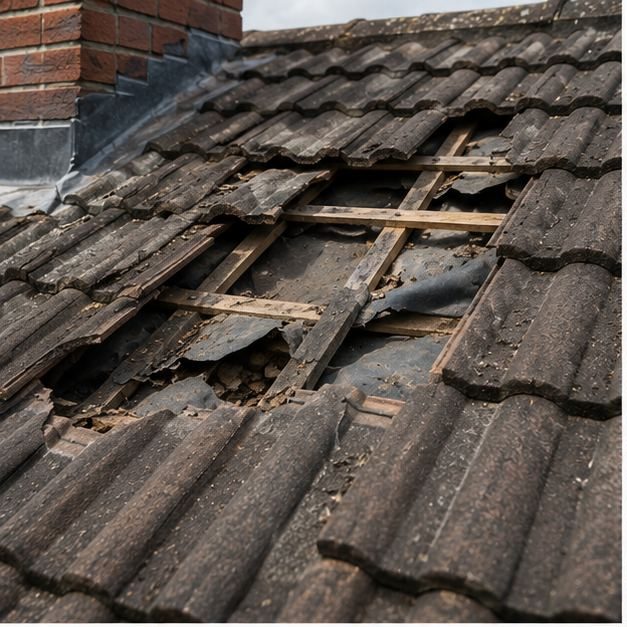
In a big Victorian or Edwardian house the roof space is large and the rafters are long. Water entering at one point can track down a rafter, across a purlin and along old felt before it drips. By the time you see a mark, the timber has often been damp for some while, which is why we trace the entry point rather than patch the stain.
Older roofs also have more places for water to hide. Boxed-in gutters, deep valleys and thick walls around chimneys can all carry water a long way sideways. That is one reason a leak that seems minor can be wetting a large area, and why we look at the whole run of roof above the stain, not only the spot.
What decides how quickly damage builds
Three things matter most: how much water gets in, whether it returns with every shower, and what it lands on. A steady trickle onto bare timber is worse than one wet night. Insulation, plaster and old lath soak water up and hold it, so a ceiling can look dry while the material above stays wet.
- Rain that returns every few days keeps timbers wet and never lets them dry
- Water on insulation spreads sideways and hides itself from view
- A leaking lead gutter or valley can wet brickwork and wall plaster too
- Wind-driven rain finds gaps that a gentle shower would miss
Signs it has already gone on too long
Peeling paint on a bedroom ceiling, a musty smell in the top room or a soft patch of plaster all suggest the water has been arriving for a while. In the loft, dark staining on timbers, damp insulation and a smell of mould say the same. None of this means the roof is finished, but the visit should not wait.
What to do while you wait for us
Stay inside and keep to the ground. Put a bucket under any drip, move furniture and electrics clear and lay a towel to protect the floor. If the loft hatch is easy to reach, look for daylight, wet timber or damp insulation and take a photograph. Never go onto the roof yourself. Then call us for a proper look.
What we check and fix when we come
We start with the likely sources: slipped or cracked tiles, ridge and hip bedding, lead flashings, valleys and the lead-lined gutters common on houses of this age. Then we follow the water back through the loft. Many leaks turn out to be a small repair; where the covering has failed more widely, we say so plainly and explain the choice.
We also explain what can wait and what cannot. A missing tile before a dry spell is a different matter from a failed lead flashing above a bedroom. You get a plain order of priority, so you can decide what to do now and what to plan, without pressure to do more than the roof needs.
Frequently Asked Questions
Is a slow drip an emergency?
Not always an emergency, but not something to leave. A slow drip still wets timber and insulation every time it rains. If water is near light fittings or a ceiling is bulging, treat it as urgent, keep clear of the room and call us straight away.
Will the ceiling dry out once the leak stops?
Surface damp often fades once the water stops, but plaster, lath and insulation can stay wet for a good while. Stains usually need sealing and repainting afterwards. Timber that has been wet for long enough may need checking for rot, which is why the source is fixed first.
Can I leave it until the weather is better?
Dry weather hides a leak rather than curing it. The fault is still there for the next storm, and wind-driven rain tends to find it quickly. A dry spell is actually a good moment to book a look, because the loft and roof are easier to read and repair.
Talk to our team about roof repairs in Redland
Every roof is different — the fastest way to get an accurate answer is a quick chat with our team.