
A dry verge closes the gap at a gable edge that old mortar leaves open. Here is what that means for birds, bees and wasps, and where they may still try elsewhere.
At the gable edge of a Redland house, old mortar cracks and falls out, leaving holes that birds and insects find quickly. A dry verge replaces that mortar with fixed units that close the edge. This guide looks at what changes for the wildlife, and what does not.
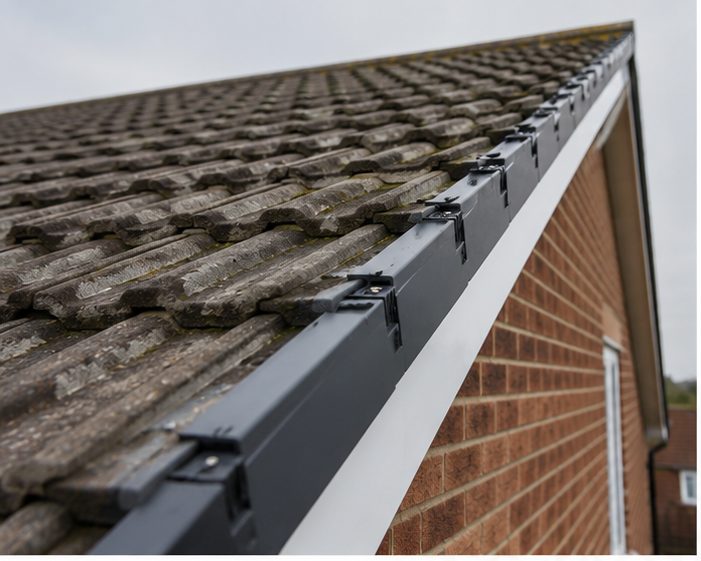
How the gaps appear
Mortar along a verge is rigid, while roofs move with the weather. Over time it cracks, loosens and drops away, often landing on paths and drives. The gaps behind it open into the space under the tiles, a dry sheltered spot that starlings, sparrows and some insects find ideal.
Starlings and sparrows return to the same spot, so a closed edge also stops them coming back each season. Their droppings and nesting material can block gutters and stain walls, so keeping them out helps the rest of the roof edge too.
What a dry verge does at the edge
Mechanically fixed verge units and end pieces sit tight against the tile ends, with no mortar to fail. The edge stays closed, so birds have no hole to enter and insects have no cavity to settle in. Wind and rain also meet a solid edge rather than a crumbling one.
- No mortar means no cracks for nests to start in
- Fixed units follow the line of the roof edge neatly
- The sealed edge keeps out weather as well as animals
- Tile-end pieces close the small gaps along the verge
Nests that are already there
Before any verge work we look for nests or a colony. If birds are nesting, we do not disturb an active nest, and we agree with you how to proceed. Insects in a cavity are a different matter; we advise you on the safest route for a pest control visit first.
What a dry verge cannot stop
It deals with the verge only. Gaps at the eaves, under ridge tiles, around chimneys or in soffits can still let animals in. We look at the whole roof edge when we are there, and tell you if other areas need attention so the work is not undone.
Checking the fit on site
Dry verge systems must suit the tile profile and be fixed to the tile maker's guidance, so we check compatibility on the day rather than assume. If a roof is failing elsewhere, we say so, because a new verge is not a cure for a tired roof.
If you have seen birds going in and out at the gable end, tell us where. It helps us find the gap and confirm the work covers the right place. Photographs from the ground are plenty; please do not go near the edge to look.
Frequently Asked Questions
Will birds nest under a dry verge?
They are far less likely to, since the gap they rely on is closed. A dry verge leaves no open cavity at the roof edge. Birds can still try other gaps, so we check eaves and ridge ends while we are there.
Do bees or wasps use a mortar verge?
They can. Cracked mortar creates sheltered pockets that some insects use as a nest site. Closing the edge with fixed units removes those pockets, though a nest already in place should be dealt with before the work starts.
Does a dry verge stop the roof space ventilating?
A dry verge is designed to close the edge against weather, birds and insects without relying on gaps for airflow. Roof ventilation is provided at the eaves and ridge instead, which we check as part of the overall roof.
Talk to our team about dry verge systems in Redland
Every roof is different — the fastest way to get an accurate answer is a quick chat with our team.