
A single tile out of place usually has a reason behind it. This guide covers the common causes of slipped and cracked tiles on older and newer homes, and how we put them right.
Tiles do not slip for no reason. Something has let go, whether that is a rusted nail, a broken tile batten, a frost-damaged tile or simply years of wind working at an exposed edge. Barton Hill has Victorian roofs, later council-built houses and plenty of outbuildings, so the causes vary. Finding the real reason matters more than replacing the one tile you can see.
Fixings that have given up
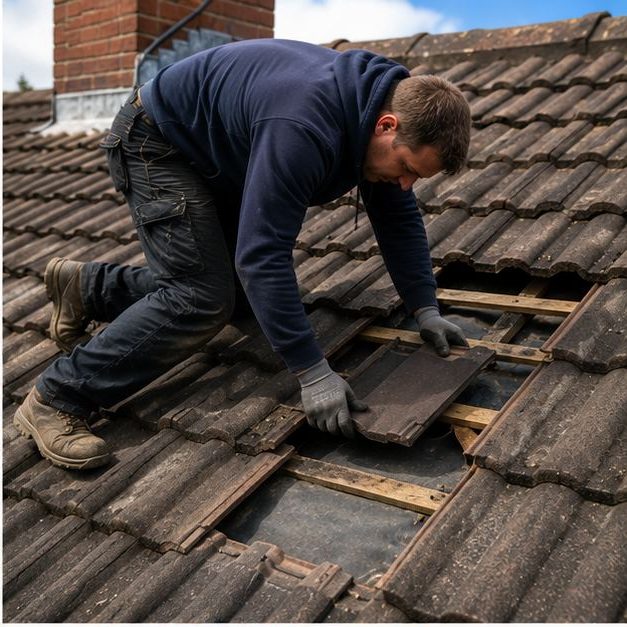
On older roofs the nails or clips holding tiles in place can corrode, and the timber battens beneath them can soften. The tile still looks fine until a gust lifts it a few millimetres and it slides out of line. When we see one slipped tile we always check the ones either side, because they are often held by the same tired fixings.
Fixings fail more often than people expect, and the tile itself may be perfectly good. That is why we refix rather than simply swap pieces over, and why we check the battens and felt under each repair before closing the area back up.
Cracks from frost, knocks and movement
Tiles absorb a little water. When it freezes and thaws repeatedly, the surface can flake or split, particularly on older clay and concrete. Branches, ball games and careless access for aerial or chimney work can also crack tiles that look intact from below.
Cracks often show as dark lines or a dropped corner when seen from below. A cracked tile may keep out rain for a while, but water will find its way in eventually, usually during the next hard downpour, and then the felt and timbers underneath start to suffer too.
Wind, exposure and roof edges
Tiles at ridges, hips and edges take the most wind, so they work loose first. Roofs near open ground between older industrial sites and housing can catch more gusts than sheltered streets. A lifted course at the edge can let wind get underneath and strip more. That is why edge tiles and ridge pieces get a close look on every visit.
Signs you can spot from the ground
You do not need to be on the roof to notice trouble. Look for a tile sitting proud of its row, a visible gap, a dropped corner, or broken pieces in the gutter or on the ground. Inside, check the loft for daylight or damp patches under the affected area.
- A tile that sits lower or higher than its neighbours
- Fragments of tile in gutters, yards or flower beds
- Daylight showing through the loft covering
- Damp marks on rafters or felt below a suspect area
How we repair them
We lift the surrounding tiles carefully, replace broken ones with a close match, refix the slipped ones properly and check the felt and battens beneath. If the felt is torn or the timber is soft we deal with that too. Where many tiles are failing across a slope we will say honestly if patching is no longer sensible.
Frequently Asked Questions
Can a cracked tile be repaired rather than replaced?
Rarely in a way that lasts. Sealing a crack from above can trap water and hide a worse problem. A broken tile is normally lifted out and replaced with a matching one, and we check the felt under it at the same time.
Why do tiles keep slipping in the same place?
Usually the fixings or battens in that spot have weakened, or the area is more exposed to wind. Putting the tile back without fixing that cause means it slips again. We look at what is holding the tiles, not just the tiles themselves.
Will matching old tiles be difficult?
Sometimes, particularly on older roofs where the tile has weathered. We look for a close match in size, colour and profile, and we may take sound tiles from a less visible slope. We explain the options before starting.
Talk to our team about roof repairs in Barton Hill
Every roof is different — the fastest way to get an accurate answer is a quick chat with our team.