Repairs on Barton Hill's older and newer homes
Victorian terraces in this part of east-central Bristol typically have slate or tile roofs with chimney stacks, party walls and lead flashings that have been patched over many decades. Those joints are the first places we check, because old lead splits and lifts long before the tiles themselves give out. Wherever the roof backs onto a neighbour, we pay attention to the shared wall and gutter line.
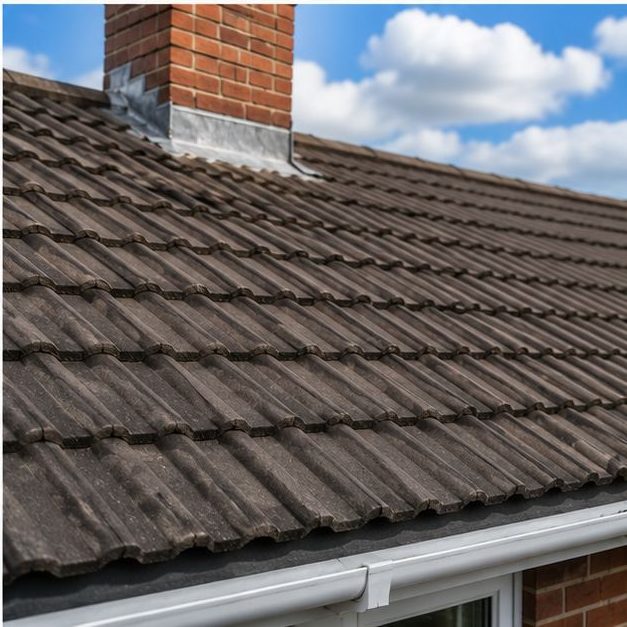
The later council-built houses have plainer roofs, often concrete or clay tile, with ridges and verges that were bedded in mortar. As that mortar ages it cracks and drops out, so ridge and edge repairs are a regular part of what these roofs need. These repairs are usually quick and make a big difference to how well the edge sheds water.
Many properties also have flat-roofed extensions and outbuildings alongside, and the point where a pitched roof meets one of them is a frequent leak. Water runs down the slope and straight onto that junction, so we always look at it. We give that junction the same attention as the main slope, as the repair has to hold both together.
Roof repairs we carry out in Barton Hill
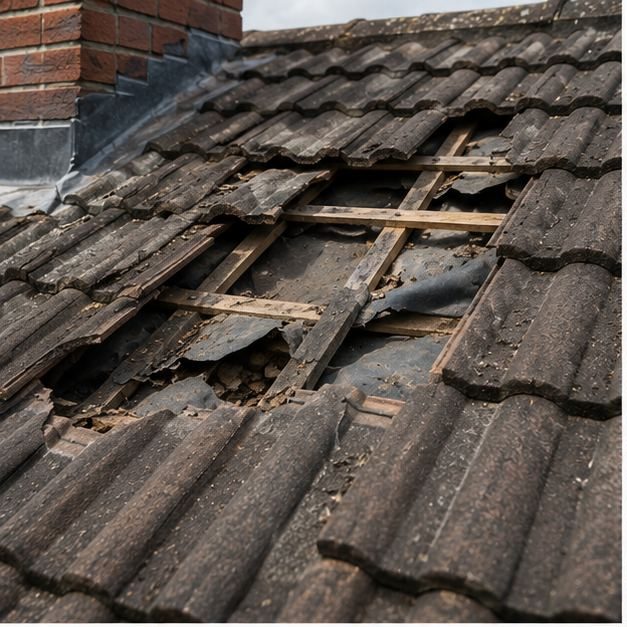
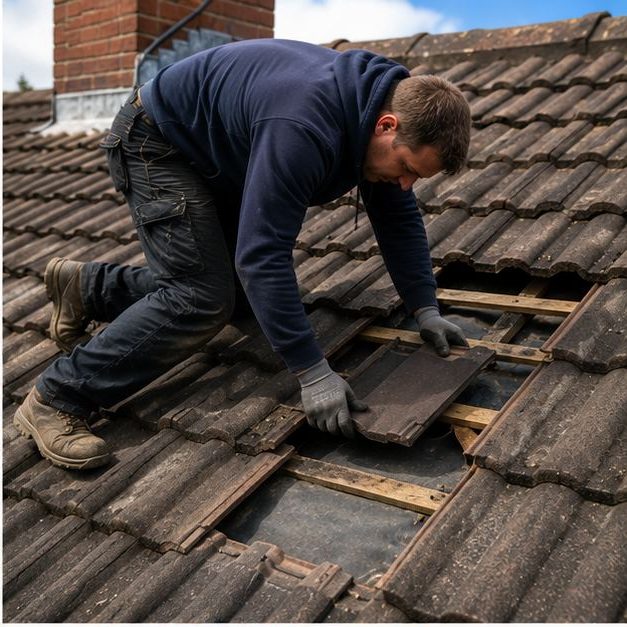
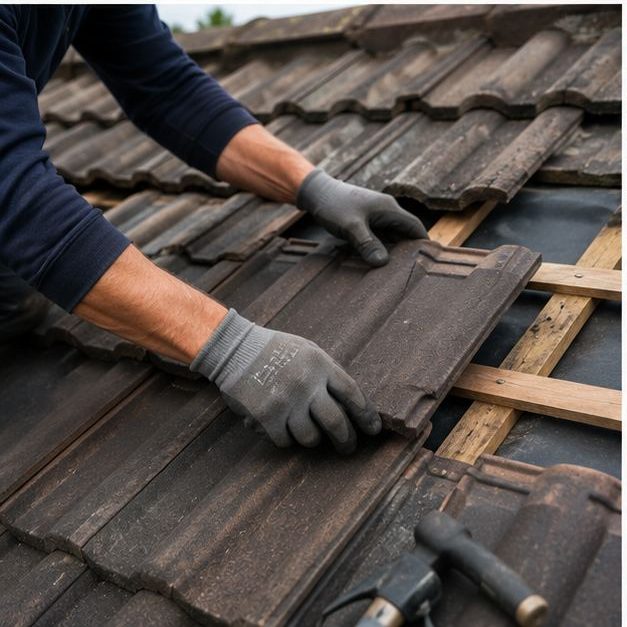
- Slipped and missing tiles. Tiles that have slid, cracked or gone missing are replaced or re-fixed, and the battens and felt beneath are checked before the roof is closed up.
- Broken or loose slates. On older terraces with slate roofs, damaged slates are replaced one by one with a matching size, keeping the courses tight and watertight.
- Ridge and hip re-bedding. Ridges and hips whose mortar has cracked and fallen are rebedded or refixed, which is a regular repair on the later council-built roofs.
- Lead flashings and valleys. Flashings around chimneys, party walls and valleys are repaired or renewed, as these joints are where terrace roofs most often start to leak.
- Verge and gutter-edge repairs. Roof edges where mortar has failed or tiles have lifted are made good, and the gutter edge checked so water runs off the roof properly.
- Leak tracing and storm repairs. Leaks are followed back along timbers and felt to the true entry point, and storm-loosened coverings are secured and replaced.
How we approach repairs in Barton Hill
We begin outside and in the loft together. From outside we look at the covering, ridge, flashings and gutters. Inside we look for stained felt, damp timbers and daylight, because the visible leak is often some way from where the water first enters the roof. We also note the state of the gutters, since a blocked one can soak the roof edge and cause its own damage.
Then we explain what we found in plain language: what is failing now, what is only ageing, and whether a repair or a larger job is the honest answer. You decide what happens next, with the reasons in front of you. We aim to leave you with a clear idea of what is needed and what is not.