
Ridges and flashings take the worst of the weather and the least attention. Here is what repairs to them actually involve on the roofs found across Henleaze, and how to judge a sensible job.
The ridge along the top and the lead where a roof meets a wall or chimney are the two details most likely to let water in on an older house. Henleaze has plenty of Edwardian and inter-war roofs where both have aged. This guide explains what we look for, how each repair is done, and when a patch is not enough.
What the ridge does
The ridge is the line of capping tiles where two slopes meet. Each one sits on a bed of mortar or a dry-fixed system, and together they keep rain out of the roof's highest point. Over time mortar shrinks, cracks and crumbles, and the tiles loosen. On a windy day a loose ridge tile can shift or fall, so cracking or gaps at the top are worth acting on early.
How a ridge repair is carried out
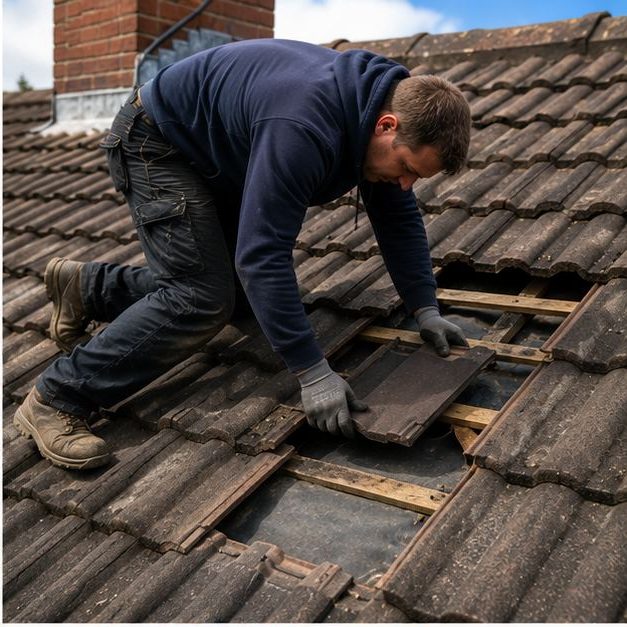
We lift the affected capping tiles, rake out failed bedding, and clean the surfaces. Tiles are re-bedded on fresh mortar and pointed, or fixed with a mechanical system where that suits the roof. Hips are treated the same way. We replace any cracked tiles with a close match, and check the felt beneath, because a tired ridge often means the underlay has been getting wet.
- Loose or cracked capping tiles replaced
- Failed mortar removed and re-bedded
- Hip ends and ridge ends checked and secured
- Underlay below the ridge inspected for damp
Why lead flashings fail
Lead is long lasting but it moves with heat and cold, and over time it lifts, splits or pulls out of the wall joint. Around chimneys on larger Henleaze houses, flashings are often old and have been smeared with sealant, which hides the problem rather than fixing it. Water gets behind, runs down inside the chimney breast, and shows as a stain well below the roof.
What a flashing repair involves
We assess whether the lead is sound enough to refix or needs replacing. Refixing means dressing it back, wedging it into a clean joint and pointing it properly. Replacement means new lead cut and dressed to suit the junction, with the soakers or step details done correctly. We steer away from surface sealant as a lasting answer. It is a stopgap at best, and we tell you when that is all a job allows.
- Chimney stacks and their aprons
- Abutments where roofs meet walls
- Valley gutters lined with lead
- Dormer and loft conversion junctions
What to ask before agreeing work
Ask how many tiles are being re-bedded, whether lead is being renewed or only sealed, and what the roof is like beyond the repair. A clear written description of the work should say what is replaced. Where work may need planning or Building Regulations checks, we advise before work starts.
Frequently Asked Questions
How can I tell if my ridge needs attention from the ground?
Look for dark lines or gaps along the top, tiles sitting out of line, or crumbs of mortar on paths and in gutters. Binoculars from the garden help. Do not climb up. Photograph anything you see and call us for a proper look.
Is sealant on flashing a proper repair?
Usually not. Sealant skins over and cracks as the lead moves, and it can trap water behind. It buys a little time on a minor fault, but sound flashing needs to be properly dressed and fixed into the wall, or replaced where it has failed.
Do ridge repairs need scaffolding?
It depends on the height and the extent of the work. A few tiles near an easy edge may be reachable with safe access, while a full ridge or chimney job on a taller house usually needs scaffold. We confirm access and how it is arranged before starting.
Talk to our team about roof repairs in Henleaze
Every roof is different — the fastest way to get an accurate answer is a quick chat with our team.