
A bit of peeling paint does not always mean new boards, and a repair on rotten timber is wasted effort. Here is how the decision gets made on a Henleaze roofline.
A fascia can look tired for many reasons, from flaking paint to real rot behind the surface. Whether to repair or replace depends on what is underneath. Across Henleaze, where timber boards on Edwardian and inter-war houses are common and mature trees keep gutters wet, we see both situations. This guide sets out how we judge it.
What we check from the ground
We start with the boards themselves: peeling paint, dark staining, open joints and gutters pulled away. We then look at the gutter line, because a leaking joint above a fascia is often the reason it is rotten. Stains on the wall or the soffit beneath also give clues about how long water has been getting in. Photographs taken from the garden help us arrive prepared.
When repair is reasonable
If the boards are sound and the trouble is limited to a short length, a repair can work. We cut out any soft section, splice in sound timber or board, and refit the gutter. Where the fault is a leaking gutter joint, correcting that is part of the job. A repair only makes sense if the rest of the roofline is in good order, because the next length may be affected soon.
- Isolated section of damaged board
- Sound timber beyond the damaged area
- Gutter fault that can be corrected
- Rafter ends dry and firm
When replacement is the better answer
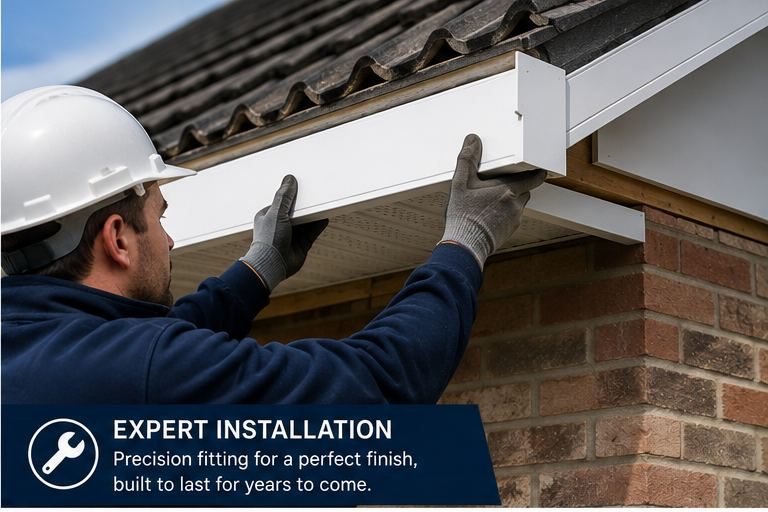
Where timber is soft across much of the roofline, or the soffits are also failing, patching just delays the work and the scaffold cost is repeated. Replacement takes off the old boards and gutters, checks rafter ends and eaves, and fits new fascias, vented soffits or vent strips and gutters. A UPVC roofline is very low maintenance and does not need repainting. Doing the whole roofline at once also means scaffold is only needed once.
What we look for under the boards
Once boards come off, we inspect the rafter ends. If they are damp or decayed, they are treated or repaired before new boards go on. Older Henleaze houses may have soffits we cannot identify by eye alone, so we check what the existing boards are made of before disturbing them, and take the right precautions if needed.
Choices and practicalities
Replacement needs scaffold for safe access. White is the usual finish, though darker colours and wood-effect finishes are available and can suit period houses well. Ask for a written description that lists boards, soffits, vents and gutters separately. Where work may need planning or Building Regulations checks, we advise before work starts. A clear written list avoids surprises on the day.
Frequently Asked Questions
Can I just repaint a flaking timber fascia?
If the board is sound, a proper clean, treatment and repaint can do the job. If it is soft or splitting, paint only hides the problem. We press-test and inspect before suggesting either route.
Why do some fascias rot even though the house is not old?
Water sitting behind a gutter, blocked downpipes or a poorly sealed joint can soak boards quickly. Trees dropping leaves into gutters make it worse. The age of the house matters less than whether water is lingering.
Will new fascias fix the roofline on their own?
They help only if the gutters, soffits and rafter ends are also sound. A new board on a leaking gutter will suffer in time. That is why we look at the whole roofline and renew the parts that need it together.
Talk to our team about UPVC fascias and soffits in Henleaze
Every roof is different — the fastest way to get an accurate answer is a quick chat with our team.