
After a storm, keep to the ground and the rooms below, note what you can see, and get the damage assessed. Here is a sensible order for terraced homes with small yards.
A gale across the rooftops of Redfield can strip a few tiles from one terrace and leave the next row untouched. Because the houses are packed close, a loose piece on one roof can land in a neighbour's yard. Knowing what to do straight away limits the damage and keeps everyone safe.
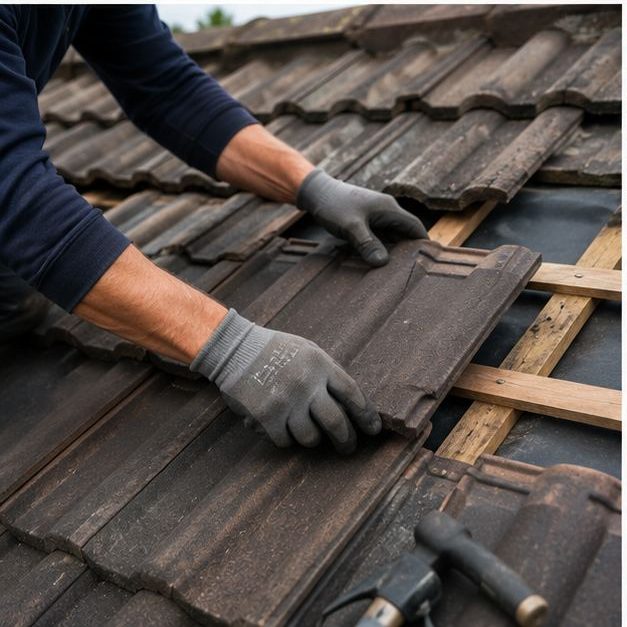
Look from where you can stand safely
Step outside, or look from an upstairs window, and check the roof lines in front and behind. Small yards give limited sight of the back slope, so use a window if you can. Keep clear of the foot of any wall with loose material above, and warn neighbours if you see something precarious on their side.
- Tiles or slate fragments in the yard or gutters
- Chimney pots, flaunching or cappings that look disturbed
- Bay roofs with lifted lead or sagging edges
- Rear extension coverings flapping or lifted
Protect the rooms beneath
If water is coming in, move furniture, lift rugs and put containers under drips. Switch off lights on any wet ceiling. In a typical terrace, the front bedroom and the landing at the top of the stairs are the first places to show a leak. Take photographs of any marks and note the time they appeared.
Check also that nothing wet is touching electrics or running down a wall near a socket or switch. If you smell damp or notice sparking, keep away from the area and call a qualified electrician as well as us. Safety indoors comes before anything else.
Why you should not go up there yourself
It is tempting to reach for a ladder or a tarpaulin, but wind-blown roofs and slick slates are where people fall. In narrow yards, ladder footing is poor and nothing is level. Safe temporary cover needs proper access and the right fixing. Leave it to us and concentrate on keeping the inside dry.
Our first visit
We check the main roof, then the details that storms like to attack, including chimneys, flashings, bay tops and the back extension. Limited rear access in Redfield means planning ladders, towers or a route through the house. If water is entering, we make the area watertight first, then talk through the permanent repair.
You will get a clear explanation of what is urgent and what can wait. If several small defects have appeared at once, we list them in order, so the ones letting water in are dealt with first and the rest are planned at a sensible pace.
Permanent repairs and paperwork
Permanent repairs might involve replacing broken tiles or slates, re-bedding ridges, renewing lead or patching a flat roof covering. Keep your photographs and any notes for your own records. Ask for a written description of the work, how access will be arranged and what will be left tidy when we have finished.
Frequently Asked Questions
Do I need to tell my neighbours?
If debris has landed in their yard, or loose items on their roof threaten yours, it is considerate to tell them. Terraces share walls and often share roof lines, so what happens to one house can affect the next.
What if the damage is only a few tiles?
A small amount of damage should still be checked. A few missing tiles can expose felt and timbers to the weather, and repairs are straightforward when caught early. We repair what is needed and tell you if anything else needs attention.
Is a bulging ceiling an emergency?
Treat it as urgent. Water is collecting above and can bring plaster down. Keep clear of the area, move belongings, and call us. Do not poke it yourself, and keep away from nearby light fittings.
Talk to our team about roof repairs in Redfield
Every roof is different — the fastest way to get an accurate answer is a quick chat with our team.