
Bits of mortar turning up in a yard or on the path are the verge's way of asking for attention. The cause is nearly always the nature of mortar itself, and patching rarely fixes it.
Redfield's Victorian terraces were built with mortar-bedded verges at the gable, and many have since been patched over and over. Each repair sits on a bed that is still moving and weathering. Falling pieces in a small yard or narrow passage are the clearest sign that this is happening.
The nature of the problem
Mortar is hard and brittle. Roofs move with wind, heat and frost, and the stiff bed cracks where the tile meets the gable wall. Water then seeps behind, expands in cold weather and pushes the fragments out. Repointing into old cracked material seldom bonds well, so the same failure returns.
Signs from your yard
In a small terrace yard, falling mortar is easy to notice. Pieces land on paving, in a bin area or on a lean-to roof, and you may see grit in gutters. Looking up from a safe spot, you might see dark gaps, tilted end tiles or exposed felt along the edge.
Terrace gables also sit above neighbours' yards, so a falling lump may land next door. Letting them know is thoughtful, and photographs of what you find help us see how far the failure has gone before we reach the roof and begin looking more closely.
- Grit and lumps on paths, bins or lean-to roofs
- Cracks and gaps along the gable edge
- Edge tiles that tilt or look out of line
- Nests or insects entering at the edge
Why leaving it is a bad idea
As the bed fails, the edge tiles lose their hold and wind can lift them. Water gets to the felt and timbers behind the verge and to the top of the gable wall. Falling material is also a hazard in confined yards where people and children pass beneath.
Birds and insects also find the gaps in a failing bed, and nests at the verge can block gutters and hold moisture against the wall, which adds to the damage and can be unpleasant to clear when the work comes to be done.
A dry verge instead of more mortar
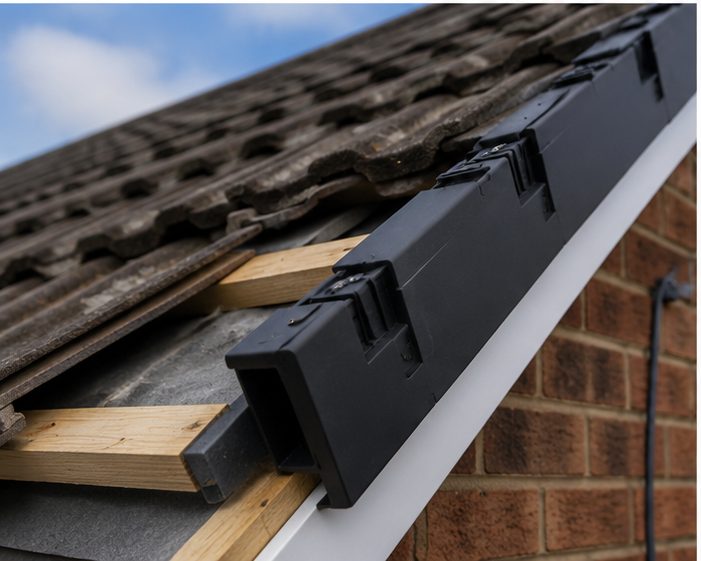
A dry verge replaces the wet mortar with mechanically fixed verge units and tile-end or cap pieces, secured following the tile maker's guidance. There is no mortar to crack or drop, and the edge resists wind better. It also keeps weather, birds and insects out. Whether it suits depends on your tile profile, which we check on site.
Access along a tight terrace is planned before work starts, with the yard and any shared passages protected, and with materials carried through the house or over a safe route if the rear is hard to reach. We explain how it will work before we begin.
What it will not fix
A dry verge is not a cure for a roof failing elsewhere. If the slope is slipping, the felt has perished or flashings are leaking, those problems remain. We look at the whole roof and explain what is urgent and what can wait. Edge work may need planning or Building Regulations checks, and we advise before work starts.
Frequently Asked Questions
Why does fresh mortar fall off again so soon?
It is laid against an old, moving, often damp edge, so it bonds poorly. Frost and wind keep working at it, and it cracks along the same lines. That is why a fixed system is more lasting.
Is falling mortar a sign the gable is unsafe?
Not necessarily, but it means the verge is failing and needs a proper look. We check the top of the gable wall and the tiles at the edge, and tell you whether anything more is required than the verge itself.
Do I need to move anything in the yard before you start?
Clearing the area beneath helps, and we protect paths and bins as best we can. In narrow yards, we plan how materials will be carried through, so we cause the least disturbance to you and to the people next door.
Talk to our team about dry verge systems in Redfield
Every roof is different — the fastest way to get an accurate answer is a quick chat with our team.