
A stain on the ceiling rarely sits under the hole in the roof. This is the order we work in when tracing a leak, and what a careful inspection should cover wherever you are in Henbury.
Water follows timbers, felt and the underside of coverings before it drips into a room, so the damp patch you see may be a long way from the real opening. A proper inspection is about tracing that path back. In Henbury the houses range from older cottages to estate semis, and each has its own usual weak points.
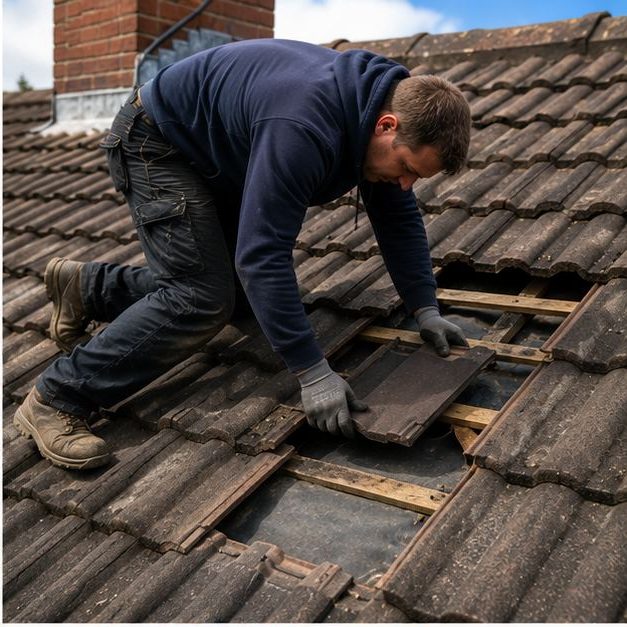
Starting with what you can see from the ground
We stand back and read the roof like a map: missing or displaced tiles, a dipped ridge, a tired chimney stack, gutters that overflow or hang low. Often the culprit shows itself from below, and it tells us where to look harder once we are inside.
If you can, note which rooms are affected and after what kind of weather. That small detail often shortens the search, and it helps us explain our findings back to you in plain terms. Even a rough diary of when the drips appear can point us straight at a particular slope or junction.
The loft check
Inside the loft we look for daylight where there should be none, damp or darkened timbers, wet insulation and stained or torn felt. Following the marks upslope usually leads to the entry point. We also check that the roof space is ventilated, because condensation can mimic a leak.
- Daylight at joints, edges or around chimneys
- Damp patches on rafters, battens or the felt
- Wet or compressed insulation below a suspect area
- Drip marks that run down timbers to a lower spot
The usual suspects on the roof itself
Most leaks come from a short list: slipped, cracked or missing tiles, broken slates, failed ridge or hip bedding, lead flashings that have lifted or split, and valleys blocked with debris. Verge and gutter-edge junctions let water in too. We check each against what the loft told us.
Rooms and ceilings below
Inside the house we note where stains sit, whether they grow after rain or after the heating comes on, and whether walls near chimneys or gables are affected. A stain that appears only in cold weather often points to condensation, not a hole, which changes the repair completely.
- Stains that grow only after heavy rain
- Marks that appear in cold spells without rain
- Damp near chimney breasts or gable walls
What you should receive afterwards
You should get a plain explanation of where the water is getting in, what needs doing now and what can wait, ideally in writing. If a roofer cannot show you the cause, ask again. We would rather explain the fault than sell you a bigger job than the roof needs.
Photographs taken from the loft hatch are handy to keep for comparison later. If a stain changes or spreads, send them over and we will talk through what they show. Keep any before and after pictures with the paperwork so you have a record to refer back to.
Frequently Asked Questions
Should I go onto the roof to find the leak myself?
No. Stay on the ground and in the loft. Take photos of any stains and note when they appear, then call us. That information is genuinely useful, and it keeps you safe while we do the roof work.
Can a leak be found without taking tiles off?
Often the cause is clear from the loft and the exterior view. Where it is not, we may need to lift a few coverings to see the felt and timbers beneath, and we explain that before doing it.
Why does my leak only show in some weather?
Wind-driven rain enters from particular directions, and condensation depends on temperature. Noting the conditions when the stain grows helps us narrow the source, whether that is a flashing, a damaged covering or the ventilation of the roof space.
Talk to our team about roof repairs in Henbury
Every roof is different — the fastest way to get an accurate answer is a quick chat with our team.