
Rot in a fascia board almost always comes down to water that has nowhere to go. These are the usual culprits, and how we stop them coming back.
Timber fascias spend their lives at the wettest part of the house, where the roof sheds water and the gutter sits right against the board. Around Henbury many older houses and estate homes still have their original timber boards, and rot usually begins quietly on the underside or behind the gutter.
Gutters that overflow or leak
A blocked gutter spills over the front and soaks the board from above. A leaking joint drips straight onto the timber below. Either way the fascia stays damp for days after rain, and that is all rot needs. Keeping the gutters running clear is the single most useful thing you can do from the ground. Gutters fixed at the wrong fall hold water, which makes it worse.
Paint that has failed
Timber boards rely on paint to shed water. Once it cracks and peels, the wood drinks up moisture, particularly at the joints and cut ends, where water is drawn in. Repainting at the right moment helps, but it is a recurring job, and neglect for a while is all it takes for decay to start.
- Peeling or blistered paint on the face
- Dark staining at joints and board ends
- Soft or spongy patches visible from the ground
Damp trapped behind and beneath
Water can sit behind the board, where the felt drips into the gutter badly or the back of the gutter is not sealed. It can also gather where the soffit meets the fascia. Poor ventilation then keeps the timber wet because the damp air cannot leave the eaves. The result is a board that looks sound from the front and is wet at the back.
Why rot often hides
The face of a board can look passable while the back, the top edge or the rafter ends behind are soft. Rot also follows the grain, so a patch that looks local may run a long way along the board. This is why we look at what lies behind rather than judging by the paint alone.
- Top edge sitting under the roof felt
- Rafter ends behind the board
- Open joints between boards where water collects
- Corners and returns at gable ends
What replacement changes
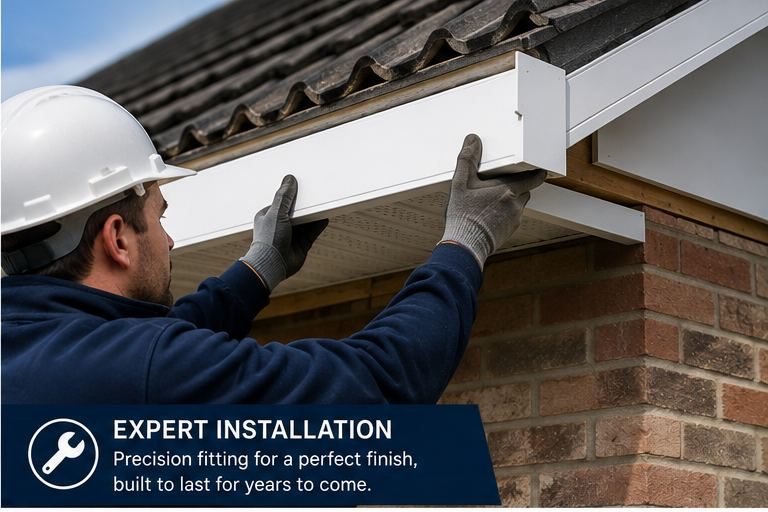
When we replace, we remove the old boards and gutters, check the rafter ends and eaves, and fit new boards with vented soffits or vent strips so the roof space can breathe. UPVC does not need painting, only cleaning, and is very low maintenance. On older homes we check what existing soffit boards are made of before disturbing them. Ask for the rafter ends to be checked and reported on before new boards go up.
Frequently Asked Questions
Is rot always a sign the roof is failing?
No. Often the roof is fine and the cause is a gutter or old paint. But rot can let water into the rafter ends, so it should be dealt with promptly and the roof edge checked at the same time.
Will repainting stop the rot?
Repainting sound timber slows moisture getting in, but it cannot cure rot that is already there. Soft wood should be cut out or the board replaced, then the cause, such as an overflowing gutter, put right.
Why choose UPVC over timber?
UPVC does not rot or need repainting, so it removes the usual cause of the problem. It is cleaned occasionally and comes in white, darker colours and wood-effect finishes. Timber can still be right on some period properties, and we can talk it through. We can talk it through on site.
Talk to our team about UPVC fascias and soffits in Henbury
Every roof is different — the fastest way to get an accurate answer is a quick chat with our team.