
Tiles do not slip or crack for no reason. On Bromley Heath's open, windy edges the causes are fairly predictable, and so are the repairs.
A tile that has slipped or cracked is a symptom, not the whole story. Bromley Heath sits on the north-east fringe of Bristol, with open, windy edges and mostly later 20th-century homes alongside some older cottages. That mix of exposure and age explains most of the loose and broken tiles we are asked to look at.
Wind is the first suspect
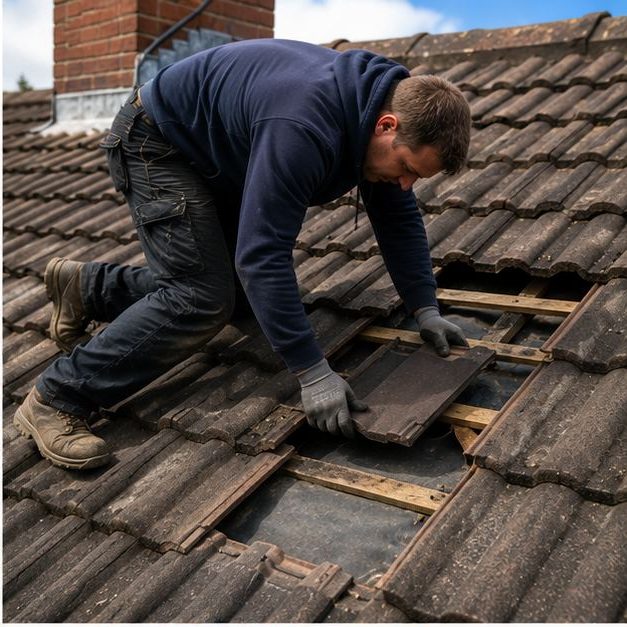
Open ground around the estate edges means gusts hit roofs hard. Wind lifts tiles, rattles them against their fixings and, over many storms, works them loose. The tiles nearest the roof edge and ridge take the worst of it. A tile that has slid a few centimetres down the slope may look minor but leaves a gap for rain. After a gale, the slope facing the weather is where we look first.
Fixings that have given up
Tiles are held on by nibs hooked over battens and, on many roofs, by nails or clips at intervals. Nails corrode, battens dry out and clips weaken. Once a tile loses its hold it slips. Houses built in the later 20th century often have fixings that were light by modern standards, so storm damage tends to show up in patches.
Frost, moisture and ageing
Water soaks into older concrete and clay tiles, then freezes and expands. Over time that opens cracks and flakes the surface. Moss holds moisture against the tile and makes it worse. On older cottages, handmade tiles can be uneven, so they crack where they bear on the battens, even without any sudden impact. Sheltered corners hold damp longer, so moss and cracks often go together.
- Hairline cracks across the tile face
- Flaking or crumbling tile edges and faces
- Moss thick on shaded slopes
- Tiles sitting out of line with their neighbours
Other causes
Walking on the roof, fallen branches, aerials being fitted and poorly done earlier repairs all break tiles. A cracked tile in the middle of the slope is often someone's boot print. That is one reason we ask owners never to go up themselves. The tiles are brittle and the slope is dangerous, and a fall puts you at risk as well as the roof.
How we deal with it
We check from the ground for slipped or missing tiles, then inspect the roof more closely and the loft for daylight or damp. A damaged tile is replaced, loose tiles are refixed and any nearby weakness is noted. If damage is widespread, we say so and discuss whether a bigger repair is more honest than patching. We give you the plain picture so you can decide.
- Replace broken tiles with matching ones
- Refix slipped tiles with proper clips
- Check battens and underlay beneath them
- Advise if the roof is tired overall
Frequently Asked Questions
Can a slipped tile wait?
A slipped tile leaves a gap for rain and it can slide further or fall. It is worth getting looked at before the next storm. Meanwhile, keep clear of the area below. We can often make a quick repair. Slipped tiles can also let water reach the timbers beneath.
Why do tiles keep slipping on one side of the house?
The exposed side takes more wind, and fixings there wear faster. Repeated slipping on one slope often means the nails or battens are weak, not just the tiles. We check what is holding them before refixing. It saves repeating the same repair after each gale.
Do cracked tiles always need replacing?
A hairline crack may not leak yet, but it usually gets worse in frost and heavy rain. We judge it on the roof. A cracked tile that is easy to replace is usually best swapped out.
Talk to our team about roof repairs in Bromley Heath
Every roof is different — the fastest way to get an accurate answer is a quick chat with our team.