Repairing roofs of every age in Downend
On the older Victorian and Edwardian terraces, the usual trouble is worn slates, tired lead at party walls and chimneys, and ridge tiles that have lost their bedding. These roofs have been patched over the decades, so we often find mixed materials that need careful matching. Careful matching keeps the repair looking right as well as working properly.
The inter-war semis and later estate houses bring different problems: slipped or cracked tiles, failing verge mortar and ridges that have started to shift. The coverings are usually more uniform, which helps, but a small fault left alone can still soak the timbers beneath. Dealing with these early is far less disruptive than waiting for the ceiling to show it.
Downend has also seen a lot of extensions and loft conversions. Each one adds a junction where new roof meets old, and those joints are where flashings and valleys tend to give trouble first. We check them as a matter of course on any repair visit. Spotting a failing flashing early often saves a bigger repair later on.
Roof repair jobs we take on in Downend
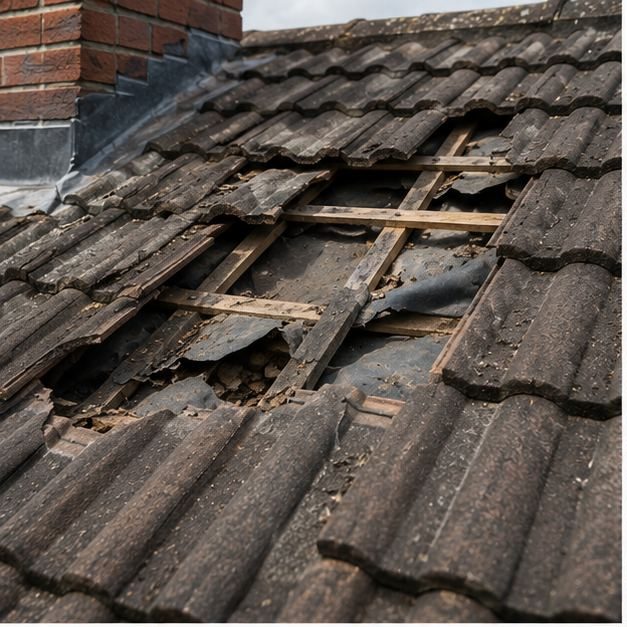
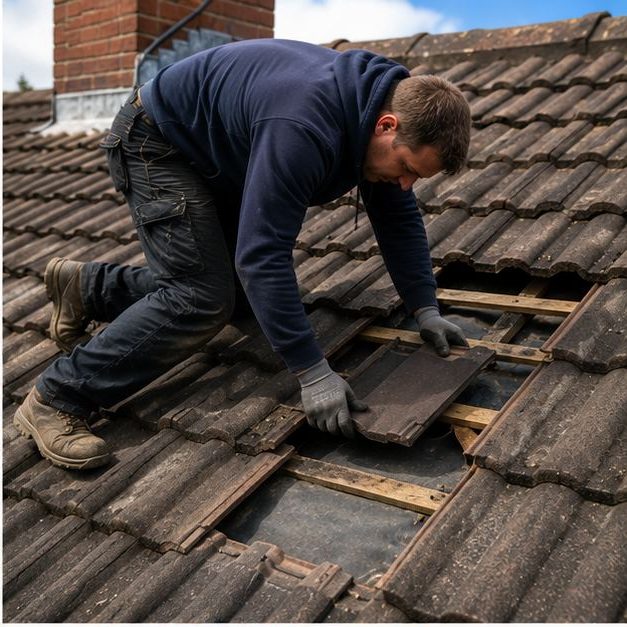
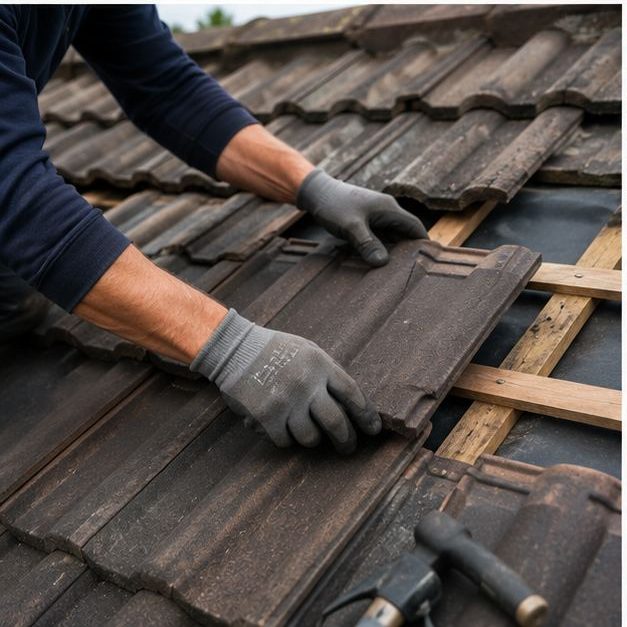
- Slipped and missing tiles. Refixing or replacing tiles that have slid, cracked or blown off, using a close match to the covering already on the house.
- Broken and loose slates. Replacing split or slipped slates on older Downend terraces without disturbing the sound slates around them.
- Ridge and hip re-bedding. Taking off loose ridge and hip tiles and bedding them again so the top of the roof is secure and closed against weather.
- Lead flashing and valley repairs. Renewing lead where roofs meet walls, chimneys, dormers and extensions, which is where many leaks around older homes begin.
- Verge and gutter-edge repairs. Fixing crumbling verge mortar and worn edges at the gutter line so wind and rain cannot get under the covering.
- Storm damage repairs. Putting right coverings loosened or lifted in high winds, and making the roof sound again before the next bad spell.
How a Downend roof repair is carried out
We ask what you have noticed first: where the stain is, when it appears, and whether it follows heavy rain. Then we look at the roof from outside, and from the loft where we can, checking the timbers and felt beneath the leak as well as the covering above it.
You get a plain explanation of the cause, what we propose and whether a repair or a larger job makes better sense. Access is normally straightforward on houses of this kind, and we choose a tower or scaffold to suit. Some work may need planning or Building Regulations checks, and we advise before work starts.