
Leaks do harm from the first wet spell, mostly out of sight. In Downend's altered homes the damage can run along timbers and behind linings before a stain shows.
People often wait to see whether a leak gets worse. The trouble is that the worst of the damage can be hidden above the ceiling long before it appears. In Downend, many houses have been extended or had the loft converted, and those changes give water more places to travel and more finishes to hide behind.
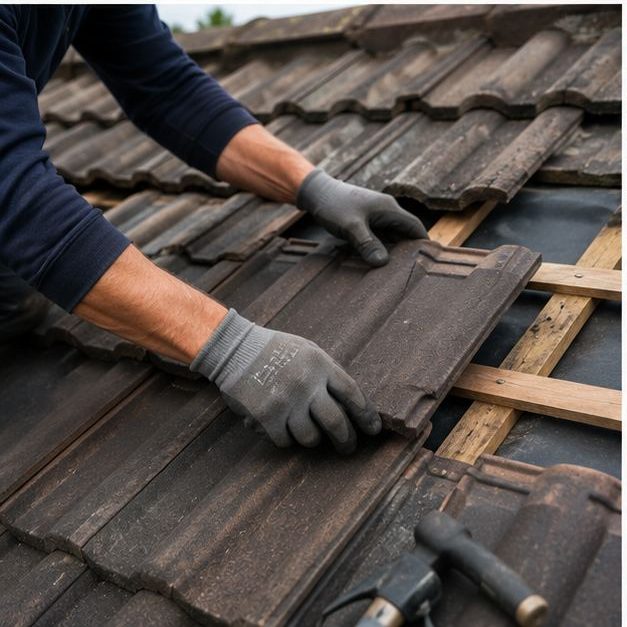
Damage starts before the stain
Water gets in at one point and follows the felt and the sides of timbers before it drips. It soaks insulation, which then holds it against the structure. A ceiling stain is the point where the water finally found a way out. By the time you notice it, timbers and boards behind it may have been wet through several rainy spells. That is why a mark that seems small can sit above a surprisingly wet roof space.
Where it travels in altered homes
Extensions and loft conversions add new joints, lined rooms and sloping ceilings. Water that enters at the join between an extension and an older wall can run along a flat roof deck or behind plasterboard in a converted loft. It may emerge far from the entry point, in a bedroom or stairwell, and be mistaken for condensation.
What gets worse with time
A small opening that is dealt with early stays a small repair. Left, the water works on the structure and fittings around it. These are the common results of leaving it: None of this is dramatic at first, which is exactly why it gets left, but each item costs more to put right than the opening that caused it.
- Soft or rotting battens, rafters and deck boards
- Wet insulation that no longer keeps the house warm
- Plaster and plasterboard that stain, bubble and fail
- Mould on ceilings and in cold corners
- Damp reaching electrics and light fittings
How urgent is yours
That depends on where the water gets in and how much. A dripping ceiling after every shower is urgent. A faint mark that only appears in a gale is less so, but still needs checking. We look at the roof and the loft, tell you what we see and say plainly what needs doing now and what can wait. If the leak is near an extension, a window or a dormer, say so, because those joints are common culprits.
Sensible steps while you wait
Catch drips in a container, move furniture and bedding, and note when the leak happens. Photograph any stains with a date. If a ceiling is bulging with water, keep clear of it and call us rather than trying to deal with it yourself. Never go onto the roof; we will have a proper look. Keep a simple note of dates so we can match them to the weather.
Frequently Asked Questions
Can I wait until the weather improves?
You can, but the water keeps doing harm while you wait, and dry weather will not fix the opening. A prompt look lets us tell you whether it is urgent, and often a small repair now saves a bigger job. In a mixed-age street, neighbouring roofs can differ a great deal.
Will my ceiling show if the roof is leaking?
Not always, or not at once. Water can soak insulation and timber for a long time before a stain appears, especially in lofts and extensions. Dampness in a loft is a sign worth checking.
Does a temporary patch fix a leak?
It may slow it, but it is only a stopgap. The real cause needs finding and repairing properly. We can look at the roof, explain what is wrong and tell you whether it can wait.
Talk to our team about roof repairs in Downend
Every roof is different — the fastest way to get an accurate answer is a quick chat with our team.