
A little attention to a roof now and then usually keeps repairs small. Here is how regular checks pay off on Patchway's semis, extensions and hipped roofs.
Houses across Patchway's inter-war and post-war estates have been through many winters, and most roofs have a few tired spots by now. Small faults left alone tend to grow into larger ones. Regular maintenance is the way to spot them early, when the repair is simple and the damage is limited.
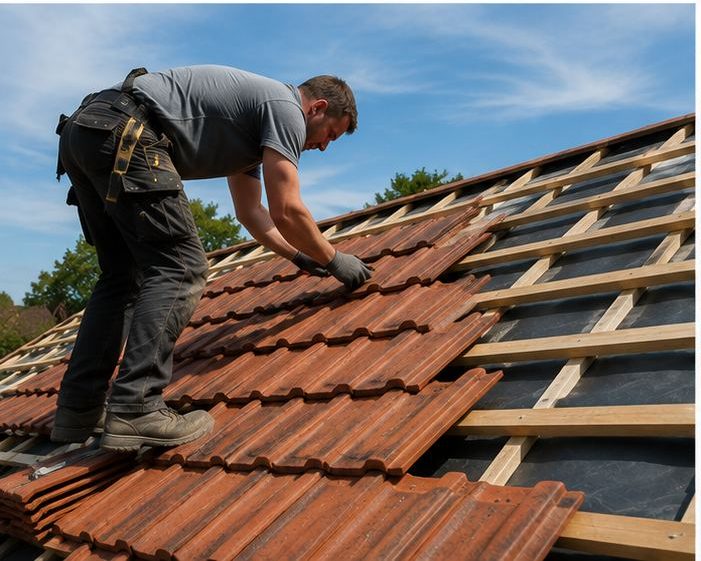
How small faults turn into big ones
A single cracked ridge tile or a lifted flashing lets rain onto the felt and timbers below. Over several storms the damp spreads, battens soften and a ceiling stain appears. By then the job has grown from a quick repair into timber replacement and redecoration. An early visit breaks that chain.
Flat roofs over extensions and garages behave the same way. A blocked outlet or a small split lets water into the deck, and a deck that has soaked through means replacement, not repair. Catching it while the covering is still sound makes all the difference.
Hipped roofs and long runs of eaves
A hipped semi has ridge and hip lines on every side, plus long runs of fascia and gutter. Each is a place where wear starts. A routine look picks up loose ridge bedding, sagging gutters and cracked trims while they are still minor, and means one visit can deal with several small things together.
Wide estate roads mean access is usually easy, which keeps routine work simple and quick. There is rarely a good reason to put off a visit because of awkward access, and a single visit can often deal with several small items together, saving repeat trips.
What a maintenance visit covers
We look at the whole roof, pitched and flat, and report plainly. Tiles, ridge and hip bedding, lead flashings, chimneys, gutters, fascias, soffits and flat roof outlets all get attention. We also note moss, explain what is urgent and what can wait, and give you a clear order of priorities.
Between visits, from the ground
You can keep an eye on things without going near the roof, which is the safest way. After storms, walk round the house and look up from the ground. These are the things worth noting, and any of them is a good reason to call us for a proper look.
- Tiles slipped, cracked or missing along the slopes.
- Mortar pieces lying on paths or in gutters.
- Gutters overflowing, sagging or stained underneath.
- New marks on ceilings or damp patches on walls.
Planning, not panicking
Because small faults are found early, you can plan repairs around the weather and your own timing instead of reacting to a leak at an awkward moment. We do not suggest work the roof does not need, and we tell you honestly when it is fine as it is. That honesty is the point of regular checks.
Frequently Asked Questions
How often should I have the roof checked?
It depends on the roof's age and condition, and on how exposed it is. An older, patched roof deserves more attention than a sound one. We can suggest a sensible routine once we have seen yours.
Is moss removal part of maintenance?
It can be. Moss holds water against the covering and can block gutters. How it is removed depends on the roof, and it should not be scraped or jet-washed by amateurs. Ask us to look first.
Will maintenance prevent every leak?
No roof can be completely immune from faults, but regular checks catch most problems before they become leaks. They also give you a clear picture of what has been done, which helps when planning future work.
Talk to our team about general roofing services in Patchway
Every roof is different — the fastest way to get an accurate answer is a quick chat with our team.