
Tall villa roofs hide small faults, and access is a large part of any job. Regular checks catch those faults while they are small. Here is what that involves.
A Victorian or Edwardian villa in Sneyd Park carries a great deal of roof: long ridges, many valleys, chimneys and gutters that sit high above the garden. Small faults are hard to see from below and costly to reach. Looking regularly, and dealing with problems while they are minor, keeps the work small and the house dry.
Why small faults are costly here
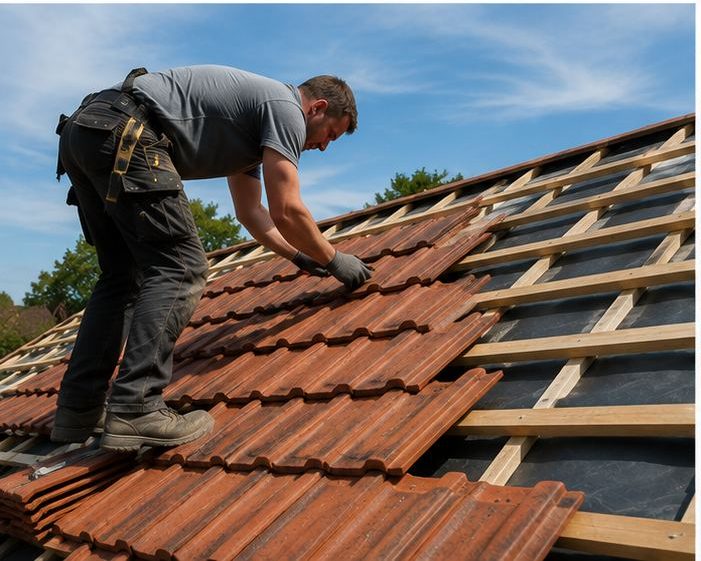
On a tall roof, getting safe access is a large part of any visit. A fault that spreads means more repairs, more access and more disturbance later. Water also does hidden damage, wetting felt, battens and plaster before a stain shows. Acting early keeps jobs short and keeps damage away from timbers and ceilings.
Trees, leaves and valleys
Mature trees give shade and character but they also drop leaves, seeds and twigs into valleys, gutters and behind chimneys. Blocked valleys overflow into the roof space, and clogged gutters push water against fascias. Regular clearing and a check of the coverings below keep the water going where it should.
- Leaves and debris in valleys and gutters
- Moss building up on shaded slopes
- Branches rubbing or dropping on the covering
- Gutter joints overflowing against the wall
Chimneys, ridges and flashings
Tall chimneys, ridge lines and lead flashings take the most weather. Pointing cracks, lead lifts and ridge mortar breaks down. A regular look picks these up early, when repointing or refixing a short section is enough. Leave them and water finds its way behind the lead and into the structure below.
What a check covers
We look at the whole roof, pitched and flat, with the gutters, fascias, chimneys and roof windows. We note slipped or cracked coverings, lifted ridge pieces, tired flashings, moss and blocked outlets, then tell you what is urgent and what can wait, so you can plan work rather than react to a leak.
After a storm, a quick look from the ground for displaced slates or tiles is sensible, followed by a proper inspection if anything seems wrong. Tall roofs hide damage well, so do not assume that no stain indoors means no fault above.
Choosing who looks
Ask for a written note of what was found and done, with photos where the roof is hard to see. A good roofer separates what is urgent from what can wait. Regular care is not about creating work; it is about keeping a sound roof sound.
On a roof this size it also helps to have the same person look each time, because they can compare what they saw before with what has changed, and notice slow movement in a ridge, a chimney or a valley that a first-time visitor would not pick up.
Frequently Asked Questions
How often should a villa roof be inspected?
There is no single interval, but a check after severe weather, and a regular look when something seems different, is sensible. Roofs under trees and with many valleys benefit from more frequent attention.
Is moss a problem on a roof?
Moss holds moisture and can lift edges and block valleys and gutters. It is not always urgent, but it is worth dealing with. We remove it carefully and check the covering beneath, rather than leaving it to build up.
Can I check the roof myself?
Only from the ground or the loft. Look for slipped slates, overflowing gutters, damp patches and daylight showing through. Do not go onto the roof yourself; note what you see, call us and we will look properly.
Talk to our team about general roofing services in Sneyd Park
Every roof is different — the fastest way to get an accurate answer is a quick chat with our team.