
You cannot inspect a roof yourself, but you can judge a lot from the ground, the loft and the paperwork. Here is a sensible checklist for any roofer.
Once the scaffold is down it is hard to know what happened up there. A good roofer helps you judge the work without climbing anywhere, with a written description beforehand, photographs afterwards and a tidy site. This guide sets out what to ask and what to look for on the typical tiled semis around Brentry.
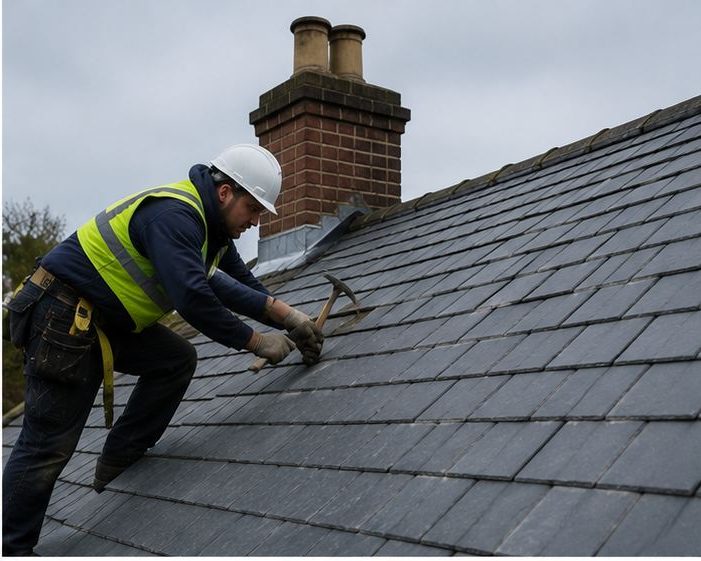
Before the work starts
A good job starts with clarity. You should have a written description of what will be done, how access is arranged, what happens to old material and who will be on site. If a roofer cannot explain the plan in plain words, or avoids putting it in writing, that is a signal worth listening to.
What you can see from the ground
Stand back and look at the finished roof. Tile lines should be straight, the ridge neat and even, and the edges tidy. There should be no stray tiles or debris in the gutters, and no obvious gaps or mismatched patches. Garages and porches should look as carefully treated as the main roof, not as an afterthought.
Do not climb up for a closer look. Binoculars from the garden show a surprising amount, and so do photographs taken from an upstairs window, which you can compare with the written description of the work that was agreed beforehand.
- Straight tile courses and an even ridge
- Neat junctions where roof meets wall
- Clear gutters with no spilled mortar
- Matching tiles with no odd patches
Evidence from the loft
Inside the loft, check for daylight where there should be none, damp patches or disturbed insulation. After a re-roof, you should see a continuous underlay and sound battens. Any bits of broken tile or rubbish left behind in the roof space are a sign of poor care. A good roofer should offer photographs of hidden work as well.
The way they treat your property
The site should be tidy at the end of each day, with drives, paths and gardens protected and left clean. Waste should be taken away. You should be told what is happening and if anything unexpected turns up, such as rotten timber, with an explanation of what needs doing and why before any extra work goes ahead.
Good roofers also keep noise, access and parking in mind for the neighbours on a short terrace or semi, where drives and paths are shared or close together, and they let you know when scaffold will arrive and when it will come down.
After the job
Ask for a clear account of what was done, with photographs, and keep it with your house papers. Run an eye over the roof after the first heavy rain, and check the loft for damp. If anything looks wrong, tell the roofer straight away. If any work may need planning or Building Regulations checks, we advise before work starts.
Frequently Asked Questions
What should a written description of roof work include?
It should say what is being repaired or replaced, which materials are used, how access and waste are handled, and what is outside the scope. That lets you compare roofers on the same terms and check the finished job against it.
Is it a problem if the roofer leaves some mess?
A little dust is normal. Tiles, nails, rubbish or mortar left in gutters, gardens or the loft are not. Good roofers clear up as they go, and tell you if anything has to be left until a later visit.
What if I think the work is not right?
Tell the roofer promptly, in writing, with photographs if you can. A reputable firm will come back and look. Do not try to inspect or fix anything on the roof yourself, and ask for any reasons to be explained.
Talk to our team about general roofing services in Brentry
Every roof is different — the fastest way to get an accurate answer is a quick chat with our team.