
Ridges and flashings are the joins of a roof, and joins are where water gets in first. Here is what the repair work actually involves, step by step, on a typical Brentry semi.
Many Brentry homes are inter-war and post-war semis and short terraces, with a ridge along the top, hips at the ends and lead where the roof meets a chimney or a party wall. Those details do hard work for decades, and when one fails the tiles around it are usually still fine.
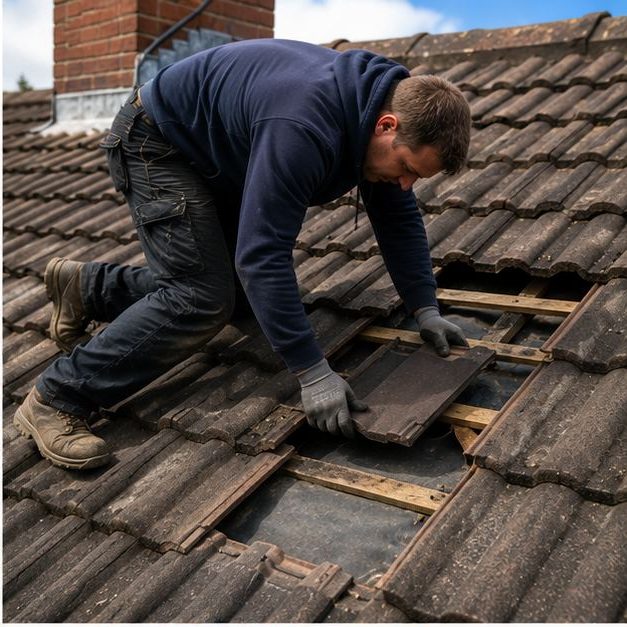
Ridge tiles and why they loosen
Ridge tiles are bedded in mortar along the apex, and over time the bedding cracks and the tiles shift. Wind then gets under them and rain follows. From the garden you may see a ridge line that dips, a gap between tiles or bits of mortar in the gutter. Those are signs to ask us to take a closer look.
How a ridge is re-bedded
We take off the loose ridge tiles, clear out the old bedding and check the tiles beneath are sound. The ridge is then laid again on fresh bedding, with the joints finished so they shed water. On roofs with hips, the hip ends and the junction at the ridge get particular attention, since that is where movement tends to open gaps.
Where the old tiles are cracked, we replace those rather than put them back, and we tell you which ones and why. Matching the tile type matters, so we check what is on the roof before ordering replacements for the ridge or hips.
- Remove and set aside the sound ridge tiles
- Clear out failed bedding and debris
- Lay the ridge again with proper bedding
- Check hips and end pieces for movement
What lead flashing does
Lead is a soft metal that is dressed to the shape of the roof, then tucked into a chimney or wall and lapped over the tiles. It seals the join between two surfaces that move at different rates. Because it is the sole barrier at the junction, a split or lifted lead strip lets water into the roof straight away.
Replacing a flashing properly
We strip back the old lead, check the brickwork or the mortar line it was tucked into, and fix new lead with proper laps and fixings so it follows the tiles and wall. Chimneys and garage or porch abutments often need stepped flashings and a new back gutter behind the stack, which is where a good many leaks hide.
A rough smear of sealant over a split is not a repair, and we say so openly. Proper lead work follows the shape of the roof and wall, and it is the sort of job where tidy work at the start saves a call-back later.
Before work starts
We confirm what is being repaired, whether the roof is otherwise sound and how access will be arranged. Chimney work may involve scaffold or a tower. If any work may need planning or Building Regulations checks, we advise before work starts. Ask for the plan in writing, including whether any extra faults are likely to turn up once the ridge is lifted.
Frequently Asked Questions
Can a ridge be repaired without re-roofing?
Yes, if the tiles below are sound. Re-bedding the ridge deals with the failed mortar and loose tiles without touching the main covering. If the main roof is also failing, we tell you, so you do not pay twice.
Why does lead flashing fail?
It fails from movement, age, poor fixing or damage by wind and birds. Lead can lift, split or slip out of its chase, and the joins cracked by thermal movement. Once there is a gap, water can follow the wall or chimney inside.
Can I repair flashing with sealant myself?
We would not recommend it. A sealant patch may hold for a little while but it does not fix the cause, and reaching the flashing means working at height. Leave it to us and we will repair it properly.
Talk to our team about roof repairs in Brentry
Every roof is different — the fastest way to get an accurate answer is a quick chat with our team.