
A roof does not need constant attention, but it does need regular checks. This guide gives a sensible routine for terraced houses, bays and extensions.
Most roof faults start small, with a slipped tile, a cracked fillet or a gutter that no longer drains. Catching them early saves trouble. On long terraces in Bedminster, where roofs sit close together and the backs are hard to see, regular inspection is the only way to know what is going on up there.
A sensible routine
Most homes benefit from a proper roof inspection once a year, ideally before winter, with an extra look after severe storms. Older roofs and those with known problems should be checked more often. Newer roofs can go longer between checks, but a glance from the ground now and then does no harm. A roof in good order lets us stretch the interval a little.
Quick checks you can do
From the ground, look at the roofline for gaps, slipped tiles and sagging gutters. In the garden or yard, check for broken pieces or debris. Inside, look at top-floor ceilings and the loft for daylight, damp or stains. Binoculars from the garden can make the ground check far more useful.
Never climb up or lean a ladder on the roof. If you see something worrying, take a photograph and call us. Never climb up or lean a ladder against the roof. If you see something worrying, take a photograph and call us. A short note of the date and the weather at the time is useful too, and helps us work out the cause when we visit.
Events that should prompt a check
Storms, a leak, falling debris, work on a neighbouring roof or a new extension all deserve an inspection. Also look sooner if moss builds up, gutters overflow or you notice damp on an upstairs wall. Do not wait for the next routine check when something has clearly changed.
- After high winds or heavy rain
- When you find tile pieces or mortar in the yard
- If a stain appears on a top-floor ceiling
- Before and after building work nearby
What a proper inspection covers
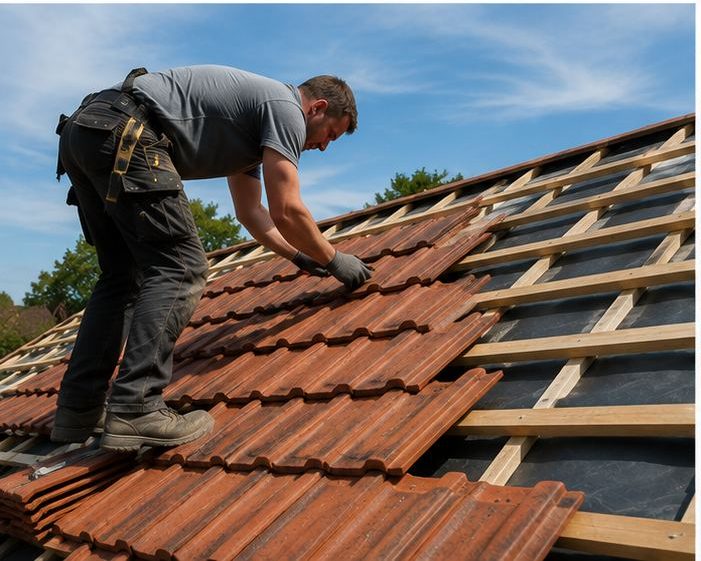
We look at the whole roof: coverings, ridges, hips, verges, valleys, lead flashings, chimneys, gutters, fascias and any flat roofs on extensions, lean-tos or bay tops. We also check the loft. Then we explain what is urgent and what can wait, so you can plan and avoid emergency repairs.
Back slopes and awkward roofs
The backs of terraces, lean-tos and rear extensions are often the parts nobody sees. Access can be tight, so they get neglected. We include these in every inspection and tell you honestly if anything needs attention. A quick look now is far better than finding out through a ceiling stain.
Frequently Asked Questions
Can I just look from the street?
It helps, but it only shows the front slope. Back slopes, flat roofs and flashings are hidden from the road. A proper inspection covers all of it. Photographs from the garden help, but the loft and the flat roofs need a proper look too.
Is an inspection always followed by a repair?
No. Often the roof is fine, or needs only minor work. We tell you plainly, and never push work that is not needed. Often a check ends with nothing more than a clear report that the roof is in sound order.
Should I inspect before buying a house?
A roof check can be very useful, particularly on older terraced houses. It tells you what condition the roof is in and what might need doing soon. It can also help you plan for any work that is coming up in the near future.
Talk to our team about general roofing services in Bedminster
Every roof is different — the fastest way to get an accurate answer is a quick chat with our team.