
A bad storm can leave a terraced roof looking fine from the street and wrecked at the back. Here is how to check safely and what we do once you call.
Terraced rows put a lot of roofs side by side, and a storm often strips the same weak spots on several. In Bedminster the front slope may look untouched while the rear slope, a lean-to or a bay roof has taken the beating. After high winds, stay off the roof, check what you can from safe ground, and get a proper look booked.
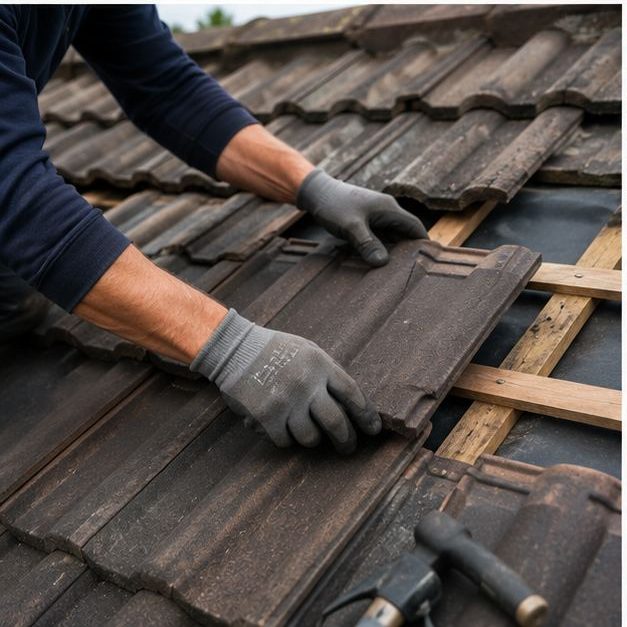
Walk round first
Check the front from the street, then ask whether you can see the back from your own garden or a neighbour's with permission. Look for missing tiles, shifted ridge pieces, lifted lead, bent gutters and debris in the yard. Rear slopes of long terraces often hide damage you cannot see from the road, so it is worth the extra look.
- Tiles missing or out of line at the ridge
- Bent or detached gutters and downpipes
- Lead flashing peeled back at walls or chimneys
- Lean-to or extension coverings lifted at edges
Protect the inside
Inside, check the top floor and loft for drips or damp. Put buckets or bowls under leaks, move furniture and electricals clear and keep children away from wet ceilings. If a ceiling bulges with water, leave it alone and call us rather than cutting into it.
Do not try to cover the roof yourself or reach it with a ladder. Sheeting must be fixed safely from the right access, which is something we arrange. Do not try to cover the roof yourself or reach it with a ladder. Sheeting must be fixed safely from the right access, which is something we arrange, including scaffold or a tower where tight rear access calls for it.
Record the damage
Take photographs from the ground, including anything that has landed in the garden or alley. Note the time of the storm and where water is coming in. Keep any broken pieces. This gives us a head start before we arrive, and it is useful for any claim you decide to make.
What happens when we visit
We assess all slopes, including the awkward rear ones, and check the lead, ridges, valleys and gutters. Where water is coming in we make it weathertight first. On narrow terraces with limited back access we plan how to get materials and scaffold in. Then we explain what needs doing now and what is a lesser job.
Avoiding the next storm
Storm damage often exposes tired fixings and loose edges that were waiting to fail. Fixing the visible damage and a few vulnerable details together can stop a second callout. We tell you honestly what is worth doing while we are there and what you can leave alone. That way the roof is left in better shape overall, not just patched where the storm did its worst.
Frequently Asked Questions
Can I wait for the weather to calm before calling?
Yes for the safe checks, no for open gaps and active leaks. If water is coming in or something looks ready to fall, call us straight away and we will advise what to do meanwhile. A short, safe look from the ground is all you need to do before ringing us.
Why is the damage worse at the back?
Rear slopes, lean-tos and extensions often have older or more exposed coverings, and wind swirls round the backs of terraces. Damage there is easily missed from the street, which is why we check every slope. We check every slope, including bays and lean-tos, so nothing is missed at the back.
Do I need to keep broken tiles?
Yes. They show what roof you have and help us match replacements. Keep them somewhere safe and dry, and tell us where they came from if you can. A photograph of where each piece landed is a useful extra if you can take one safely.
Talk to our team about roof repairs in Bedminster
Every roof is different — the fastest way to get an accurate answer is a quick chat with our team.