
A roof should be looked at regularly and not just when it leaks. The right interval depends on its age, its covering and what it has been through.
Roofs in Frenchay vary a lot, from older stone cottages and larger houses to modern estate homes with lighter coverings. Each ages in its own way, but the principle is the same: small faults found early are simple to put right, and the same faults left alone become larger ones.
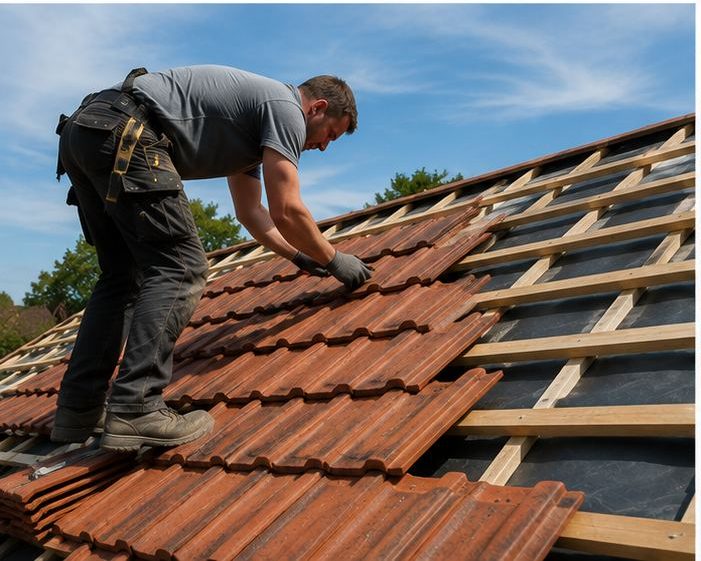
What you can check yourself
Walk round the house in spring and autumn and look up. You are looking for tiles or slates out of line, a ridge that seems uneven, sagging gutters, moss build-up and stains on walls under the eaves. Binoculars help. Do not go up onto the roof; ground and loft checks are enough.
Keep your own simple notes of dates and what you saw. A stain that has grown since last autumn or a tile that has crept further out of line is much easier to act on when you have the comparison to hand. We keep the explanation plain and show you what we have seen, so the decision stays with you.
A professional look
A roofer can see ridge and hip bedding, valleys, flashings and flat roof details that you cannot, and can check the loft properly. For most houses, a visit every few seasons is sensible, and older or more exposed roofs benefit from a closer rhythm. Newly bought houses deserve one early.
- Tiles or slates slipped, cracked or missing
- Ridge or verge mortar cracking or falling
- Flashings lifted at chimneys and walls
- Gutters overflowing, sagging or full of growth
After weather and building work
Strong wind, heavy rain or snow can move parts of a roof that were sound the week before. Building work, aerial fitting, solar installations or a loft conversion can also disturb coverings. A quick inspection after these events means damage is found before water finds it.
Outbuildings, garages and extensions often have their own roofs, sometimes flat, and are easy to forget. They get the same weather as the house, so check them at the same time and tell us if anything looks different. That is a ten minute job at most.
Older roofs and different coverings
Heavier older coverings on stone cottages and large houses age differently from the lighter ones on newer homes. Heavy roofs may hide movement in the timbers; lighter ones tend to show edge and ridge problems first. We adjust what we look at and how closely for each type.
What an inspection should give you
A plain account of what is sound, what needs doing soon and what can wait, with photographs where possible. It should not be a sales pitch. The aim is a roof that stays dry, with repairs done in sensible order and at a sensible time. Any questions you have along the way get a straight answer before the next stage starts.
Frequently Asked Questions
Is an annual inspection necessary?
Not for every roof, but a yearly look from the ground is easy and useful. A professional inspection every few seasons, plus one after any big storm, is a sensible pattern for most houses.
What can I see from my loft?
Daylight where there should be none, damp or dark timbers, wet insulation and stained felt all show up in a torch beam. Anything unusual is worth a call, and you should not go onto the roof.
Do flat roofs need separate attention?
Yes. Flat roofs on extensions and garages collect water and debris, and their edges and outlets need checking regularly. We include them in any inspection and tell you what needs to be done and when.
Talk to our team about general roofing services in Frenchay
Every roof is different — the fastest way to get an accurate answer is a quick chat with our team.