
Wooden fascias give plenty of warning before they fail. Peeling paint, soft patches and a sagging gutter are the signs that repainting is no longer enough.
Boards at the eaves cope with rain, sun and wind all year, and timber eventually loses that fight. Frenchay has older cottages with traditional eaves, larger houses with long gutter runs and modern estates where the original boards were fitted along with everything else. The signals are similar across all three.
Paint is the first witness
Flaking, bubbling or cracked paint along the board, especially on the lower edge and at the joints, means moisture is working through the surface. Repainting before the wood is sound seals in damp. If you redecorate and the paint fails quickly again, that is a message about the timber, not the paint.
Moss and algae can sit on timber and UPVC alike, so a green board is not automatically a bad one. We look at the wood beneath and the state of the gutter line before suggesting any change at all. That is the honest order. We keep the explanation plain and show you what we have seen, so the decision stays with you.
Soft wood and sagging gutters
A fascia carries the gutter, so when the board weakens the gutter droops or overflows. Staining on the wall below suggests water spilling from the eaves. Wood that is soft, crumbling or split is no longer reliably holding the fixings, and further delay risks the rafter ends behind it.
Older and larger houses
On cottages and bigger houses the eaves are often deeper and more decorative, and the timber may have been repaired many times. We look carefully at what is there, including the soffit, and whether a partial repair makes sense. Gutters on long runs put real weight on the boards, which finish them off faster.
- Paint failing again soon after redecorating
- Soft or hollow-sounding timber at the gutter line
- Boards separating at joints or corners
- Overflowing gutters and stained walls beneath
Newer estates
Boards on newer homes can be thin and fixed with little tolerance. Weather finds the joints and cut ends, and the fascia often rots from behind where water gets in. A single failing board among sound ones can be replaced; if the run is showing the same problem along its length, replacing it all is more sensible.
The practical step
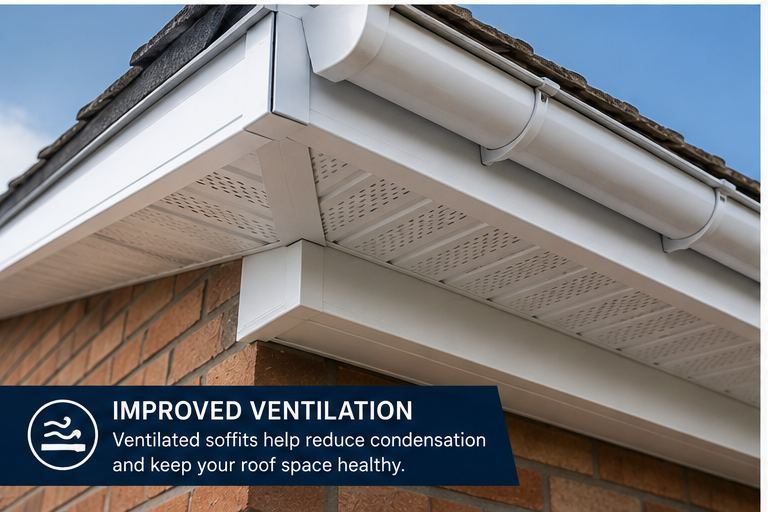
UPVC does not rot and is cleaned rather than painted, so it is very low maintenance. It comes in white and darker or wood-effect finishes. The work needs scaffold, new boards, vented soffits and gutters refitted, and may need planning or Building Regulations checks — we advise before work starts.
If you are redecorating anyway, the choice between repainting and replacing is worth making before the paint goes on. Fresh paint on rotten wood looks fine for a season and then fails, which is the most common source of regret. Better to decide first. Any questions you have along the way get a straight answer before the next stage starts.
Frequently Asked Questions
Is a repaint ever enough?
Yes, if the wood is sound, dry and only the paint has aged. Probing soft spots or finding rot says otherwise, and we can check this when we look at the boards from scaffold or a platform.
Will UPVC suit an older house?
In many cases yes, with a sensible colour and profile. The look of the eaves matters on older homes, so we talk through the options and check the existing soffit before removing anything. A short visit to the eaves settles it.
Can the work be done in stages?
It can, but the scaffold is the main part of the job, so doing the whole run together saves time and avoids a visible mismatch between old boards and new. Ask us to look at the whole run first.
Talk to our team about UPVC fascias and soffits in Frenchay
Every roof is different — the fastest way to get an accurate answer is a quick chat with our team.