
Once the wind drops, the aim is to make things safe and find out how bad it is. This guide covers the sensible first steps and what repair looks like afterwards.
Frenchay sits on the fringe of Bristol close to the Frome valley and the common, so some roofs feel more of a blow than others. Older cottages and larger houses have their own weak points, while newer estate roofs tend to lose edge and ridge pieces first. Work out what happened before deciding what to do.
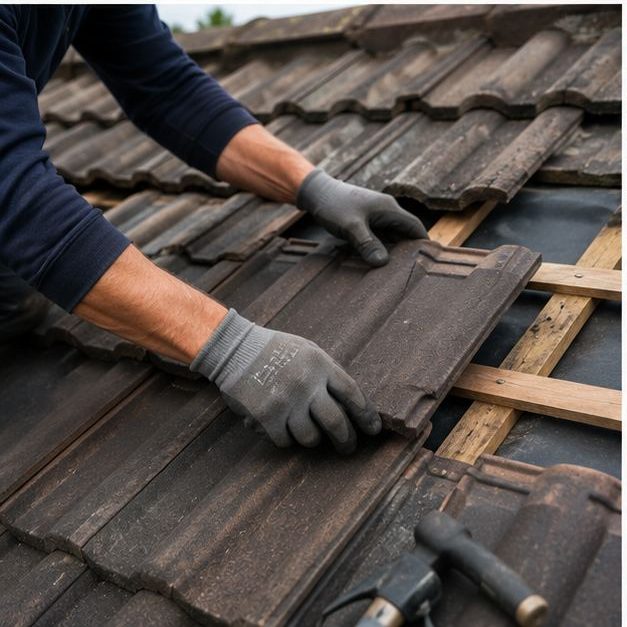
First look from the ground
Before touching anything, walk round the property and check for debris. Look up at ridges, hips, verges and chimneys for gaps, and check gardens, drives and neighbouring plots for fallen pieces. Keep children and pets clear of the area, and stay off the roof and any ladder. Take photographs from several angles.
What storms usually do
High winds lift the edges first. Verge mortar cracks, ridge tiles shift, flashings peel away and individual tiles slip or crack. On older stone cottages the heavier coverings may hold, but flashings, pointing and chimney stacks take a battering. On modern roofs, the thin edge pieces are most at risk.
Chimneys deserve attention after a storm. Stacks on older houses can loosen, flashings lift and pots shift, and any of these may let water in. Look at them from the ground for tilting, missing pieces or fresh gaps, and let us inspect up close.
Checks inside the house
Look in the loft for daylight, wet insulation, dripping timbers or stained felt, and watch for fresh ceiling marks below. If water is coming in, protect belongings, catch drips and stay clear of any sagging ceiling. Small leaks can run a long way along timbers before showing themselves.
- Daylight showing where there was none
- Damp or dripping rafters and insulation
- New stains or bubbling paint on ceilings
- Fallen debris in gutters and on flat roofs
Making it weathertight, then repairing
Where rain is getting in, we can often arrange a temporary cover or quick repair to stop the worst of it, then plan the full job. The repair may mean re-fixing or replacing tiles and slates, re-bedding ridges and hips, restoring lead flashings and repairing verges. We explain what is urgent and what can wait.
Keeping a record
Keep your photographs, dated notes and any fallen pieces, because an insurer is likely to ask for evidence. Larger houses with outbuildings should have those roofs checked too, as damage often turns up on garages and extensions that nobody thought to look at. Any questions you have along the way get a straight answer before the next stage starts.
Neighbouring houses on an estate often share the same roof type and age, so what failed on yours may be starting on theirs. It is neighbourly to mention it, and it helps us see patterns when we are called to a street. We keep the explanation plain and show you what we have seen, so the decision stays with you.
Frequently Asked Questions
Is it safe to look at the roof myself?
No. Wet and damaged coverings are slippery and unstable, and storm damage can leave loose pieces. Check from the ground and inside the loft, take photographs and call us for a proper look at the roof.
What if a tile has landed on a neighbour's land?
Tell them and keep people away from it, but do not try to retrieve it from a roof or high edge. We can make the area safe and deal with the damaged section as part of the repair.
Can small storm damage wait?
Sometimes. Active leaks and loose edges that could fall should be dealt with quickly, but minor slippage or small flashing faults can often be planned in. We look at the whole roof and tell you which is which.
Talk to our team about roof repairs in Frenchay
Every roof is different — the fastest way to get an accurate answer is a quick chat with our team.