
Water should leave a flat roof within a short time of the rain stopping. Falls, outlets and gutters decide whether it does, and the covering pays when they fail.
A flat roof that looks level but holds water is a common find on Frenchay houses, from garage extensions beside older cottages to porch and bay roofs on larger homes. Most defects start with water that has nowhere to go. This guide looks at slope, outlets and how we put them right.
The idea of a fall
A fall is a gentle slope in the deck that carries rain toward an outlet or gutter. It is subtle, usually too slight to see, but it is the only thing making a flat roof shed water. Without it, rain pools and sits on seams, edges and upstands, wearing them down.
On extensions added to older cottages or to larger houses, the new roof often meets an existing wall at an awkward height. That limits how much slope can be built in, and why the outlet position and gutter route need thinking through early.
How falls go wrong
Some roofs were built too flat from the start. Others sag as timbers soften, or lose their slope when a new covering is laid over an old one. The effect is the same, a patch where puddles remain long after rain. Consistent standing water is not just untidy; it shortens the life of the covering and finds weaknesses.
Outlets, gutters and downpipes
Even a perfect fall fails if the outlet is blocked. Leaves, moss and silt build up at the edge trim, in gutters and around the downpipe, and the water backs up. We check the size and position of the outlet, whether the gutter is level and where the water goes once it leaves the roof.
- Clear outlets and gutters running freely
- Gutters set level or to a gentle slope
- Downpipes discharging away from walls
- No long-standing pools after dry weather
How we put it right
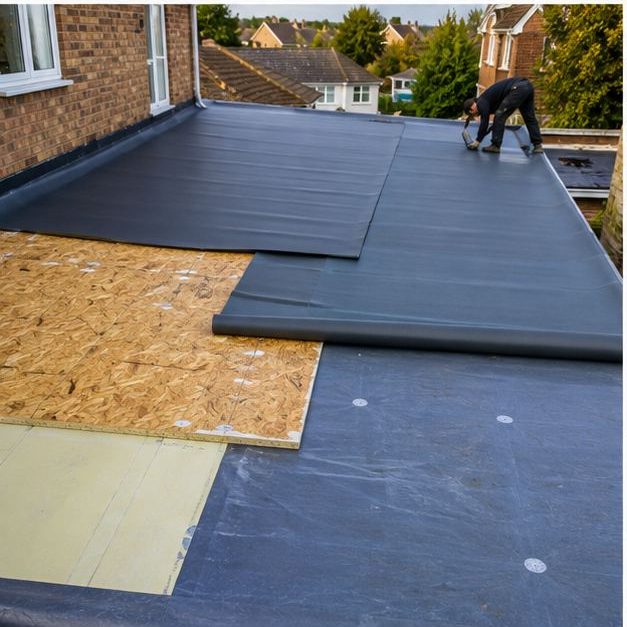
Where the deck is sound, tapered insulation or firring strips create the missing slope under a new covering. If timbers have rotted or sagged, the deck is repaired or re-laid first. Edge trims and upstands are then fitted so water leaves cleanly and does not run back toward the wall.
After the work we pour water on the finished roof, or watch the next rain, to confirm it runs where it should. A roof that drains properly protects the covering, the edges and the ceilings beneath it. That check is simple, and it shows the fall is doing its job.
What you can do
Check from a window or upstairs room after rain: pools that last, stained edges or damp ceilings all suggest a drainage problem. Keep clear of the roof itself and leave clearing blocked outlets to us, as walking on a flat roof can crack the covering.
Frequently Asked Questions
How long should water stay on a flat roof?
Only briefly after rain. A thin film that dries soon is normal; pools that last for days indicate poor falls or a blockage, and we advise on the remedy once we have looked. Ask us what we find.
Can a flat roof be given more slope?
Usually yes, by adding tapered boards or firring strips beneath a new covering, provided the deck is sound. Where thresholds or walls restrict the height, we plan around them. The answer depends on what lies beneath the covering, and the deck condition matters most.
Does ponding always need action?
Not always urgently, but it shortens the life of the covering and can lead to leaks at seams. We look at how bad it is, where it forms and whether a repair, improved drainage or a re-lay is sensible.
Talk to our team about flat roofing in Frenchay
Every roof is different — the fastest way to get an accurate answer is a quick chat with our team.