
There is no single interval that suits every roof. How often a roof should be looked at depends on its age, its type, how exposed it is and what has happened to it recently.
Redcliffe roofs range from older pitched terraces to flat roofs, parapets and converted warehouse tops. Each ages differently, and many sit hidden behind parapets or high above narrow streets, so problems go unnoticed. A regular inspection finds small faults before water finds them for you. The right rhythm depends on the roof, not on the calendar.
What decides the interval
Age is the obvious factor, but exposure matters too. A roof facing prevailing wind, a flat roof with a parapet that holds water, or a roof with many penetrations needs more frequent attention than a simple sheltered slope. Previous repairs, nearby trees and recent storms also change the picture. A roof that has been repaired recently may need an early follow-up check to confirm the repair is holding.
Times when a look is sensible
Beyond a routine visit, certain events call for an inspection. After a severe gale, after any work by another trade on or near the roof, before buying or selling a property, or when something changes inside, it is sensible to have the roof checked.
- After a severe storm or prolonged heavy rain
- Before buying or selling a building
- After building or aerial work close to the roof
- When stains or damp appear inside
What you can notice yourself
You can keep an eye out from the ground and from indoors without going near the roof. Look for slipped tiles, sagging gutters, moss build-up, debris on flat roofs and stains on top-floor ceilings. A torch in the loft shows daylight, damp timbers or stained felt. Anything unusual is a reason to call, not to climb.
What a proper inspection covers
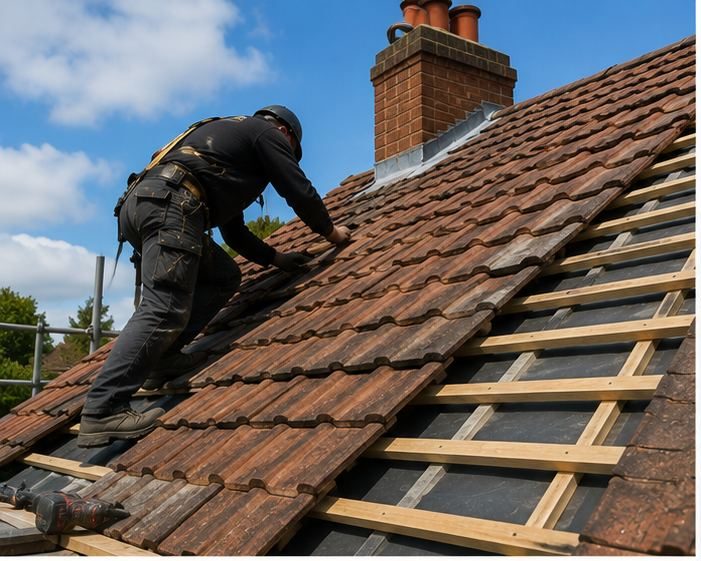
We look at the whole roof: coverings, ridges and hips, flashings, chimneys, gutters, fascias, parapets and flat roof details. We also check the loft or ceiling below for signs of water. The aim is a whole-roof view, with clear notes on what is urgent and what can wait, rather than a list of every small defect. If access is awkward, we say how we will reach each part before starting.
What you should receive
After an inspection you should get a plain explanation of what was found, ideally with photographs, and a written outline of any recommended work. Ask whether anything needs doing now, what could wait and what would happen if you left it. A sensible roofer will separate repair needs from tidy-up items and never push work that is not needed.
Keep any photographs and notes you are given, because a record of the roof over time helps spot slow changes and makes later decisions simpler. It also helps if you sell, since you can show how the roof has been looked after.
Frequently Asked Questions
Should an old roof be inspected more often than a newer one?
Generally yes, because older coverings and fixings are more likely to show wear. Flat roofs and roofs with complicated details also benefit from closer attention, whatever their age. Newer roofs still benefit from an occasional check after severe weather.
Do I need an inspection if nothing looks wrong?
Roof problems often start out of sight, so a check is worthwhile even without symptoms. Small faults found early are usually simple repairs, while ones left alone can let water into timbers and ceilings and grow into larger jobs.
Can I inspect the roof myself?
Only from the ground and from inside. Climbing onto a roof is dangerous, especially on tight sites. Look from the street or a window, check the loft with a torch, and call us if anything concerns you. That keeps you safe and still gives us useful information.
Talk to our team about general roofing services in Redcliffe
Every roof is different — the fastest way to get an accurate answer is a quick chat with our team.