
A flat roof is never truly flat. A gentle slope carries water to an outlet, and if that slope or the outlet fails, standing water begins to shorten the life of everything above and below it.
Flat roofs are a feature of Redcliffe, from warehouse conversions and modern flats to older extensions behind terraces. Many are bounded by parapets, which means water has only one or two places to go. Whether it leaves smoothly or lingers depends on falls, outlets and the state of the covering.
What falls actually are
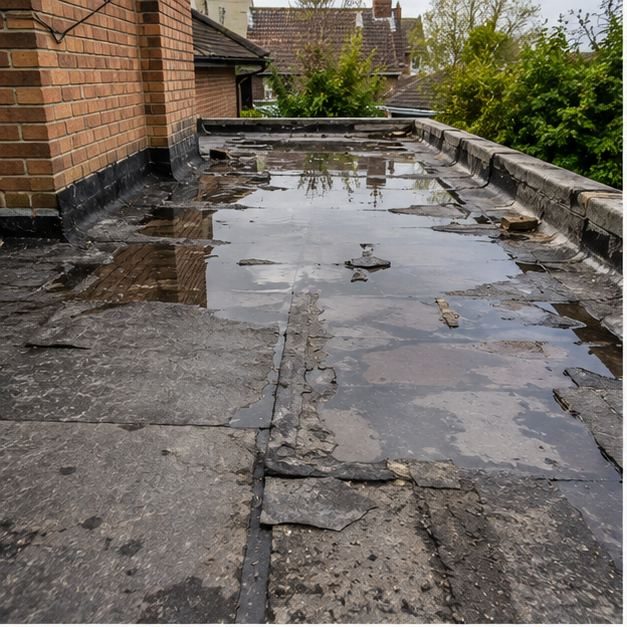
Falls are the small slope built into the deck so water runs towards an outlet or gutter. Without enough, water sits in shallow pools called ponding. Over time, the pool carries dirt, softens the surface and puts constant weight on the deck. Falls can be built into a new deck or created with tapered insulation.
Drainage is the other half of the story. A roof can have good falls and still flood if the outlet is small, blocked or set badly. We check both together, since fixing only one often leaves the roof wet and the covering under constant strain.
Why parapets make drainage more critical
A parapet is a low wall around the roof edge. It looks tidy, but it traps water that would otherwise run off. Everything leaves through an outlet or scupper, so one blockage can fill the roof like a tray. On tight city sites, leaves and debris collect quickly and nobody notices until a stain shows inside.
- Outlets blocked with silt, leaves or moss
- Scuppers set too high above the finished surface
- Parapet upstands cracked or lifting at the base
- Rainwater pipes that are crushed or discharge badly
Signs that drainage is struggling
From a window or the ground you may see water lying hours after rain, green growth in one patch or tide marks on the surface. Inside, look at ceilings directly below for yellow or brown rings. A bubbling surface can mean trapped moisture. These signs tell us where to look, and we look properly rather than guess.
What we do about poor falls
Sometimes clearing outlets and renewing a sealed joint is enough. If the deck has sagged or the falls were never right, we may recommend lifting the covering and building the slope back with tapered insulation or a revised deck layout. Rotten deck found under the covering is replaced before the new surface goes on.
Where the covering is otherwise sound, we may add an outlet, adjust a scupper detail or lay local tapered pieces to remove a pond. That is a repair, not a full replacement, and we say plainly when it is enough and when it is not.
Questions to ask before work starts
Ask how the water will leave the roof once the job is done, where the outlets sit, and how access across a tight site will be managed. A sensible roofer explains the finished falls, not only the covering. Planning or Building Regulations checks may be needed, and we advise before work starts.
Frequently Asked Questions
Is a little standing water after rain acceptable?
Small damp patches that dry quickly can be normal. Pools that remain for days, grow algae or return to the same spot point to falls or drainage that need attention, because they work on the covering constantly.
Can blocked outlets be cleared safely by the owner?
From inside a window you might see the problem, but reaching a roof to clear it is not worth the risk. Call us and we will clear and inspect outlets properly, checking the upstands and joints at the same visit.
Will new insulation change how water drains?
It can help. Tapered insulation is laid so that the surface falls to the outlet even when the deck below is level. It needs careful detailing at parapets and outlets, which we plan before the covering is laid.
Talk to our team about flat roofing in Redcliffe
Every roof is different — the fastest way to get an accurate answer is a quick chat with our team.