
Timber fascias can be repaired and repainted for a while, but there is a point where renewing them with UPVC makes more sense. These are the signs that point to that point.
Wooden fascias on the older houses around Redcliffe have taken many wet winters and repaint cycles. Many are still sound, and we will say so. Others are rotten at the joints, holding gutters badly or letting water run into the roof edge. Knowing the difference saves unnecessary work and avoids repeat repairs.
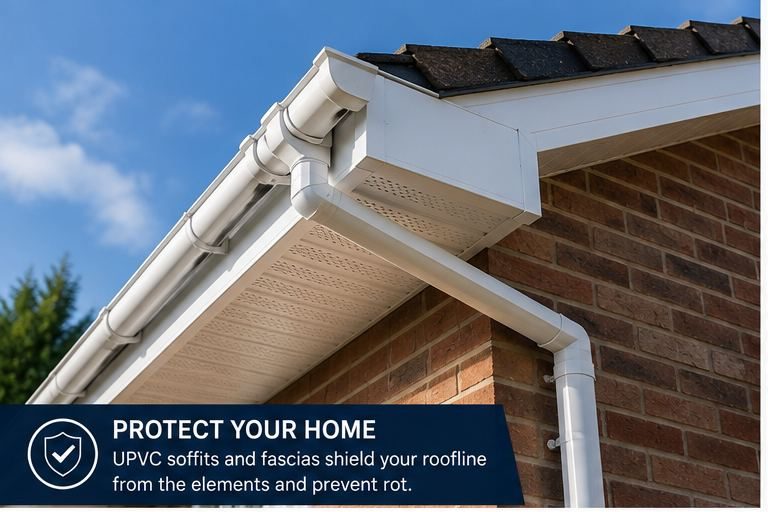
Soft timber and flaking paint
From the ground you can spot the signs: peeling paint, dark patches, bulging joints and a ripple along the board. Where water sits, wood rots from the back as well as the front. Once rot has set in, filler and paint only hide it for a short time.
Water rarely stops at the board. Rot can creep into the rafter ends behind it, so a fascia that looks poor is worth examining before more damage is done. A quick look from a safe point on the ground often tells us whether it needs a closer inspection.
Gutters that sag or leak
The fascia carries the gutter. If the board has softened, the brackets pull loose and the gutter slopes the wrong way. Water then spills behind it, soaking the board and the rafter ends. Persistent overflow marks on the wall below are a hint that the board and gutter need attention together.
- Gutter brackets pulling away from the board
- Staining or green growth on the wall below the eaves
- Gaps between the fascia and the soffit
- Birds or insects getting in at the eaves
When repair is still reasonable
If rot is limited to a short length and the rest of the board is firm, splicing in new timber and repainting may be perfectly good value. We check the rafter ends behind the board and tell you honestly. Replacement is for the case where repairs would be piecemeal or the paint cycle has become a recurring chore.
Why many owners choose UPVC
UPVC is very low maintenance. It is cleaned rather than painted, which is a real advantage where access is awkward and scaffold is needed each time. It comes in white and darker or wood-effect finishes. The changeover is also a chance to fit vented soffits so the roof space breathes properly.
Scaffold or tower access is a large part of eaves work in dense streets. Fitting boards that need no repainting avoids arranging access again for the next paint round, which for many owners is the deciding point. It is a practical reason, and it is worth weighing against the look you want.
What we check before and during the job
On older properties we check what the existing soffit boards are made of before disturbing them, and proceed with the right care. Once the old boards and gutters are off, we inspect the rafter ends and eaves, fix the new boards, fit ventilation and refit or replace the gutters. Scaffold or a tower is arranged for safe access.
Frequently Asked Questions
Can I paint UPVC if I dislike the colour?
It is not designed to be painted, and paint tends to peel. It is cleaned with warm soapy water. If you want a particular look, choose white, a darker shade or a wood-effect finish at the start of the job.
Do UPVC fascias need ventilation?
The roof space needs to breathe, and we usually combine new fascias with vented soffits or vent strips. That helps limit condensation in the loft and keeps the timbers drier, which protects the roof structure.
Will replacing fascias mean replacing gutters too?
Often, yes, because the gutters have to come off to fit the boards. Sound gutters may be refitted, but old or cracked ones are better replaced at the same time while access is in place.
Talk to our team about UPVC fascias and soffits in Redcliffe
Every roof is different — the fastest way to get an accurate answer is a quick chat with our team.