
After a gale, the sensible first steps in Redcliffe happen at ground level and inside the building. Here is what to check, what to leave alone, and how a proper storm repair is carried out.
A strong blow across the Floating Harbour can lift coverings, shift flashings and loosen parapet copings without anything obvious showing from the street. The first job is to keep people safe and limit water getting in. The roof itself is for a roofer to look at, never for you to climb onto.
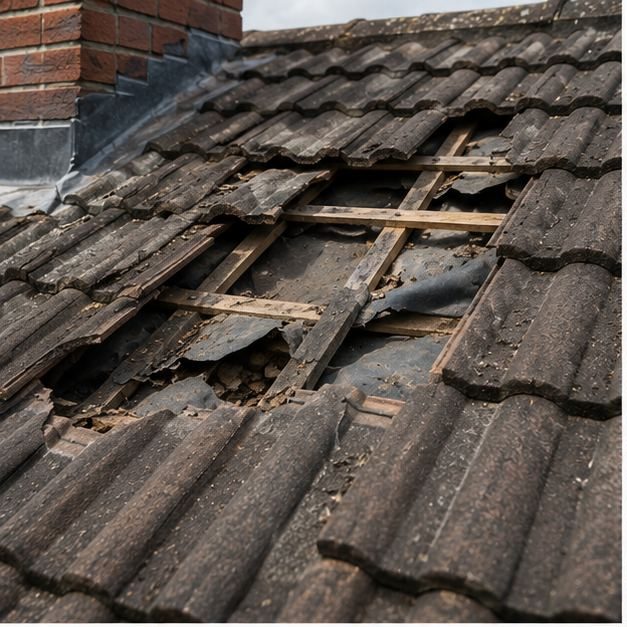
Start from the ground and the doorstep
Walk round the building and look up from the pavement or yard. Glance for tiles or slates lying on the ground, bent gutters, a hanging section of flashing or a loose coping from a parapet. Keep well back from anything that looks ready to drop, and keep children and pets clear of that side.
- Broken pieces on paths, in gutters or on neighbouring flat roofs
- Gaps or darker patches on the roof slope seen from below
- Gutters hanging away from the wall or filled with debris
- Parapet capping stones or trims that look out of line
Check the rooms under the roof
In terraces and converted warehouse flats, the top-floor ceiling often shows damage first. Look for fresh brown stains, bubbling paint, drips or a damp smell. Put a bucket under any drip and move furniture aside. If you can safely reach the loft hatch, a torch will show daylight, wet timbers or sodden insulation.
Making things safe without touching the roof
Do not climb up, lean a ladder against the roof edge or try to fix anything yourself. On a tight site the footing is poor and falls are common. Photograph everything from the ground and inside for your records, and note when the damage appeared.
If water is coming through a ceiling, place a bucket beneath and keep well away from light fittings and switches nearby. Do not poke or cut the ceiling yourself. Moving belongings out of the room and turning off a circuit you are unsure about is sensible, and anything beyond that is best left to us.
What we do when we get there
We look at the whole roof, not only the spot that was reported. Tight access around Redcliffe often means careful planning for ladders, towers or a working platform. Temporary weatherproofing is fitted if needed, then we explain what is urgent and what can wait before any permanent repair begins.
Storms often leave several small problems rather than one big one, such as a lifted ridge, a loose lead apron and a cracked tile in different places. We list them in order of urgency, so the ones letting water in are dealt with first and the rest can be planned.
Permanent repair and what to ask
Permanent work might mean refixing tiles, replacing broken slates, renewing lead flashing, resetting a coping or patching a flat roof covering. Ask for a written description of the work, how access will be arranged and what will be left tidy. A sound roof only needs the damage put right; a tired one deserves an honest conversation.
Frequently Asked Questions
Should I phone my landlord or managing agent first?
If you rent or live in a converted block, tell the person responsible for the roof straight away, since the roof is often not yours alone. Photos help. You can still call us for a proper look at the damage and to arrange temporary protection.
Can I cover a damaged roof with a tarpaulin myself?
No. Getting onto a roof to fix a sheet in place in wind is how people get hurt. Keep to inside measures such as buckets and moving belongings, and let a roofer arrange safe temporary cover from proper access.
Is every storm leak obvious from the inside?
Not always. Water runs along felt and timbers before it drips, so a stain can sit well away from the real opening. That is why we check the whole area above and around a mark, not only the mark itself.
Talk to our team about roof repairs in Redcliffe
Every roof is different — the fastest way to get an accurate answer is a quick chat with our team.