
There is no fixed date that suits every roof. How often to have it looked at depends on its age, its materials, its exposure and what has happened to it recently.
A roof out of sight tends to stay out of mind until something drips. In Warmley, with older village buildings, Victorian houses and later estates all in the mix, roofs vary a lot in age and covering. A sensible inspection routine catches small faults early and spares you the larger repair that follows neglect.
Why regular checks pay off
Most roof damage starts small: a slipped tile, a lifted flashing, a blocked gutter. Left alone, water works into the felt and timbers and the repair grows. A look from a roofer who knows what to check means you hear about problems while they are still simple, and you can plan the work.
Inspection is also a good way to avoid surprises when you are planning other work, such as redecorating a damp ceiling, since it tells you whether the cause has been dealt with or is still active above. It is a small step that saves guesswork.
What shapes the right interval
Older roofs need looking at more often than newer ones, as do roofs with plenty of trees nearby dropping leaves and branches. Flat roofs and areas of lead work deserve extra attention. A recent repair or a new covering needs less, and we will give an honest view rather than an arbitrary schedule.
- Age and condition of the covering
- Trees overhanging or close to the roof
- Flat roof sections and lead flashings
- Previous repairs and any past leaks
Times when you should not wait
Certain events should trigger a look regardless of the usual interval. After a strong storm, after any sign of damp on a ceiling, if tiles are found on the ground, or before buying or selling a house, an inspection makes sense. Do not wait for the next routine check if something looks wrong.
What an inspection covers
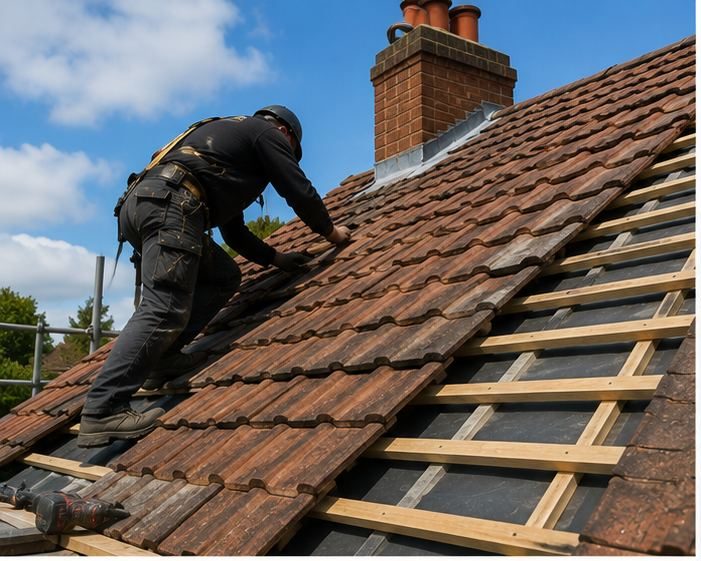
We look at the whole roof: coverings, ridge and hip lines, chimneys and lead, gutters, fascias, verges and any flat sections. We also check the loft for daylight, damp timbers and stained felt. You get a plain explanation of what is urgent and what can wait, so you decide with clear information.
Where we find something, we keep to what is real. A roof with a few loose tiles does not need a new covering, and we say so. Equally, if the roof is nearing the end of its useful life, we explain the signs and the likely options.
What you can do between visits
From the ground, glance at the roof after bad weather and look for gaps, uneven lines or debris. Check ceilings for fresh stains and the loft for dampness. Never climb up to look closer. If anything seems off, call us for a proper look.
Frequently Asked Questions
Is a yearly inspection necessary?
Not for every roof. A sound newer roof may need less, while an ageing roof under trees is worth checking more often. We give an honest recommendation based on what we find, and we do not push unnecessary visits.
Should I get my roof checked after a storm?
Yes, if there is any sign of damage such as tiles on the ground or damp inside. Wind can loosen things that have not yet failed. A quick inspection after a bad storm is far less trouble than dealing with a leak found later.
What will I get after an inspection?
A clear account of the roof condition, what needs doing now and what can wait, with photographs where useful. We explain the reasons in plain language, so you know exactly what to expect and decide for yourself.
Talk to our team about general roofing services in Warmley
Every roof is different — the fastest way to get an accurate answer is a quick chat with our team.