
Wooden fascias can be repainted for a while, but there comes a point where rot and constant upkeep make replacement the sensible choice. These are the signs to look for.
Timber fascias and soffits do a good job until water gets into them. Many Warmley homes, from older village buildings to Victorian houses and later estates, still have original boards that have been painted over and patched for a long time. Knowing when to stop patching saves money and avoids damage to the roof edge.
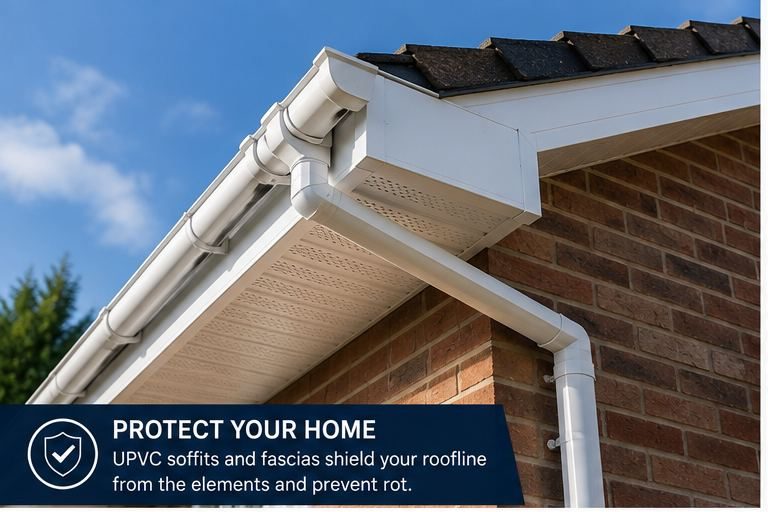
Signs the boards are past painting
Look up from the ground at the boards under your gutters. Flaking paint, dark staining, boards that bow or have gaps at the joints, and sections you can see are soft are all signs. If a screwdriver sinks in when pressed, rot has set in and a fresh coat of paint will only cover it over.
- Paint peeling again soon after redecorating
- Soft, crumbling or spongy timber at the edges
- Gaps where boards meet at corners
- Gutters sagging because the board behind has weakened
Why the gutter often tells you first
The fascia carries the gutter. When the board behind it rots, the gutter fixings loosen and the run starts to sag or leak. Overflowing water then soaks the board further. If gutters keep coming loose or drips run down the wall behind, the fascia is usually the root of it.
A quick look inside the loft can add to the picture. Damp or stained timbers near the eaves suggest water has been getting past a failing board, and that points towards replacement rather than another round of repainting, and it is worth mentioning when you call us.
Rot that reaches the roof edge
Wet timber does not always stay put. It can reach the ends of the rafters and the soffit, and birds or insects may find a way into the roof space through the gaps. Checking the rafter ends is part of any replacement, so the whole eaves detail is sound before new boards go on.
Why UPVC makes sense at that point
UPVC does not rot or need repainting, only an occasional wash, so it is very low maintenance. It comes in white and darker or wood-effect finishes, and vented soffits or vent strips let the roof space breathe. It suits homes where the timber has reached the end of its repainting life.
Timing matters too. Replacing before the rot spreads to the rafter ends usually means a smaller job, whereas leaving rotten boards for another winter can turn a simple board change into timber repairs as well, with a larger job to match.
A note on older homes
Where a house is older, we check what the existing soffit boards are made of before disturbing them, and plan the work around that. Replacement may need planning or Building Regulations checks, and we advise before work starts. Ask us for a look from the ground first.
Frequently Asked Questions
Can I keep painting my wooden fascias instead?
If the timber is sound, yes. Once rot is present, paint only hides it and the board keeps failing underneath. We can tell you from a close look whether the boards are worth keeping or whether replacement is the better route.
Do I have to replace the gutters at the same time?
Usually the gutters come off to remove the old fascia, and refitting or replacing them is sensible while access is set up. If they are in good order they can often go back on. We advise once we see them.
Will new UPVC boards ever need painting?
No. UPVC is cleaned, not painted. A wash with warm soapy water now and then keeps it looking tidy. That is the main reason people choose it once their timber boards have rotted.
Talk to our team about UPVC fascias and soffits in Warmley
Every roof is different — the fastest way to get an accurate answer is a quick chat with our team.