
After a rough night of wind and rain, the first hours matter more than the first repair. Here is what to look at safely, what to leave alone, and how we deal with storm damage in Warmley.
Wind finds the weak points on any roof, and Warmley has plenty of different roofs to test: older village buildings, Victorian houses and later estates all age and fail in their own ways. After a storm, the aim is simple. Stay off the roof, limit the water coming in, and get someone who knows roofs to look properly.
Start with the ground, not the roof
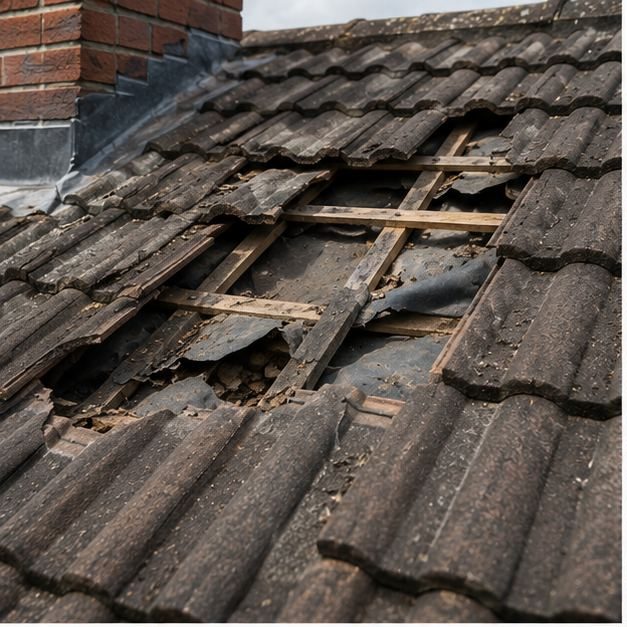
Walk round the outside of the house and look up from a safe distance. Gaps in the tile or slate lines, a ridge that looks uneven, a sagging gutter or debris lying on the path all tell you something. Do not climb up or put a ladder against the roof to get a closer look. A pair of binoculars does more good than a risky climb.
- Tiles or slates lying on paths, lawns or the drive
- Gutters hanging loose or pulled away from the fascia
- Ridge or hip lines that look broken or uneven
- Branches or large debris resting on the roof or gutters
Check the loft and ceilings from inside
If it is safe to reach the loft hatch, look for daylight where there should be none, damp patches on timbers, and wet or stained felt. Check upstairs ceilings for new brown marks or bubbling paint. Water often runs a long way along timbers before it drips, so the stain is rarely under the damaged spot.
Limit the water and protect your belongings
Move furniture and electrics away from wet areas, put a bucket under any drip and lay towels to protect floors. If a ceiling is bulging with water, pierce it carefully with a small hole to let it drain into a bucket, standing clear below. Photograph everything as you go, as it helps if you are making a claim on your home policy.
What a proper storm inspection covers
When we come out we look at the whole roof, not just the spot you spotted. That means loose and slipped tiles, cracked slates, ridge and hip bedding, lead flashings around chimneys and valleys, verge edges and gutters. Wind often loosens things that have not yet failed, so we point those out as well, and say which are urgent and which can wait.
Temporary fixes and lasting repairs
Where water is still getting in, a temporary cover or a few replaced tiles can hold things until the weather settles. We would rather tell you honestly whether a lasting repair is enough or whether wider work is needed. On older Warmley roofs with tired coverings, one storm repair can reveal how much else is near the end.
Frequently Asked Questions
Should I go up and check the roof myself?
No. Wet, windy conditions and loosened coverings make a roof dangerous to anyone not trained for it. Look from the ground, check the loft and ceilings from inside, and call us for a proper look. We can reach the roof safely with the right access.
Can I wait until the weather improves?
If water is coming in, deal with it now by protecting the room and arranging a temporary cover. If the damage is only visible and nothing is leaking, a short wait is usually fine, but loose tiles can shift again in the next gust, so do not leave it long.
How do I know whether it is a repair or a bigger job?
We look at how many pieces have moved and why. A few slipped tiles on a sound roof is a repair. If the battens are soft, the felt is perished or the covering is failing widely, we will say so and show you what we found.
Talk to our team about roof repairs in Warmley
Every roof is different — the fastest way to get an accurate answer is a quick chat with our team.