
It depends on how widespread the faults are, what condition the timbers and felt are in, and whether repairs keep needing repeating. An honest roofer tells you which applies.
Nobody wants to replace a roof that only needs a repair, or keep paying for patches on one that has had its day. On a tall Cotham villa or terrace, the choice is shaped by lead work, chimney stacks and parapet gutters as much as by the tiles. The answer comes from what is actually found on the roof.
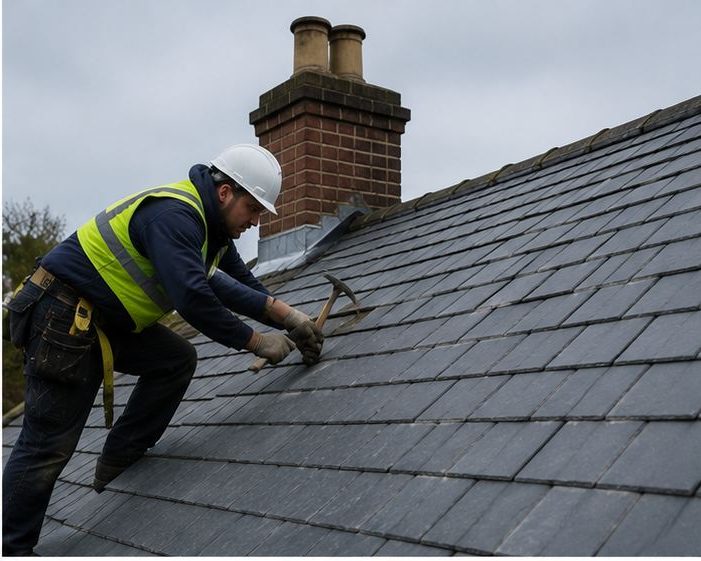
When a repair is the right answer
If the faults are local, such as a few slipped tiles, a worn flashing or a blocked valley, and the timbers and felt beneath are sound, repair makes sense. The rest of the roof is doing its job. A targeted repair can deal with the problem properly and leave the sound areas alone, which is both honest and sensible. We tell you how long we expect the repair to hold up and what could change that, in plain terms.
When replacement makes more sense
Replacement becomes the better option when problems are spread across the roof. Signs are widespread slipped or crumbling coverings, repeated leaks in different places, rotten battens or rafters, and felt that has failed. Patching in those conditions only chases the next fault. A new covering stops the cycle and can include better detailing around the edges. It also gives a chance to improve ventilation and detailing at the same time. Replacing is a bigger decision, so we show our evidence.
What tips the decision on these houses
Tall roofs with big stacks and parapet gutters bring extra considerations, and access can be a cost in itself. If scaffold is needed anyway, it can make sense to do more while it is up. The decision rests on evidence, not on pressure. The things we weigh up include these: A little extra planning here saves repeat visits.
- How many separate faults the roof has
- Condition of timbers and felt under the covering
- State of lead flashings and parapet gutters
- How often repairs have been needed before
A whole-roof view
We look at the whole roof, not only the spot that leaks: ridge, hips, chimneys, gutters, flashings and fascias. Then we explain what is urgent and what can wait. A roof may need a repair now and replacement later, and knowing that lets you plan instead of reacting after the next storm. That may include lead work and gutters that are easy to overlook from the street.
What to expect from us
You get a plain explanation of what we found, with photographs where possible, and a clear written description of the work for either route. If a repair is enough, we say so. If it is not, we say why. Call us for a proper look and we will tell you straight. We never push replacement when a repair will do.
Frequently Asked Questions
How do I know if my roof is beyond repair?
Widespread failure, repeated leaks in different places and rotten timbers are the main signs. A roofer needs to see inside and out to judge. One leak alone does not mean a whole new roof. We can show you what we see.
Can a part of the roof be replaced?
Yes. If one slope or section has failed and the rest is sound, replacing just that part can be a sensible middle route. We explain where the line falls and what it means for the remainder.
Does a repair affect a later replacement?
No, a good repair does not get in the way. It keeps the roof weathertight in the meantime and lets you plan a replacement when it suits you rather than in an emergency.
Talk to our team about general roofing services in Cotham
Every roof is different — the fastest way to get an accurate answer is a quick chat with our team.